Why You Shouldn’t Size Up Just to Get Wider Boots
If your boots fit in length but squeeze across the forefoot and crush your toes, buying a longer pair shouldn’t be your first move. Hell, it shouldn’t be a move at all. Yet “just size up” is advice that gets handed out whenever someone asks about boots for wide feet.
Go up half a size. Maybe a whole size. Give your feet some room.
Look, there’s a reason people suggest it. A larger boot size generally gives you some extra width along with the extra length, so it can feel better at first. But that relief can come with a tradeoff. Your heel may move more, your foot may slide around, and the ball of your foot may no longer sit where the boot is designed to bend. Less squeeze doesn’t automatically mean a better fit.
If the length already fits, “just size up” is some of the worst boot advice you can get. In this article, I’ll explain what changes when you go bigger, when sizing up actually makes sense, and how to find the room your feet need without buying unnecessary length.
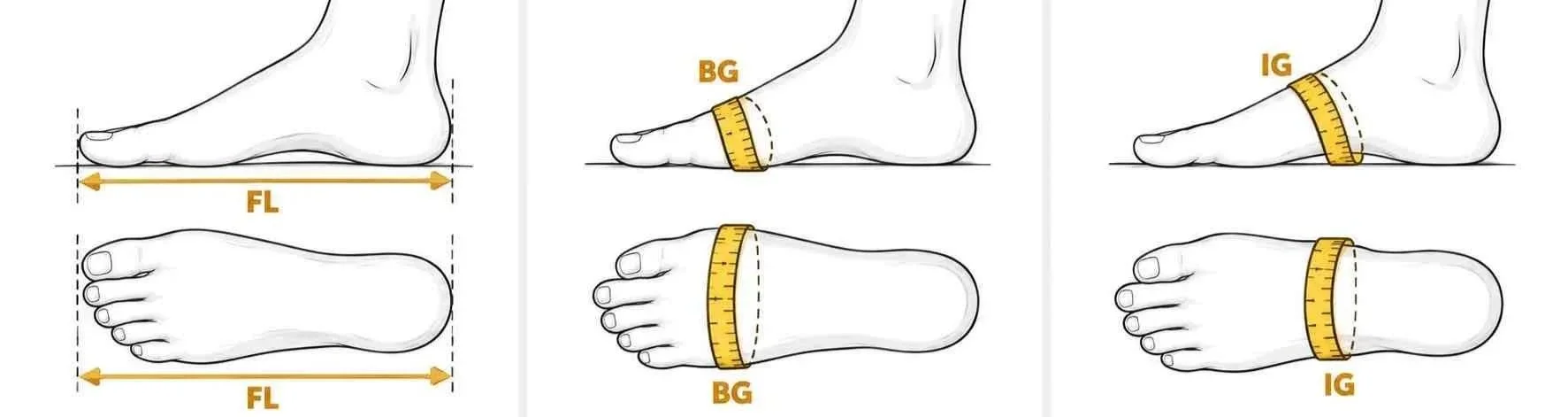
Your Foot Size is made up of Length, Width and Girth. You have to consider all of them for the right fit. Adding Length isn’t a fix
Should You Size Up in Boots If You Have Wide Feet?
No. If a boot already fits your foot in length, sizing up shouldn’t be the fix for a width problem. You need a width and last shape that accommodate your foot without adding length you don’t need.
The frustrating part is finding a pair you really like, only to discover the brand doesn’t offer a suitable width. I get it. But buying the next size up doesn’t guarantee a good fit. Sometimes that particular boot simply isn’t right for your foot.
The same problem comes up with heavily tapered, almond-shaped toe boxes. People size up to move the taper farther forward, hoping it will stop squeezing their toes. That can relieve some pressure, but it also adds length and changes how the rest of the boot fits.
A tapered toe box may already extend well beyond your toes as part of its design. That space alone doesn’t mean the boot is too big. What matters is where your foot sits inside it. Sizing up just to escape the taper can leave your heel and midfoot less secure or put the ball of your foot too far behind the boot’s intended flex area.
If you need more room across your forefoot or around your toes, look for a boot that provides room in those places. You shouldn’t have to keep buying longer boots until your feet finally stop feeling squeezed.
Does Going Up Half a Size Make Boots Wider?
Yes, in most boot sizing systems, going up half a size adds some width as well as length. Exactly how much depends on the brand and the last. A half-size increase isn’t automatically equivalent to choosing a wider fit in your original size.
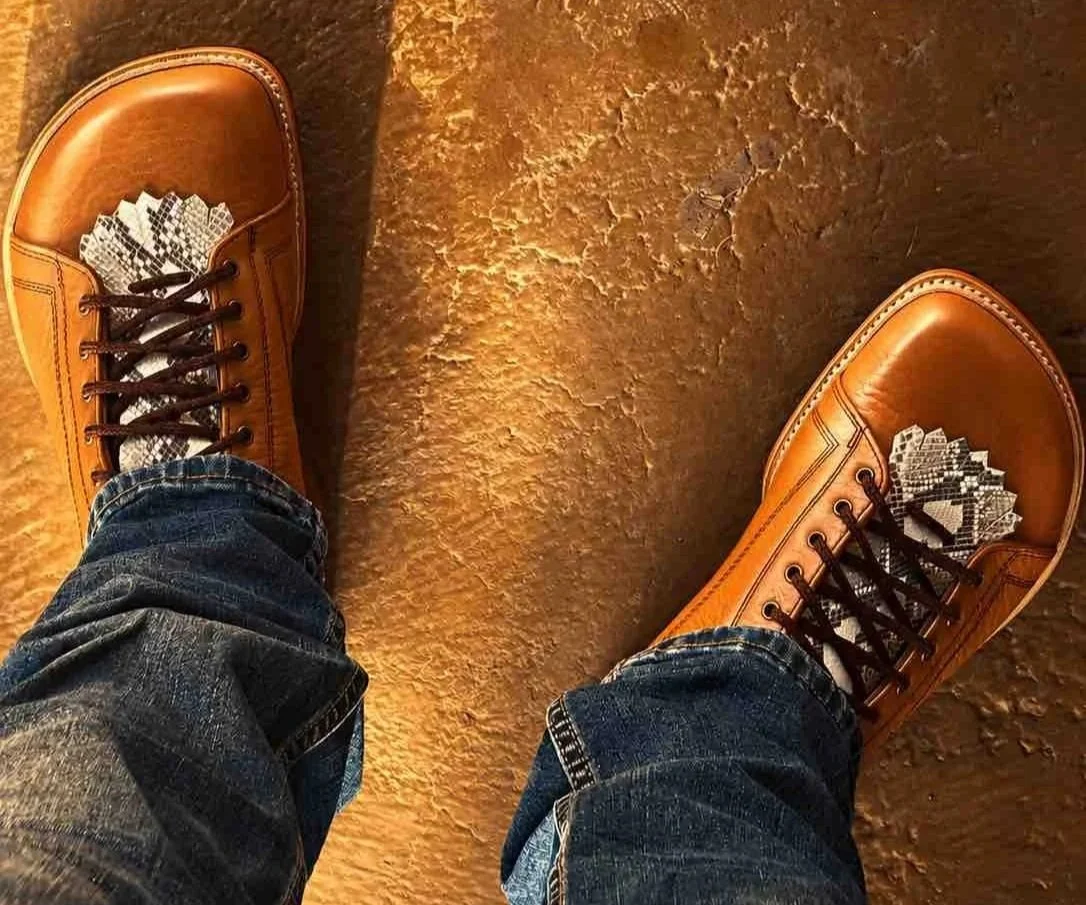
But here’s the thing: if the length already fits, you’re adding length you don’t need to get that extra width.
The larger size might feel more comfortable across your forefoot when you first put it on. Start walking, though, and you need to check what else has changed. Does your heel still feel secure? Does your foot slide forward? Does the boot bend comfortably with the ball of your foot?
Those problems aren’t inevitable with every half-size increase, but they’re the trade-offs you need to assess. A boot getting wider doesn’t automatically mean it fits better. You need the extra room without losing the secure fit and correct positioning of your foot inside the boot.
What’s the Difference Between a Bigger Boot Size and a Wider Fit?
A bigger boot size generally adds length, width, and overall volume. A wider fit at the same size is intended to accommodate a broader foot while keeping the same length.
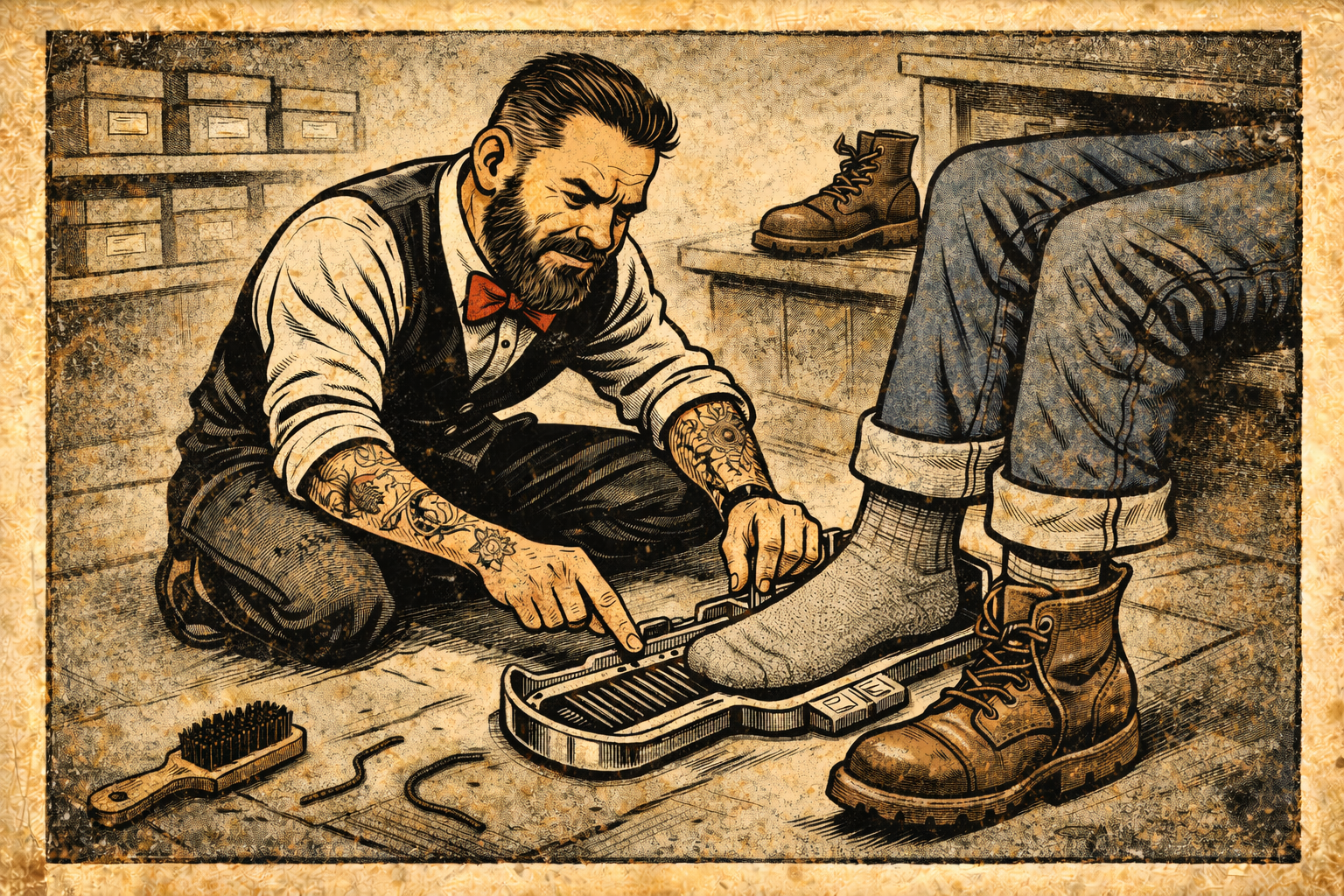
When you go up half or a whole size, the changes extend beyond the forefoot. The heel and midfoot may become roomier too. If those areas already fit securely, that extra space can let your foot slosh around inside the boot.
You’re also changing the boot’s heel-to-ball dimensions. If the original size positioned your foot correctly, sizing up can put the boot’s intended flex area farther forward than the ball of your foot. That relationship matters because the boot needs to bend comfortably with your foot.
Choosing a wider fit in the correct length lets you address the width problem without automatically moving up to a longer boot. For example, a size 10 wide and a size 10.5 regular are different fitting options, even if both give you some relief across the forefoot.
But don’t assume a wider fitting leaves everything behind your toes unchanged. Depending on the maker and last, it can also add room through the midfoot and instep. Some bootmakers explicitly increase those areas alongside the forefoot.
The goal is enough room across your forefoot and around your toes, with a secure heel and midfoot. If the wider version becomes loose elsewhere, you may need a different last shape. Keep the length that fits, then find the width and proportions that work for your foot.
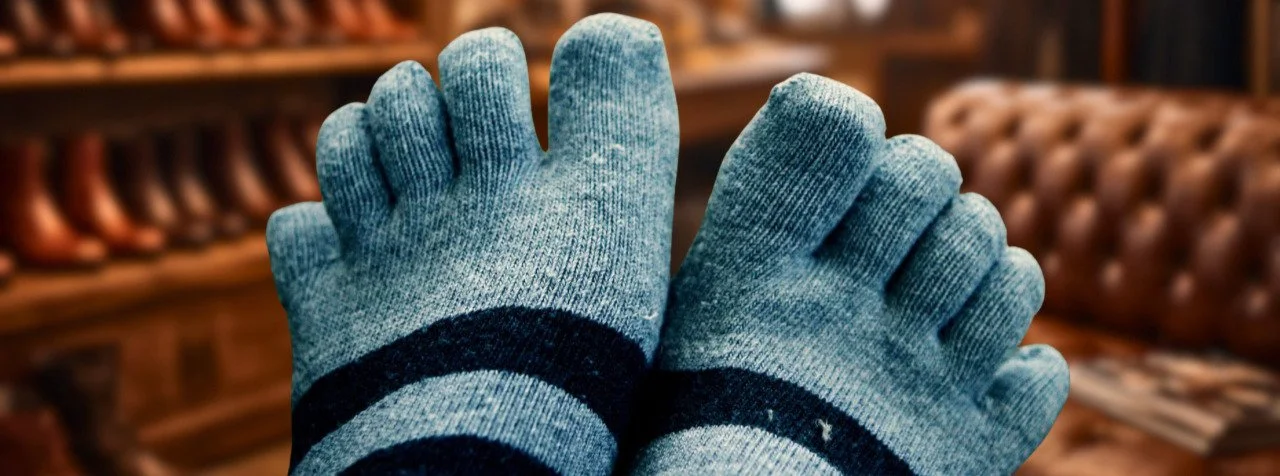
Always measure your feet with the socks that you normally wear.
What Fit Problems Can Sizing Up for Width Cause?
Sizing up for width can leave you with unnecessary length, a less secure heel and midfoot, and too much overall volume. The pressure across your forefoot might ease, but the larger boot can introduce problems elsewhere.
Extra length and poor heel-to-ball positioning
Going up a size adds length in front of your toes and changes the boot’s heel-to-ball dimensions. If your foot was correctly positioned in the original size, the larger boot’s intended flex area may sit too far forward. Your foot and boot then have less natural alignment as you walk. The extra length can also make the boot feel cumbersome and impact your gait.
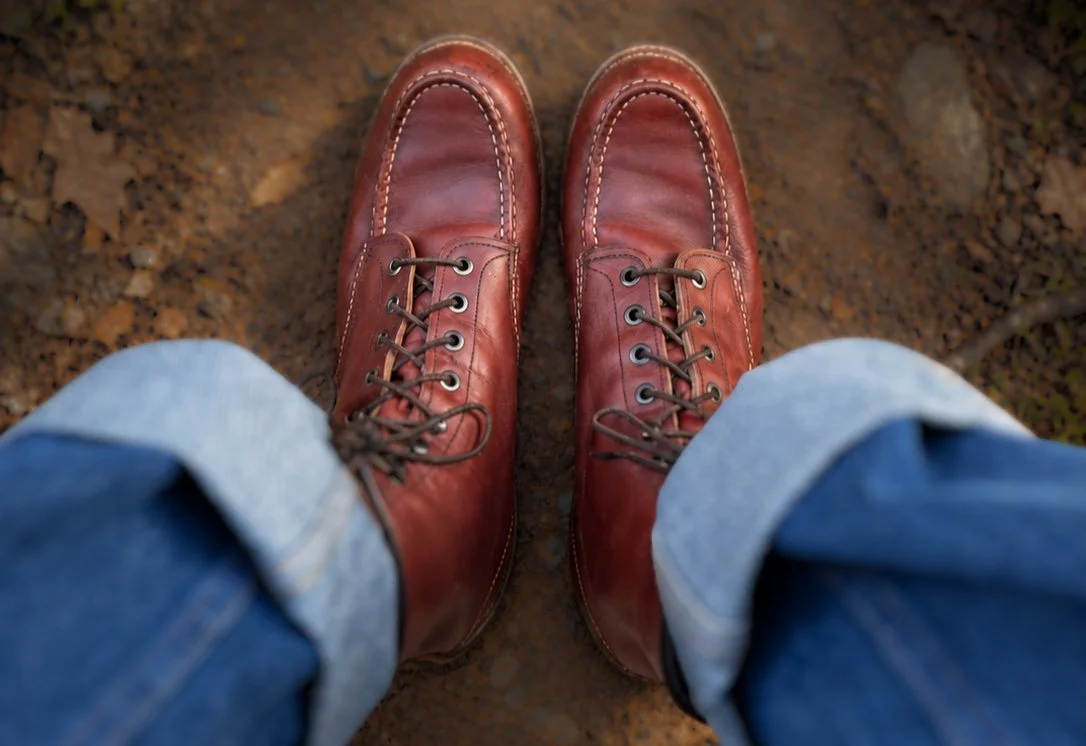
Up Sizing Boots can cause a lot of issues with gait and fit
A loose heel and midfoot
A larger size can add room around your heel and midfoot, even if those areas already fit well. You might gain the forefoot space you wanted while losing the hold that keeps your foot secure.
Watch for increased heel movement or your foot sliding forward inside the boot. If you have to pull the laces excessively tight to regain that security, the larger size may have created a new fitting problem.
Too much overall volume
Volume is the three-dimensional space inside the boot, including the room above your foot. A boot can be comfortable across the forefoot and still feel sloppy because there’s too much space elsewhere.
Thicker socks, adding a kiltie, or an added insole may take up some room, but they also change the fit in areas that might already feel right. If you’re adding length to gain width, then filling the boot back up to keep your foot secure, it’s worth trying a different width or last for a better fit.
Shop Naang Boots and Get The Width Your Feet Need
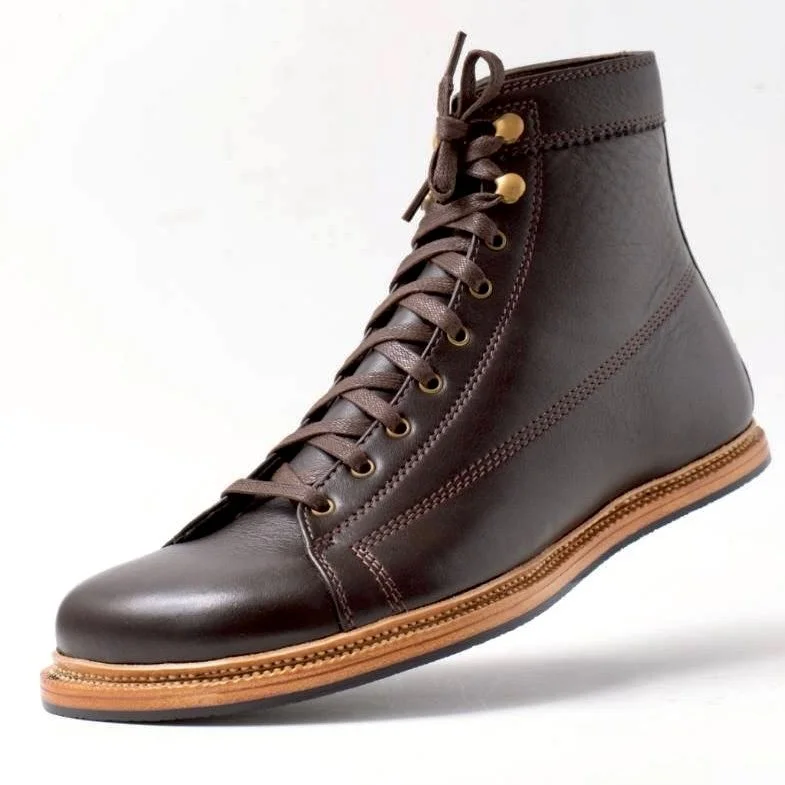
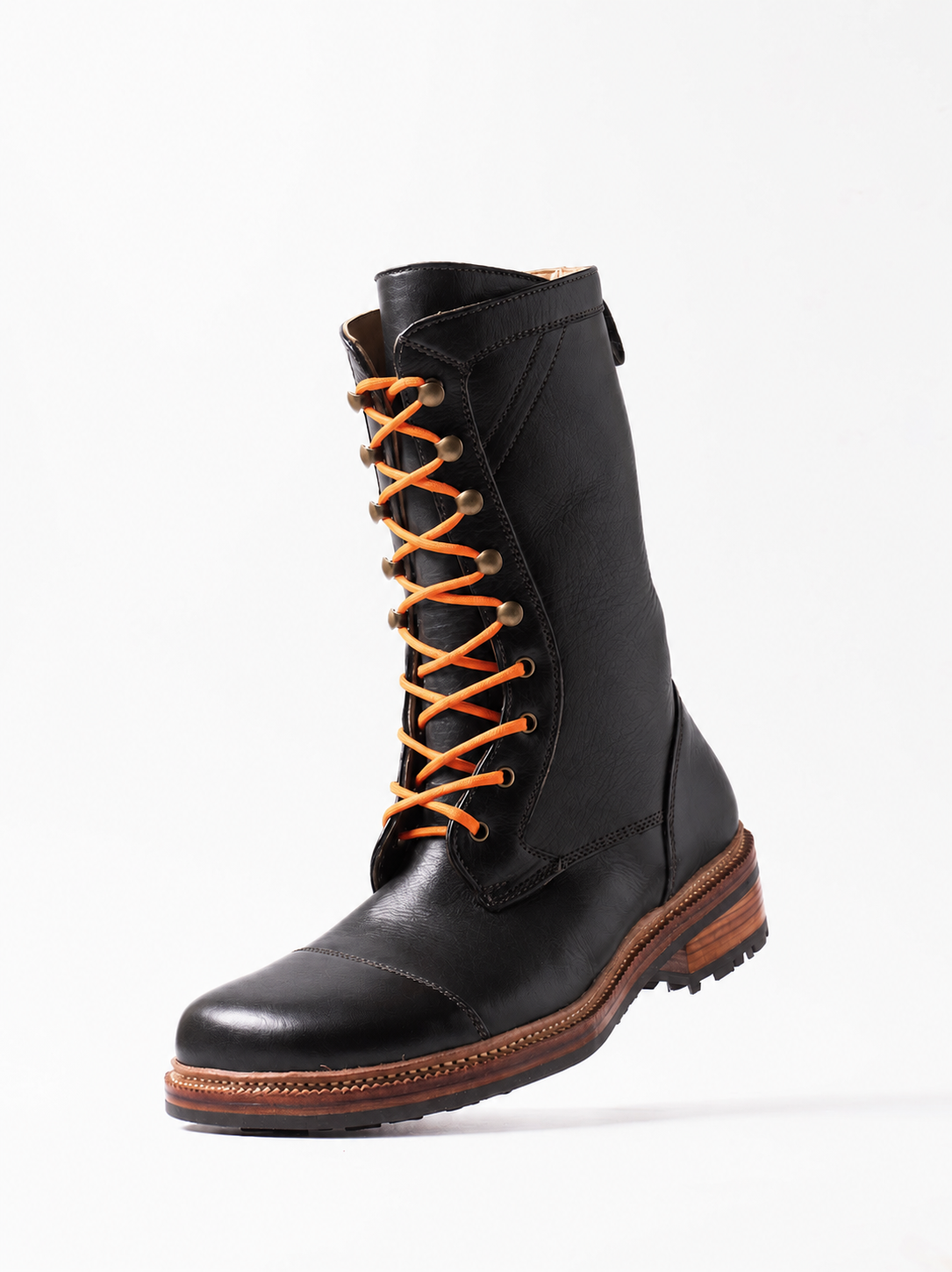
Do You Need Wider Boots, More Instep Room, or a Wider Toe Box?
Where a boot feels tight helps you identify what needs to change. Pressure across the ball of your foot may call for more width or girth. Pressure over the top may mean you need more instep room. Toes being pushed inward can point to a toe box that’s the wrong shape.
In my experience, too many boots are narrow in the places our feet need room. And sometimes, even the wider version still has the wrong shape. Before choosing another size, work out where your foot is being squeezed.
More width across the forefoot
If the boot compresses the sides of your foot around the ball, try a wider fit in the appropriate length. Pay attention to how the upper wraps around that area too. Your foot has depth as well as width, so the space around the ball matters alongside the width underfoot.
Check the rest of the fit afterward. Getting enough forefoot room shouldn’t leave your heel sliding around.
More room over the instep
The instep is the top of your foot between your toes and ankle. If the boot presses down here while the sides and toes feel comfortable, you may need more volume through this area.
Loosening the laces can help you assess the pressure, but lacing has limits. A wider fit may offer more instep room, or you may need a different last.
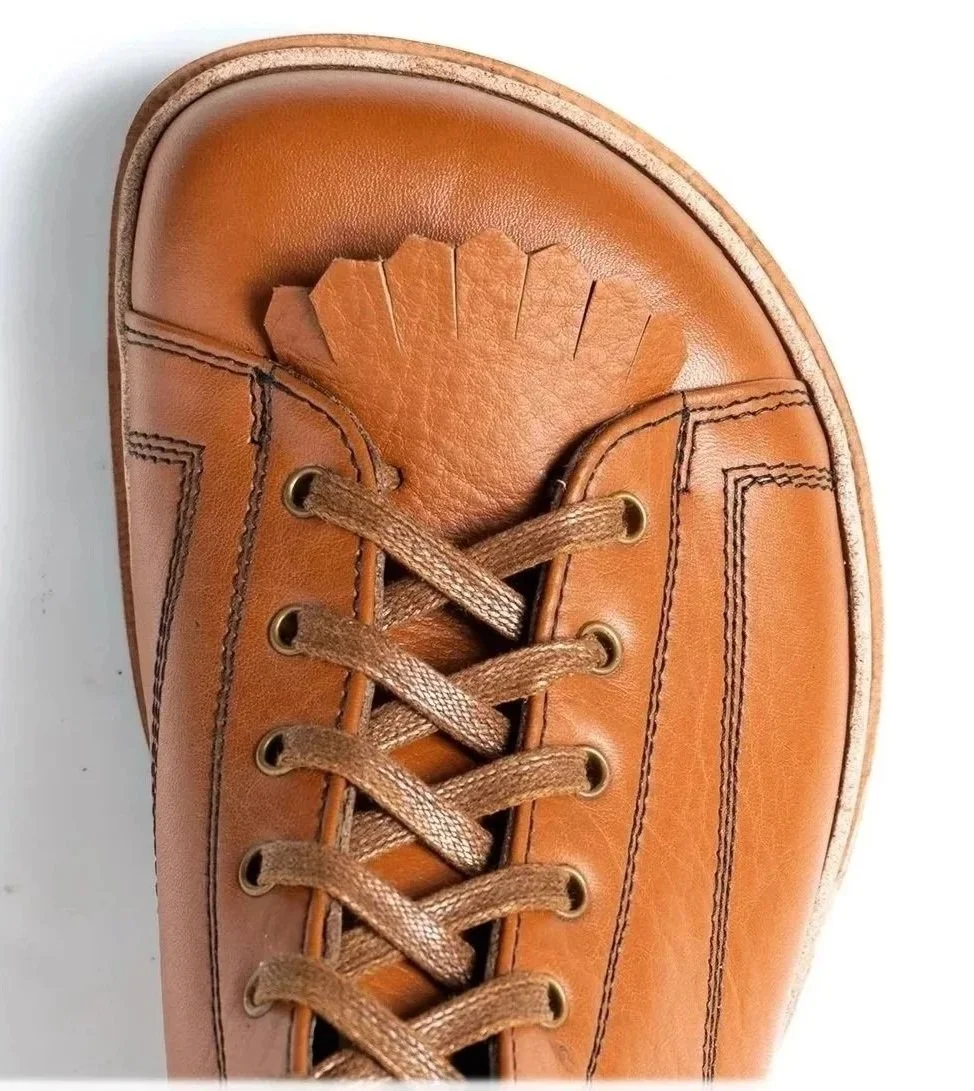
A toe box that follows your foot’s shape
If the ball of your foot fits comfortably but your big toe or little toe gets pushed inward, look at where the toe box starts to taper. More width across the ball won’t necessarily provide enough room farther forward.
An anatomical toe box is designed to accommodate the natural arrangement of your toes. The aim is room for them to sit and move without being forced together, while the heel and midfoot still hold securely.
Find the space your foot needs where it actually needs it. Making the whole boot bigger is a poor substitute for getting those proportions right. And make sure that your boot fits correctly when you buy it, never assume your boots need to be broken-in to get the right fit.
When Is Sizing Up in Boots the Right Choice?
Sizing up makes sense when a boot is too short for your foot or when a larger size positions the ball of your foot correctly. Those are the only two reasons to choose more length.
The first is straightforward. Your longest toe needs clearance from the front of the boot, including when you walk. If your toes hit the end because the boot is too short, you need more length.
The second is easier to miss. Your heel-to-ball measurement may call for a larger size than your heel-to-toe measurement suggests. You can have space ahead of your toes and still need a larger size to position the ball of your foot properly.
Sizing also varies between brands and lasts, so wearing a larger number than usual doesn’t automatically mean you’re buying excess length. Judge the fit of the actual boot.
But if your toes have adequate clearance and the ball of your foot sits correctly, extra length shouldn’t be your default answer to a tight fit. Look at the width, volume, and last shape before reaching for the next size.
How Do You Find Boots That Fit Wide Feet Without Extra Length?
Start with a boot that matches your foot’s shape, width, and volume at the correct length. Look for brands that offer wider fittings or lasts with enough forefoot and toe room, then check that the heel and midfoot still hold your foot securely.
Some brands offer more options for wide feet than others. At Naang Boots, we build around an anatomical last and work with customers to assess their sizing needs. But we certainly aren’t the only option. Our friends at Stridewise included Naang in their video highlighting the best boots for wide feet, which gives you several brands to consider.
Before ordering, talk to the maker. Share measurements of both feet and explain where your current boots feel tight or loose. “My little toe gets squeezed, but my heel slips” tells us much more than “I need a bigger boot.” Wear your usual boot socks when assessing the fit, and account for any insoles you plan to use.
For long-term comfort, your toes need room to sit and move naturally, and the rest of your foot needs a secure fit. Don’t settle for unnecessary length just because a brand doesn’t offer the width or shape you need.
If you’re considering Naang, start with our boot sizing guide and get in touch if you’re unsure. Let’s work out the fit before you order.
Frequently Asked Questions About Boot Width and Sizing Up
Should I size up in boots if I have wide feet?
If a boot already fits your foot in length, try a wider fit or a different last. A larger size may relieve pressure across your forefoot while adding unnecessary length and space elsewhere. The aim is enough room for your forefoot and toes with a secure heel and midfoot.
Does going up half a size make boots wider?
In most boot sizing systems, going up half a size increases width and volume alongside length. The amount varies by brand and last. A half-size increase is not a reliable substitute for a wider fit.
Is a size 10 wide the same as a size 10.5 regular?
No. A size 10 wide is intended to accommodate a broader foot at size 10’s length. A size 10.5 regular adds length as well as some width. The two may feel similar in one area but fit differently through the heel, instep, and forefoot. Exact dimensions depend on the maker.
How can I tell whether my boots are too narrow or too short?
Toes hitting the front of a boot can indicate insufficient length, although your foot sliding forward can also cause contact. Pressure along the sides of your forefoot or toes points toward a width or shape problem. Check both the position of your foot and how much toe room your boots provide.
How much space should I have in front of my toes?
You need enough clearance that your longest toe does not hit the front during normal walking. There is no single gap that proves every boot fits because toe shape and foot proportions vary. Check side-to-side room and toe-box height too. Our guide to toe room in boots explains these separate dimensions.
Can I need a larger boot even if there is already space in front of my toes?
Yes. Your heel-to-ball measurement may require a larger size than your heel-to-toe measurement suggests. Correct fit includes positioning the ball of your foot appropriately within the boot.
Are wide boots and boots with an anatomical toe box the same thing?
No. A wide fitting describes the additional space offered within a particular sizing system. An anatomical toe box describes a shape intended to accommodate the natural arrangement of your toes. A wide boot can still taper where your toes need room. Learn more about Naang’s anatomical toe box and our approach to anatomical boot design.
Why do my toes feel squeezed even in wide boots?
The toe box may taper too sharply, lack height, or provide its extra width farther back than your toes need it. A wide label does not guarantee that the boot’s proportions suit your foot. Our article on why boots can feel too narrow explains how the last influences that fit.
Do I need wider boots if they press on the top of my feet?
Pressure over the instep can indicate insufficient height or volume, even when the forefoot width is suitable. First check whether the laces are unnecessarily tight. If comfortable lacing still leaves pressure, try a fitting with more instep room. Going wider may help, but a different last may suit your proportions better.
What if I have wide feet and narrow heels?
Look for a last that accommodates a broad forefoot while holding your heel and midfoot securely. Increasing the size of the whole boot can create excess room at the back. Naang can discuss fitting options for this combination. Contact us about your fit and explain where your current boots feel tight or loose.
Does heel slip mean my boots are too big?
Not always. Some heel movement can occur while a new sole is stiff, but excess heel or instep room can also cause slipping. Check whether your midfoot feels secure and whether your foot slides inside the boot. Our guide to heel slip in boots explains how to assess the likely cause before changing sizes.
Will narrow leather boots stretch enough during break-in?
No. Leather can soften, conform, and give somewhat with wear, but you should not rely on break-in to correct a substantially narrow boot or an unsuitable toe-box shape. Start with adequate space for your foot. Read Boot Break-In: What Changes and What Doesn’t for the difference between materials softening and a sizing problem.
Should I size up in boots for thick socks or insoles?
Fit the boots while wearing the socks and any insoles you intend to use. Those additions occupy space, but they do not automatically mean you need more length. You may need more width, depth, or instep volume. Choose a larger size only if the complete setup fits properly, including toe clearance and heel-to-ball positioning.
Are lace-to-toe boots better for wide feet?
Lace-to-toe boots offer more control over how the upper holds your forefoot. That can help you reduce pressure in one area while maintaining a secure fit elsewhere. The boot still needs sufficient width and a suitable toe-box shape. Our lace-to-toe boot guide explains the benefits and limits of that adjustment.
What should I do if the boots I want only come in standard width?
Ask the maker about the last and whether another model offers more room where you need it. If the standard fitting squeezes your foot at the appropriate length, consider another boot. Buying a longer size solely because the correct width is unavailable can leave you managing a different set of fit problems.
How should I measure my feet before ordering boots online?
Measure both feet while standing, and record heel-to-toe length, heel-to-ball length, and width. Follow the maker’s instructions for any additional measurements, such as ball girth or instep circumference. Share your usual socks, insoles, and current fitting problems too. For Naang orders, start with our boot sizing guide.
Should I order a larger size in Naang Boots for extra width?
Naang’s sizing guidance is to order your true US Brannock size and contact us before ordering if your feet are exceptionally wide or your sizing is uncertain. Don’t automatically add half a size for width. We can discuss where you need additional room using your measurements and fitting history. See our Naang Boots sizing guide.
Can Naang make boots for exceptionally wide or hard-to-fit feet?
Yes. Naang offers fittings in EEEEEE, also written as 6E, and can discuss wider options when needed. We also offer bespoke fittings for customers who can visit us in Bangkok. Read about our wide-foot fitting options, then contact us to discuss your measurements and requirements before ordering.
What to Read Next



All Boots Are Made-To-Order. Current Lead Time: 60-90 Days.
The Winnfield is built to walk the earth. This limited edition pairs red goat leather with our anatomical toe box and lace-to-toe design, giving your toes room to spread and letting you adjust the fit across your forefoot.
Built with 360° hand-welted construction and a full leather lining, these 6-inch boots are available with a zero-drop sole or minimal heel.
Upper: Limited edition red goat leather
Construction: 360° hand-welted
Lacing: Lace-to-toe for adjustable forefoot fit
Shaft height: 6 inches
Fit: Anatomical toe box
Last Options: Zero drop or minimal heel
Lining: Full leather lining
Not sure about your size? Check our Sizing Guide. Or Contact Us.
Worldwide shipping available.