
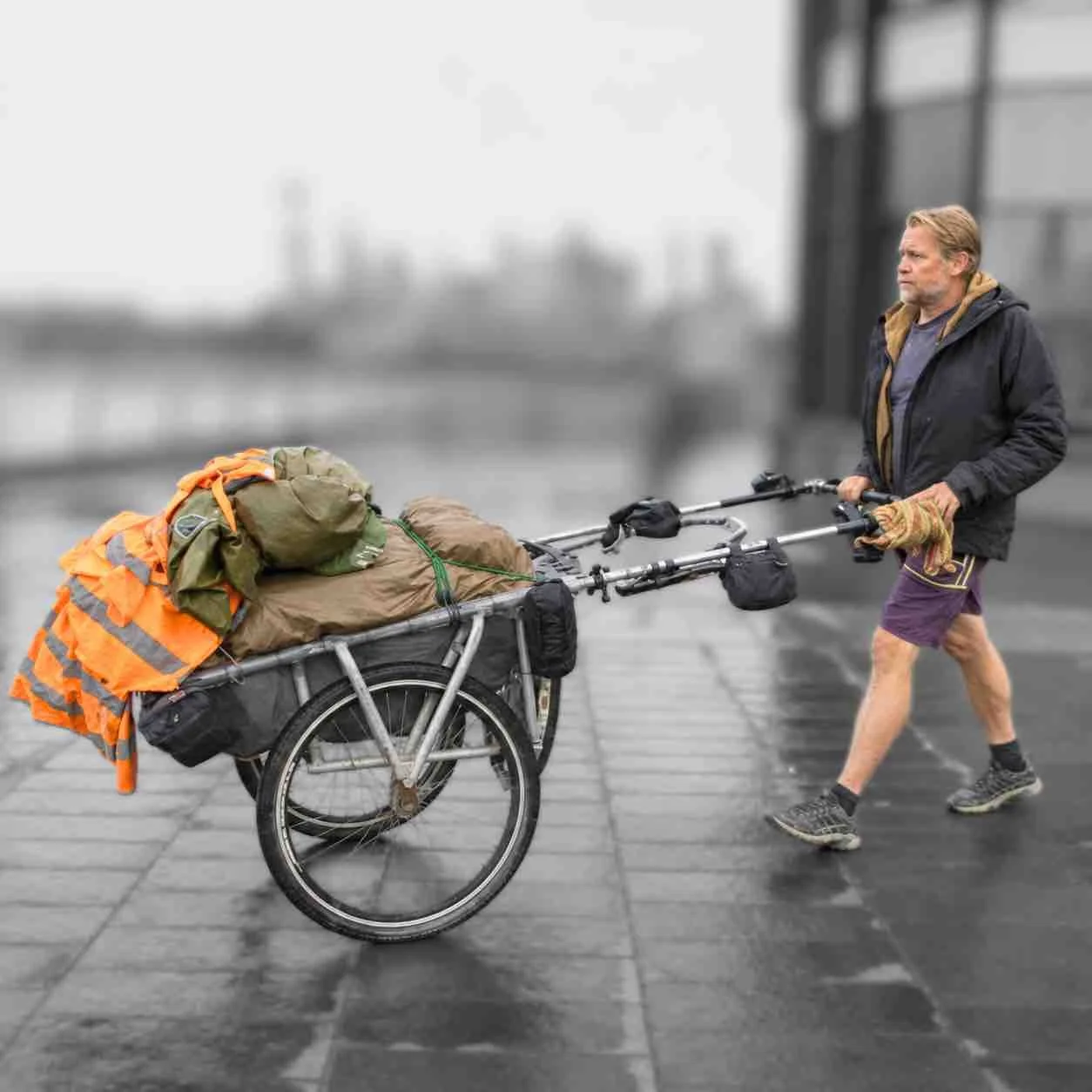
I’ve written about Karl Bushby a few times in our weekly newsletter, The Naang Journal, including when he had one last stretch of water to cross between him and home. After he finished his 28-year walk around the world, GearJunkie asked him about the kit he’d used along the way. I went straight to the boots.
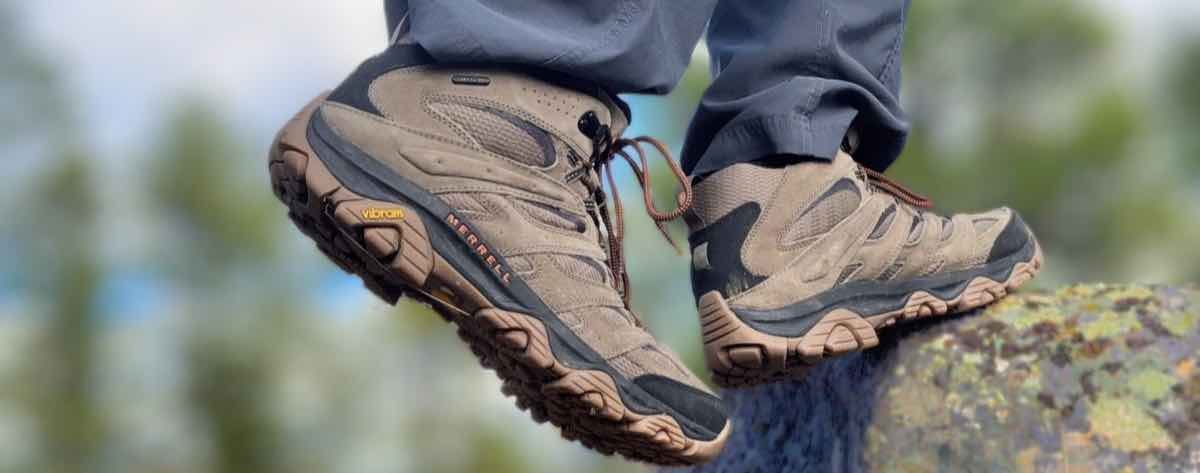
Bushby told GearJunkie he’d never been a gearhead, and I liked how little fuss he made about choosing his hiking boots. He came across the Merrell Moab in the U.S. It had what he called “a good wide fit,” and he could find another pair when he needed one. What caught my attention was the sizing. For long days on the road, he liked his boots two sizes big so his feet had room to expand.
I can see why he wanted the room. When someone tells me their boots feel tight, the first question I ask as a bootmaker is, “Where do you feel it?” If your little toe presses against the side of your boot and you’ve already got space in front of your longest toe, what would another half inch of length do for you?
That’s what I’d have liked to ask Bushby before handing him a pair of Winnfields to try. At Naang, we shape the toe box to give your forefoot room while keeping the fit snug through the heel. I’d be willing to bet that shape would have given him the room he wanted in a boot closer to his usual size.
What Hiking Boots Did Karl Bushby Wear on His Walk Around the World?
Karl Bushby went through about ten pairs of Zamberlan hiking boots in South America, switched to Merrell Moabs in the United States, and chose insulated Bunny Boots for the Arctic. As a former British Army paratrooper he was undoubtedly used to making the kit he had work, and picked up much of his early kit wherever he could find it cheap. The Zamberlans came through a sponsorship later on. He liked the boots, but they were heavy for the desert stretches. He ended up pulling out the Gore-Tex lining and cutting holes in the boots to lighten them up and cool them down.
The Merrell Moab makes sense for a practical reason. Once Bushby found a boot that fit him comfortably, he could walk into another shop and find the same model when his pair wore out. Merrell eventually came on as a sponsor, too. By the time he reached Alaska, he needed a boot built for extreme cold. That’s where the Bunny Boots came in.
There’s another way I’d approach the replacement problem. We hand-welt every boot at Naang so a cobbler can replace the worn sole and you can keep walking in the leather upper you’ve already broken in. Bushby’s approach had an advantage on the road, though. All he had to find was a shop that stocked his size. But he was breaking in a new pair every time.
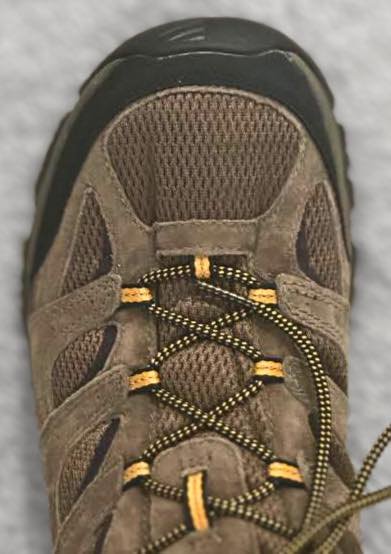
I’ve owned several pairs of Merrells over the years (a long time ago). They’re good hikers; they aren’t the worst toe box out there, but they still taper toward the front. That’s the detail I’d want to look at alongside Bushby’s preference for going two sizes up. An anatomical toe box leaves more room alongside your toes at the same boot length. Bushby said he wanted room for his feet to expand on long road walks. What I’d have liked to ask him is where he felt the difference when he tried on the bigger pair.
Why Did Karl Bushby Go Two Sizes Up for Long Road Walks?
Karl Bushby told GearJunkie he went two sizes up to give his feet room to expand on long walks, especially on roads. I can understand wanting some extra room. Your feet can swell over the course of a day, and a pair of hiking boots that feels comfortable when you lace up in the morning can start to feel tight by late afternoon.
My hunch is that some of what Bushby gained by sizing up was room beside his toes. In a boot with a tapered toe box, the sides narrow as they approach the tip. Sizing up to get more width and your toes can sit farther back in a wider part of that taper. That could help explain why the larger Merrells felt right to him. Bushby didn’t say the Moabs pinched his toes, though. That’s my read as a bootmaker. That is the typical difference between a wide and an anatomical toe box
Two full sizes up from what fits is a bigger jump than I’d recommend for ordinary swelling, even with thick socks. I’d try the boots late in the day, wearing the socks you hike in. If you already have clearance in front of your longest toe but feel pressure along the outside of your big and little toe, try a boot with a wider, more anatomical toe box at the same length. You can then feel for yourself how much of a difference the shape makes.
Shop Naang Boots
Where Do You Need Room in a Hiking Boot?
A properly fitted hiking boot should hold your heel and midfoot securely, fit close around the ball of the foot, and give your toes room to spread when you put weight on them. A short downhill walk is a good way to check that fit. Your heel should stay seated, and your toes should not touch the front of the boot. If you have to pull the laces tight enough to squeeze your forefoot just to keep your foot from sliding forward, I’d try a different fit.
Across the ball of your foot, the upper should feel like a gentle hug. Pay attention to what happens just ahead of that point. A boot can feel plenty wide at the ball and still taper sharply enough to push your big and little toe inward. That’s where I like an anatomical toe box for hiking. It follows the outline of your toes and gives them room to splay as you steady yourself on uneven ground and push off for the next step.
How much room your toes need also matters if you hike in toe socks. Each toe gets its own sleeve, so there’s fabric between toes that would otherwise rub together. A moisture-wicking fabric can draw sweat away from the skin there, keeping the space between your toes dry. Toe socks can also prevent blisters from forming between your toes since they prevent skin-on-skin rubbing.
If you are wearing a boot with a traditional tapered toe box, that extra fabric can cause more pressure. But in a boot with an anatomical toe box thats’s not an issue, as your toes have room to splay. So ask yourself if you should wear toe socks.
Why Did We Build the Winnfield This Way for Hiking and Rucking?
We built the Winnfield around the fit. We spent three years developing the anatomical last that gives our boots that shape. It hugs the heel and midfoot, opens up across the ball of the foot, and follows the outline of your toes so you can walk with a natural stride.
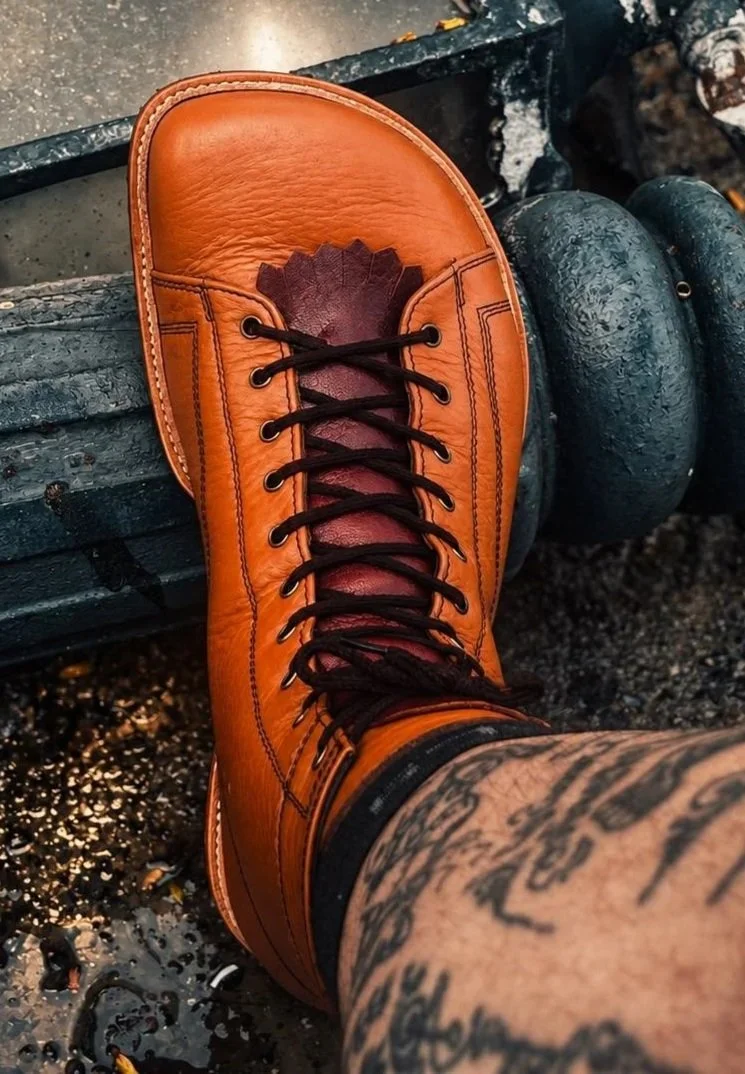
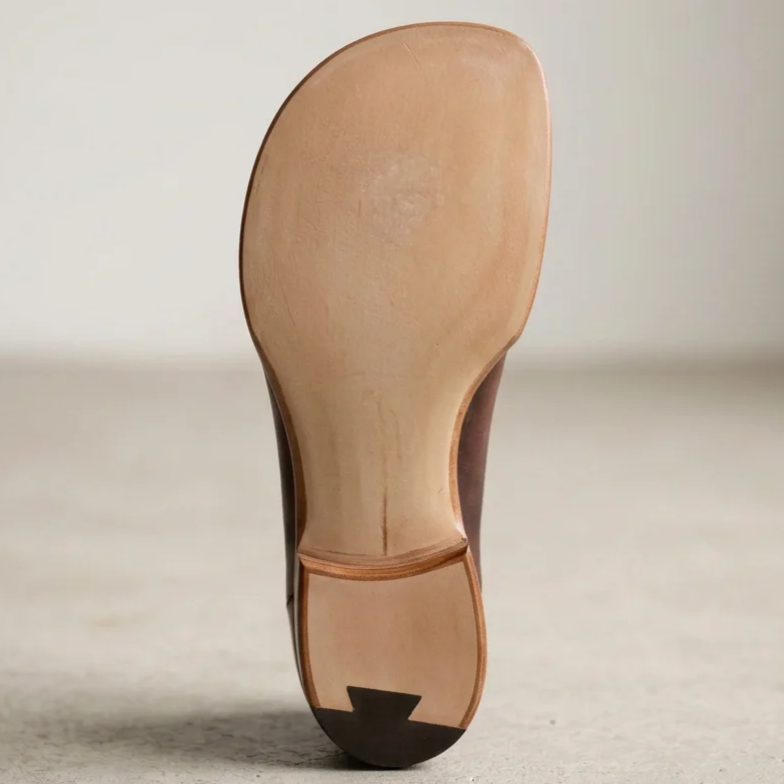
Craftsmanship and repairability mattered to us, too. Our bootmakers hand-welt every pair of Winnfields so a cobbler can resole and rebuild your boots when you wear through the tread. You get fresh rubber underfoot and keep the leather uppers you’ve spent all those miles breaking in. Years down the road, if the uppers need stitching or a patch, those are repairs a cobbler can make as long as the surrounding leather is sound. That’s what sustainability means to us at Naang.
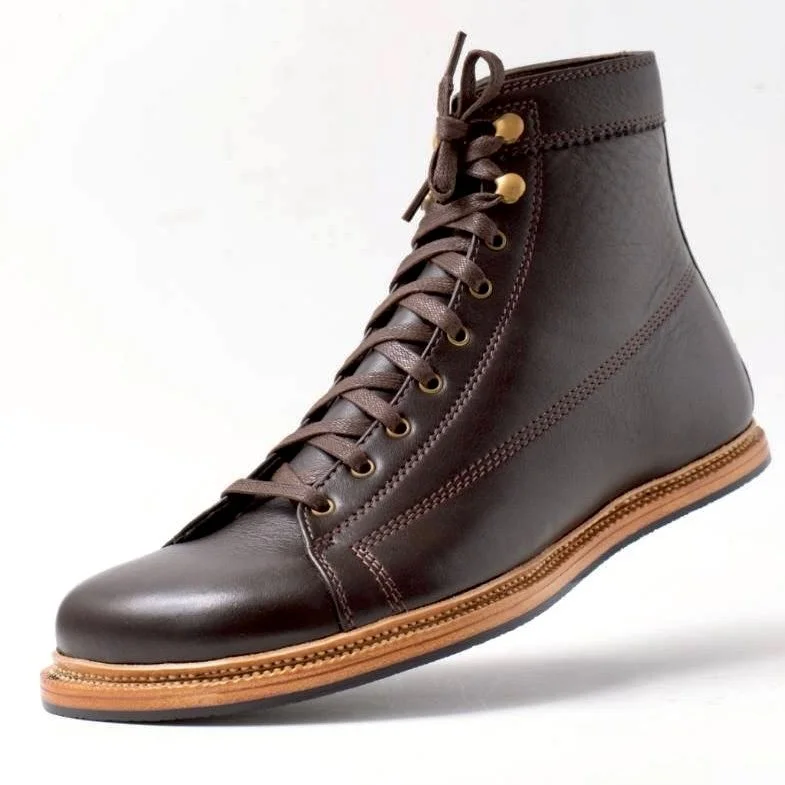
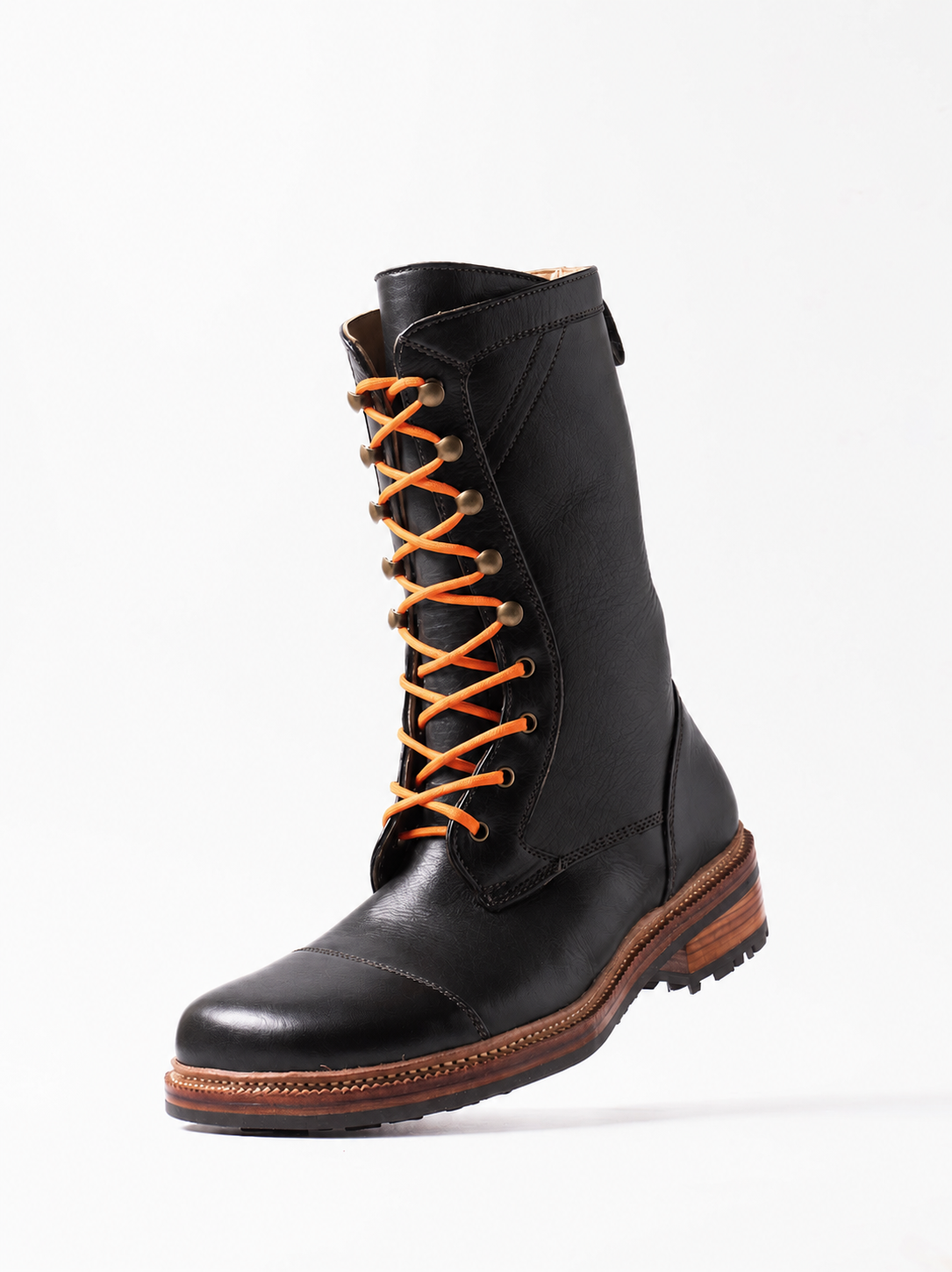
For the Winnfield specifically, I chose a lace-to-toe design because it lets you adjust the fit farther down your foot. Say you’re a few hours into a hike and your feet have started to swell. You can ease the lower laces over the ball of your foot, then wrap the laces around each other twice at the instep to form a surgeon’s knot. That extra turn helps hold the lower tension in place while you snug up the laces above it to keep your heel seated.
That’s the part of Karl Bushby’s story I keep coming back to. He wanted more room for his feet on long road walks. With the Winnfield, we built that room into the toe box of the boot and put the laces where you can reach down and use them. Sometimes the adjustment you want after a few hours on your feet is just a little slack over the ball of your foot or over your midfoot.
Read This Next

All Boots Are Made-To-Order. Current Lead Time: 60-90 Days.
The Winnfield is built to walk the earth. This limited edition pairs red goat leather with our anatomical toe box and lace-to-toe design, giving your toes room to spread and letting you adjust the fit across your forefoot.
Built with 360° hand-welted construction and a full leather lining, these 6-inch boots are available with a zero-drop sole or minimal heel.
Upper: Limited edition red goat leather
Construction: 360° hand-welted
Lacing: Lace-to-toe for adjustable forefoot fit
Shaft height: 6 inches
Fit: Anatomical toe box
Last Options: Zero drop or minimal heel
Lining: Full leather lining
Not sure about your size? Check our Sizing Guide. Or Contact Us.
Worldwide shipping available.