What’s the Best Leather for Boots?
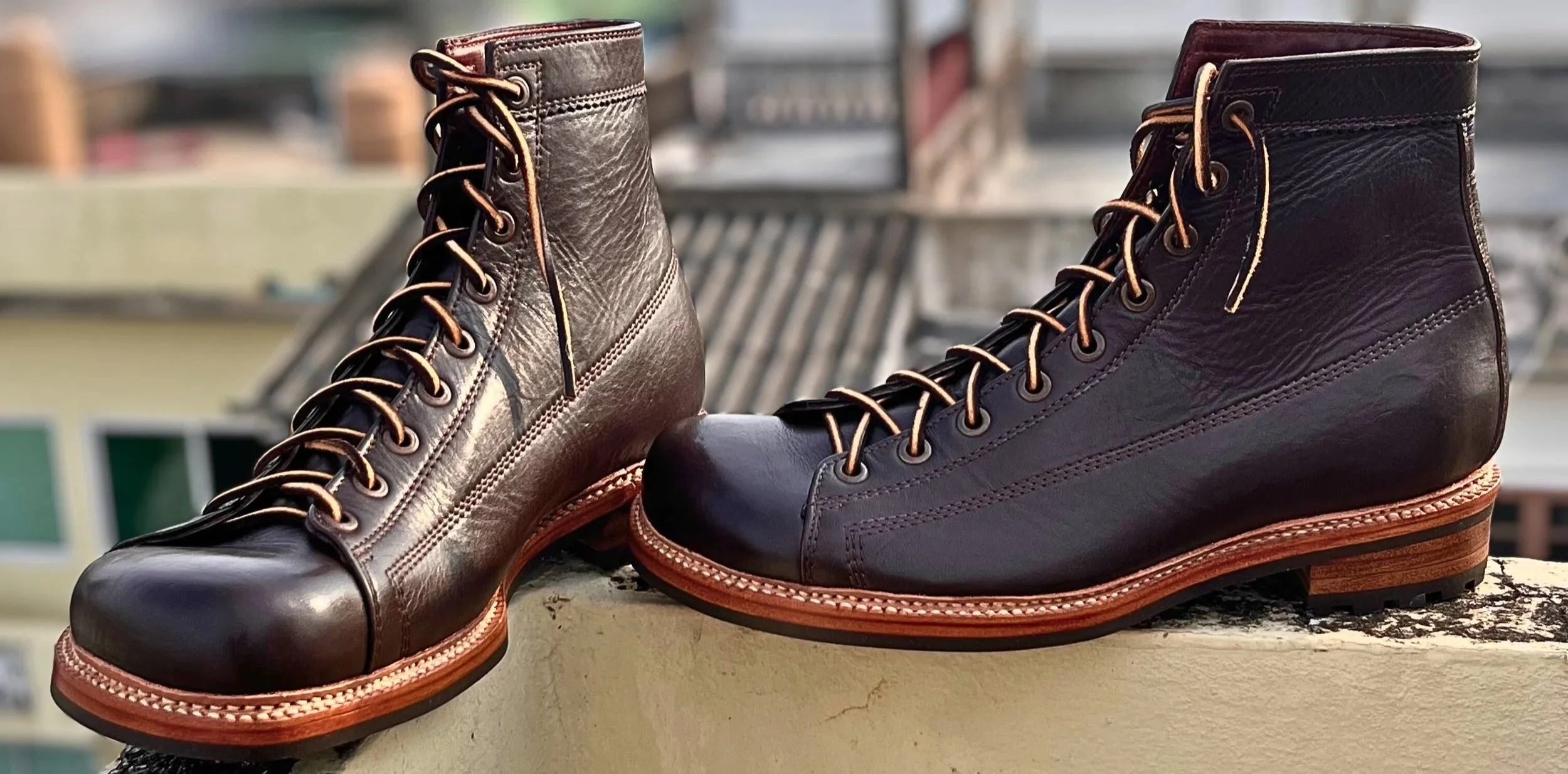
The Naang Winnfields are hand made from 100% leather construction
There is no single best leather for boots. Different parts of a boot are best served by different types of leather.
Many discussions about leather focus on finding the one best leather, as if a boot were made from a single material. In reality, a well-made boot is a collection of components, each with its own job to do.
The leather that makes the best boot upper is not necessarily the leather that makes the best insole. The leather that works best for a heel counter may not be the best choice for a lining. Each component has different requirements, which means each component benefits from different characteristics.
That’s why many premium boots use multiple types of leather within the same boot. A bootmaker may choose one leather for flexibility and weather resistance, another for structure and support, and another for comfort.
In this article, we’re going to break down the major components of a boot and discuss the types of leather that work best for each one.
Along the way, you’ll see why experienced bootmakers tend to look at the question differently.
They aren’t searching for the single best leather.
They’re trying to find the absolute best material for each part of the boot.
-
What's going on, everyone? Dana here for NANG Boots, and I want to talk a little bit about leather and the different types of leathers that get used in boots—because it's not just one type of leather that we put in boots.
You know, the uppers are made for something completely different than the midsole, or the insole, the welt, the toe puff, the heel counter, the liner—all that is different. So, I want to talk about that just a little bit.
Upper Leather
I'll start by talking about the uppers and what we use. This is our upper leather. You can see it's quite thick. I'll use one of the lighter ones here.
Our upper leather is about $3\text{ to }3.5\text{ mm}$. This one's kind of beat up—it's been in my bag for a bit—but this is very, very thick. It's a little bit heavier.
In a lot of boots, you're going to see a chrome-tanned leather. The other really popular leather you'll see for uppers is a dual-tanned or dual-process leather, where it's chrome-tanned and then finished in a veg-tan vat, which is what our leather is as well.
So, our upper leather is dual-stage: it's fully tanned in a chrome-tan vat, and then finished in a veg-tan vat to give it some of that quality you would get from a veg-tan, but not 100%.
Occasionally, you will see leather that is fully veg-tanned used for uppers. We don't do that, though some brands do. It makes an amazing patina leather—especially if you want like a monster patina, veg-tan is the way to go for sure. But it's very stiff, very hard to break in, and you don't get a lot of the qualities that make a chrome-tan or a dual-process leather really nice.
Here are some others that are dark brown—you can see how thick it is. We use really thick leather because ruggedness and durability are super important to us at NANG Boots. But that doesn't mean it's the only thing that's good.
The trade-off (and like anything, there are trade-offs) is that you end up with a boot leather or a boot that's much heavier when you use a very thick, substantial $3\text{ to }3.5\text{ mm}$ thick leather like this. When you use a thick leather like this, yeah, the boot is much heavier, but it's more durable. That ruggedness you get from that heavier leather is the trade-off you're making in exchange for weight.
With a little bit thinner leather, the boot gets lighter, right? You can shape it better, it gets lighter—it just depends on what quality you want in the boots. One's not better than the other.
Honestly, the tanning and processing of the leather—and the type of leather, the density of the grain—does a lot to add to that ruggedness or that suppleness.
Insoles and Midsoles
Next up, we'll talk about our midsoles and our insoles. Because we do a hand-welted boot at NANG, we use really thick veg-tan leather. You can see how stiff this is.
This is what makes up our insoles, where we carve the holdfast into it and hand-welt it. Our midsoles are made from this same leather, so you get that really stiff, really rugged construction that our boots are known for.
Now, you could go thinner on this—it makes it more flexible. Some companies, especially in the zero-drop space, use a rubber or a composite midsole because it adds more ground feel, more flexibility, and less break-in time. You do have to break this in, but I think you end up with a much tougher, more rugged, stronger boot. This is heavier than a composite would be; this is quite substantial leather, this really thick veg-tan that we use in the midsoles.
Toe Puff, Heel Counter, and Inner Structure
In our toe puff and heel counter, we might use something similar to this veg-tan, which is still a little thick, but it's got some flexibility to it. This helps us give structure to the toe and to the heel with our fully veg-tan heel counter and toe puff.
Some more commercial boots might use a composite heel, or some type of fiberboard or canvas with some glue. We like to use full leather. We think it adds to the heritage style and construction of the boot (which is what we do at NANG), but also it's just a better way to make it, in our opinion.
Then we use some of this really thin veg-tan leather. This is super thin, super flexible. Anywhere within the inner structure of the boot that we think needs a little bit more body or structure, we might use some of this. This specific piece is so thin and flexible that it wouldn't cut it for a toe puff or heel counter, but something similar—a little bit thicker—would be perfectly fine.
Our welts are also made from very stiff veg-tan that we mold around and split, allowing us to do that fully hand-welted construction: a $360^\circ$ hand welt with a storm welt. We make our welts from really thick, stiff veg-tan leather.
Liners and Heel Cups
That's really all the leather that goes into a boot. Oh—our liner as well!
If you have a fully lined boot (all boots from NANG are fully lined), we use a very thin, supple chrome-tanned leather as our liner. In our heel cup, we'll turn it out and use the roughout side of that leather so that you get a little bit more friction in the heel. It holds it steady so you're not getting as much rubbing as you're breaking the boot in and wearing it in. Then, that roughout will smooth over time, ending up with a softer, more supple heel.
Wrap-Up & Crafting Philosophy
So yeah, those are the different types of leather! I just wanted to go into that because we get a lot of questions about leather and the different types used.
We are all-leather construction. The different types, styles, and tanning processes really add to the boot, making it a very unique product. It allows you to enjoy it more when you understand that all these different types of leather have different roles and qualities.
Again, everything that we do is a trade-off. It doesn't mean that it's the best or that it's perfect—it's just how we choose to do it. Just because someone else decides to do it a different way doesn't mean it's better or worse. We do hand-welted, but there are a lot of companies that make amazingly rugged boots using stitchdown, and I think that's fantastic. There are companies that do dress boots using Blake stitch or Goodyear welt, and that's just a different approach with its own trade-offs.
To recap:
Uppers: Chrome-tanned or dual-process leather.
Liners: Thin chrome-tanned leather (with roughout at the heel cup).
Everything else (Insoles, Midsoles, Welts, Heel Counter, Toe Puff): Veg-tan leather.
That's about it! Let me know down in the comments if you guys have any questions about the different leathers that we use and the different types of construction.
See you in the next one!ription text goes here
Table of Contents
The Best Leather for Boots? It’s Not That Simple
The best leather for boots depends entirely on which part of the boot you’re talking about.
If we’re discussing the upper, one answer might make sense. If we’re discussing the insole, heel counter, welt, or shank, the answer may be completely different.
This is where many discussions about leather go off track. People often compare different leathers as if a boot were made from a single piece of material. In reality, every component of a boot has different demands placed upon it.
A boot upper needs to flex thousands of times, resist the elements, and remain comfortable throughout years of wear. An insole needs to provide support and gradually mold to the shape of the foot. A heel counter needs to maintain its shape while supporting the heel. A welt needs to hold stitching securely through years of use and multiple resoles.
Those are very different jobs.
As a result, the characteristics that make a leather ideal for one component may make it a poor choice for another.
This is one reason premium bootmakers use multiple types of leather within a single boot. They’re not trying to find the best leather overall. They’re trying to find the best leather for each specific purpose.
Before we look at the individual components, it’s important to understand one simple principle:
The best leather for a boot is rarely a single leather. It’s usually a combination of materials, each selected because it excels at a particular job.
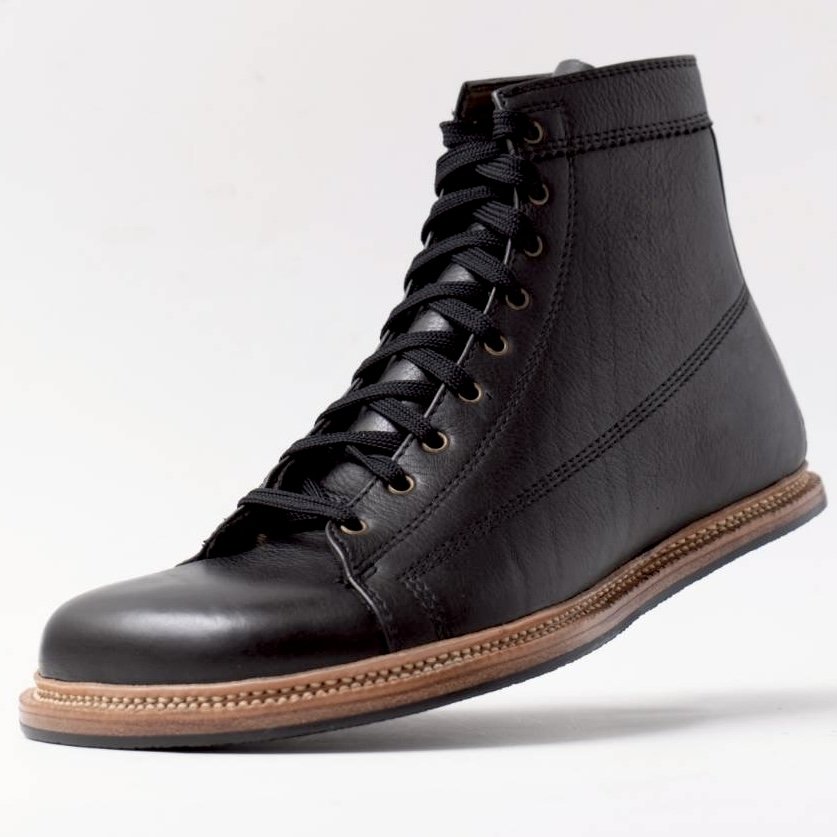
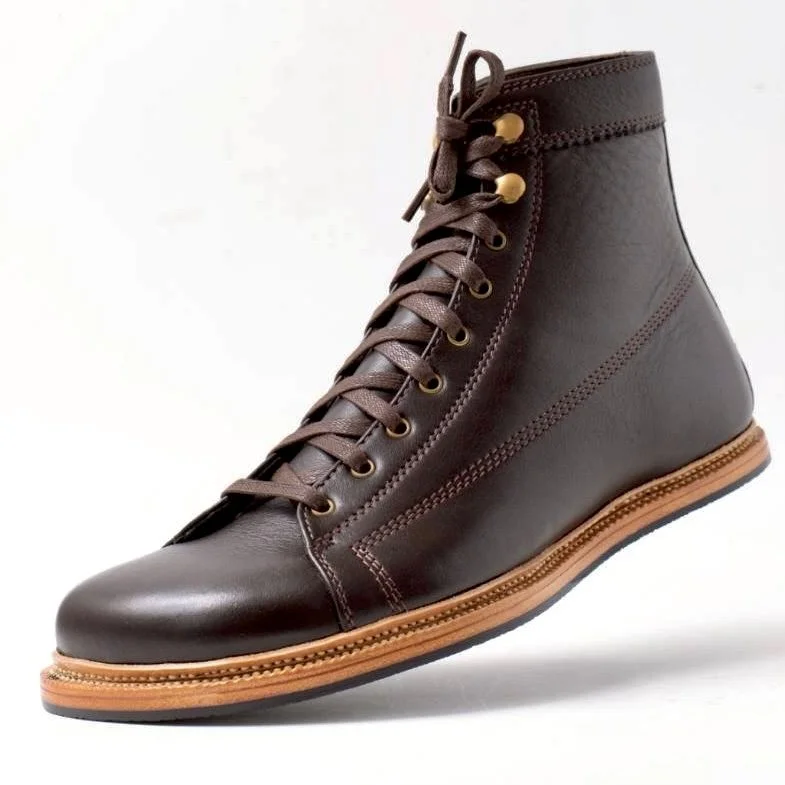
Shop Now
~
Shop Now ~
A Boot Is Not One Piece of Leather
Before we start discussing which leather works best for different parts of a boot, it’s important to understand just how many components make up a quality pair of boots.
When most people look at a boot, they see the upper. That’s the leather everyone notices, and as a result, it’s the leather that gets most of the attention.
But the upper is only one part of the story.
Inside a traditionally constructed boot you’ll often find a lining, insole, midsole, welt, heel counter, toe puff, shank, and heel stack. Each of these components performs a specific job, and each places different demands on the materials used to make it.
Some parts of a boot need to be flexible. Some need to be rigid. Some need to hold their shape for decades. Some need to mold to the foot over time. Some need to resist moisture. Others need to hold stitching securely through multiple resoles.
When you start looking at boots through that lens, it becomes clear why there is no single best leather for every component.
The qualities that make a leather ideal for a boot upper may make it a poor choice for a heel counter. Likewise, the characteristics that make a leather perfect for an insole may make it unsuitable for a lining.
This is how experienced bootmakers approach material selection. Rather than searching for one leather that does everything, they select materials based on the specific demands of each component.
Now let’s break down those components one by one and look at the types of leather that work best for each.
The Best Leather for Each Part of a Boot
Before we dive into the individual components, it’s worth noting that much of this discussion comes back to the characteristics of chrome tanned and vegetable tanned leather.
If you’re not already familiar with the differences between the two, I recommend reading our article on Chrome Tan Leather vs Veg Tan Leather: What’s the Difference? before continuing.
With that foundation in place, let’s take a look at the major components of a boot and the types of leather that are best suited for each one.
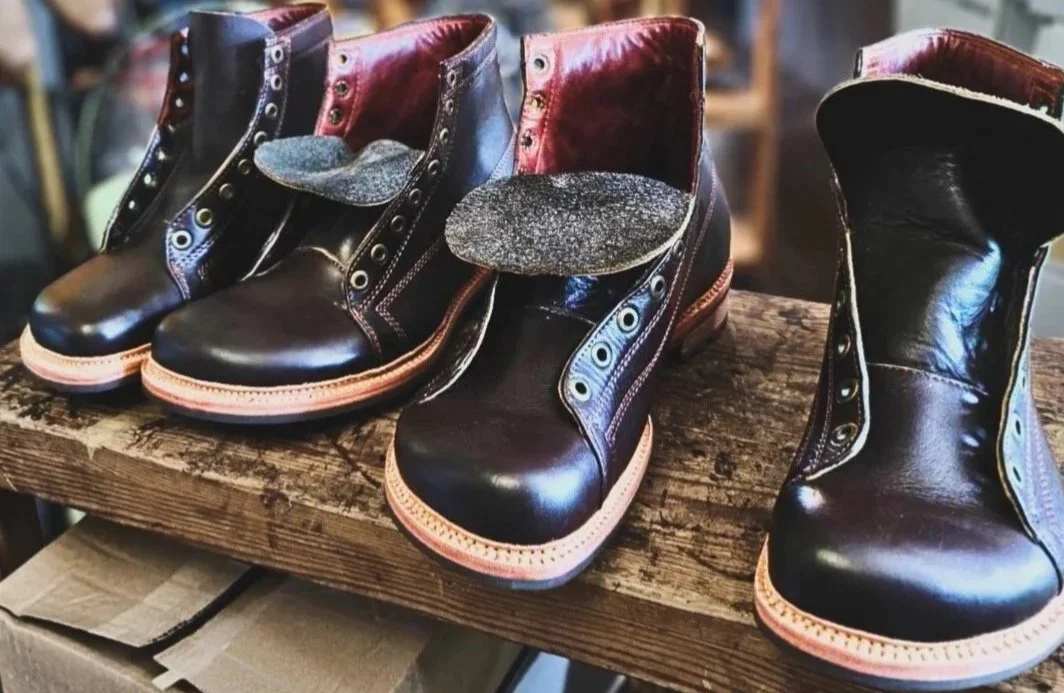
Naang Boots Ready for the Next Steps in the Boot Making Process
Upper
For most boots, I believe the best leather for the upper is a high-quality combination-tanned leather.
The upper is one of the hardest-working parts of a boot. It needs to flex thousands of times, withstand exposure to the elements, resist abrasion, and remain comfortable enough to wear day after day. Because of those demands, flexibility and durability are often more important than rigidity.
At Naang Boots, we use a combination-tanned leather for our uppers. The leather is chrome tanned first and then finished with a vegetable tanning process. For us, this provides the best balance of characteristics from both tanning methods.
Many premium bootmakers take a similar approach. Combination tanning allows them to capture much of the flexibility, comfort, and weather resistance associated with chrome tanning while introducing some of the character and aging qualities associated with vegetable tanning.
If I could only choose one type of leather for a boot upper, combination-tanned leather would be my choice. It strikes a balance that is difficult for either chrome tanning or vegetable tanning to achieve on their own.
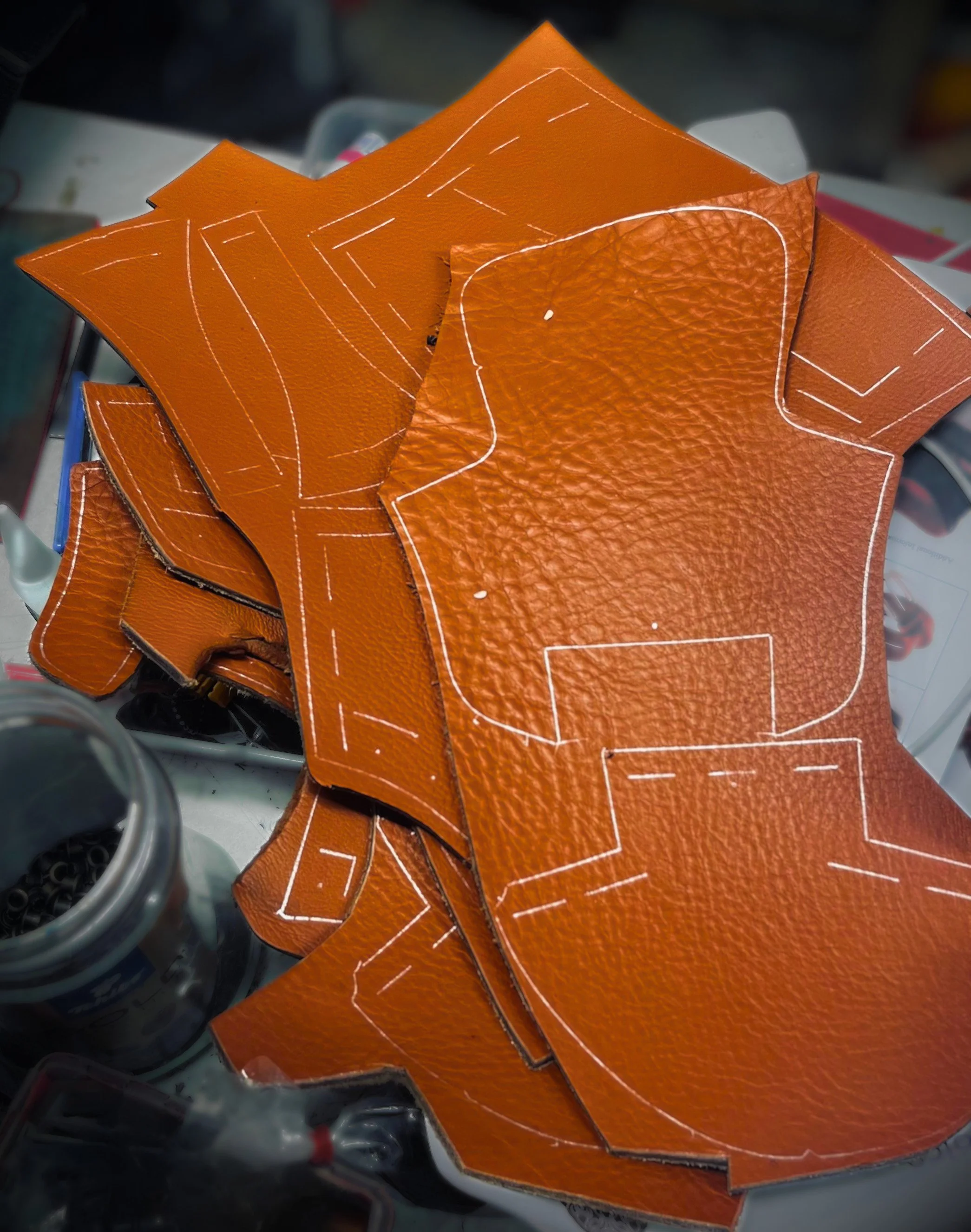
That said, a high-quality chrome tanned leather is still an excellent choice for a boot upper. It is flexible, durable, comfortable, and generally easier to live with during the break-in period. If you’re building a boot that is meant to be worn hard and worn often, chrome tanned leather is difficult to beat.
Vegetable tanned leather can also be used successfully for uppers, but this is one area where it would not be my first choice for most boots.
The additional stiffness, reduced flexibility, and longer break-in period can make it less forgiving, particularly in heavier footwear. Remember, the upper is constantly moving. Every step requires the leather to flex, bend, and recover. Chrome tanned and combination-tanned leathers generally handle this repeated movement better while remaining comfortable throughout the life of the boot.
The exception is when your primary goal is a boot that people will describe as a patina beast.
If you want a leather that develops dramatic color changes and a highly distinctive character over time, vegetable tanned leather can be an outstanding choice. Few materials tell the story of their use quite as visibly as a good veg tan upper.
For most boots, however, I’d choose a quality combination-tanned leather first, a quality chrome tanned leather second, and reserve vegetable tanned uppers for situations where maximizing patina is the primary objective.
Lining
When it comes to boot linings, I believe a quality chrome tanned leather is the best choice.
The job of a lining is very different from the job of the upper. A lining sits directly against your foot and socks, so comfort becomes one of the most important considerations. It also needs to flex constantly, manage moisture, and hold up to years of abrasion from the inside of the boot.
For these reasons, softness, suppleness, and flexibility are all desirable characteristics in a lining leather.
At Naang Boots, we use a light weight chrome tanned leather for our linings. It provides excellent comfort while remaining durable enough to withstand years of hard use. Despite being substantial and durable, it remains soft and flexible, allowing it to move naturally with the foot.
A quality chrome tanned lining also helps improve the overall comfort of the boot during break-in. Because it is softer and more forgiving than vegetable tanned leather, it creates a more comfortable environment inside the boot from the very first wear.
When it comes to linings, a soft, durable, flexible chrome tanned leather is hard to beat.
Insole
When it comes to insoles, there is no debate in my mind. The best material is a thick vegetable tanned leather.
The insole is the foundation of the boot. Every other component is ultimately built on top of it, and throughout the life of the boot it must support your weight, maintain its structure, and gradually conform to the shape of your foot.
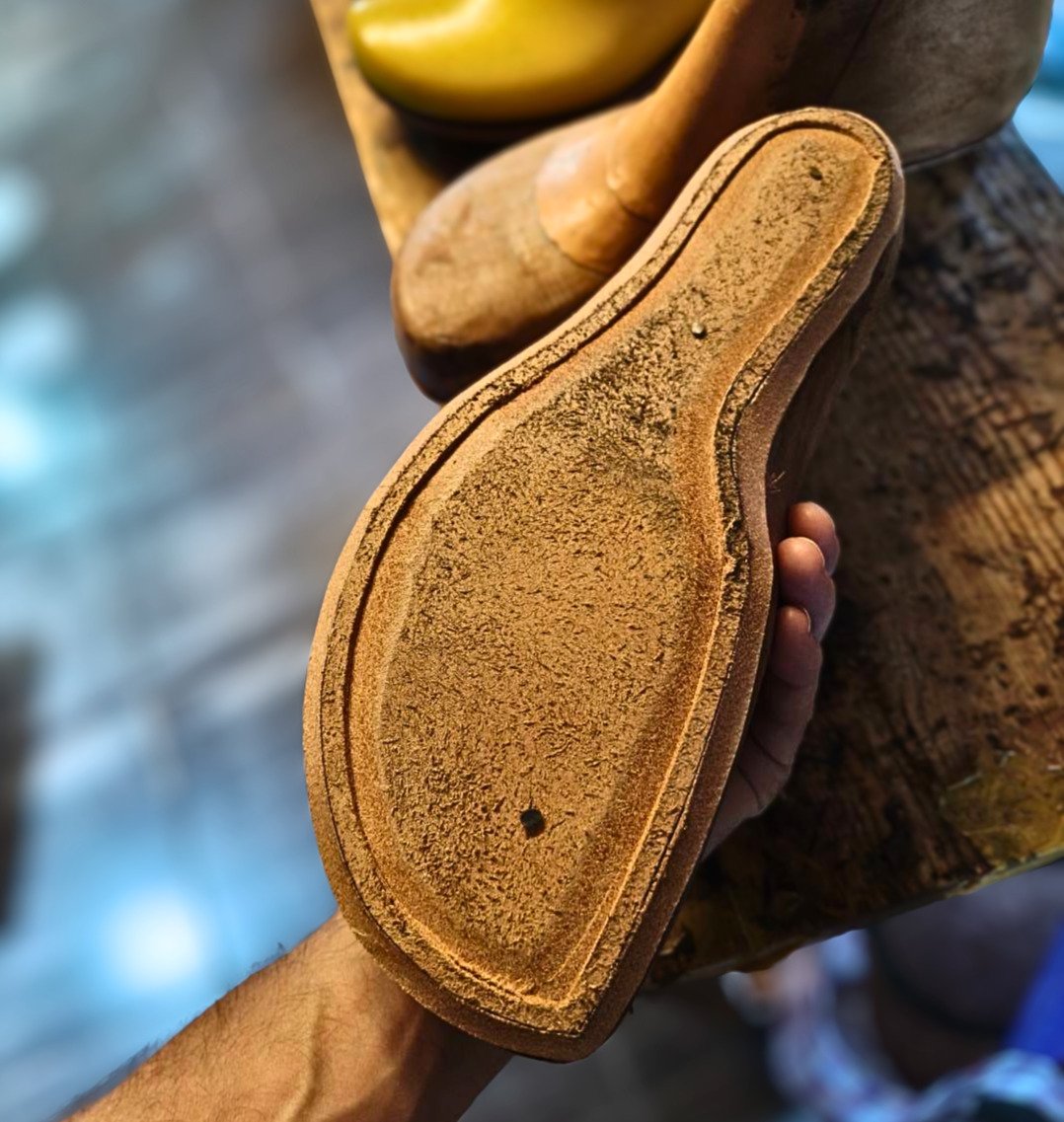
A Thick Veg Tanned Insole is Required to Carve the Holdfast for a Hand Welted Boot.
This is exactly the kind of job that vegetable tanned leather excels at.
A quality vegetable tanned leather insole is dense, stiff, durable, and capable of holding its shape under years of use. At the same time, it slowly molds to the wearer’s foot, creating the personalized fit that many people associate with high-quality boots.
At Naang Boots, we hand welt all of our boots. That construction method requires a thick vegetable tanned leather insole because we carve a holdfast directly into the leather. The holdfast is the lip of leather that the welt is stitched to during the hand welting process, and it is one of the defining features of traditional hand-welted construction.
Without a thick, high-quality vegetable tanned leather insole, that simply isn’t possible.
This is one of the reasons hand-welted boots have traditionally relied on vegetable tanned insoles for generations. The material provides the structure, density, and durability needed to support both the construction method and the long-term performance of the boot.
Vegetable tanned leather is unquestionably the right tool for the job.
Midsole
Just like the insole, the best material for a midsole is thick vegetable tanned leather.
The midsole sits between the insole and outsole and plays a critical role in the structure and durability of the boot. It helps distribute forces across the bottom of the boot, provides additional support, and serves as another layer that can absorb years of wear and abuse.
This is not a component that benefits from softness or flexibility.
Instead, the midsole needs to be strong, dense, and resistant to compression. It needs to maintain its structure under load while helping support the rest of the boot. These are exactly the qualities that make vegetable tanned leather such an excellent material for the job.
A quality vegetable tanned leather midsole adds substance and durability to a boot. It helps create the solid underfoot feel that many people associate with well-built heritage and work boots, and it contributes to the long-term longevity of the boot as a whole.
At Naang Boots, we use thick vegetable tanned leather midsoles because they provide the strength and structural integrity we want in a rebuildable boot. Like the insole, the midsole is expected to perform for years and often through multiple resoles.
Could a midsole be made from softer materials? Of course.
But if the goal is to build a boot that is durable, supportive, and capable of lasting for decades, a thick vegetable tanned leather midsole remains the best choices available.
Shank
When it comes to shanks, I prefer vegetable tanned leather.
The shank has a unique job inside a boot. It needs to provide support and stability through the arch while still allowing the boot to flex and move naturally as you walk. Get it wrong and the boot can feel either unsupported or unnecessarily rigid.
This means a good shank is always a balancing act.
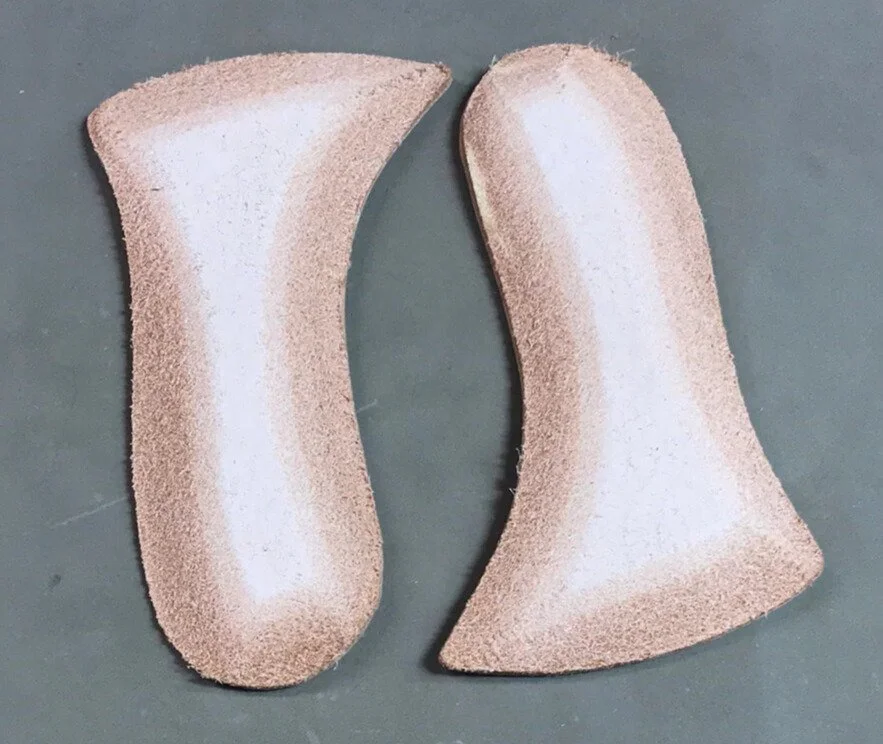
At Naang Boots, we use vegetable tanned leather shanks because they provide the strength and support we want while still allowing us to fine-tune how the boot flexes. Vegetable tanned leather is dense, durable, and capable of maintaining its structure over years of use, making it an excellent material for this application.
The key is shaping it correctly.
We skive the edges of the shank down while leaving the center section thicker. This allows us to create the flex characteristics we want without sacrificing the support the shank is designed to provide. Too much material and the boot can feel overly stiff. Too little and it may not provide enough support.
Finding the right balance is one of the most important parts of designing a leather shank.
Like the insole and midsole, the shank is another component where the density and rigidity of vegetable tanned leather become advantages rather than disadvantages.
The goal isn’t to make the boot as stiff as possible. The goal is to provide support while still allowing the foot to function naturally, and a well-designed vegetable tanned leather shank does that exceptionally well.
Toe Puff
When it comes to toe puffs, I still believe vegetable tanned leather is the best material for the job.
The toe puff is the component that sits between the upper and the lining in the toe box of the boot. Its purpose is to help the boot maintain its shape, provide structure to the toe box, and protect the appearance of the boot as it ages.
In many modern boots, the toe puff has become a synthetic component. Synthetic materials are inexpensive, easy to work with, and can provide a consistent level of stiffness. As a result, they have become increasingly common throughout the footwear industry.
At Naang Boots, however, we still use vegetable tanned leather toe puffs.
For us, leather provides the right balance of rigidity and flexibility. We want enough structure to help the toe box maintain its shape, but not so much that the front of the boot feels unnaturally stiff.
Our toe puffs are made from a relatively thin but very stiff vegetable tanned leather that is produced specifically for this purpose. During construction, the leather is molded over the last and shaped into its final form. Once it dries and sets, it holds that shape exceptionally well.
This is where vegetable tanned leather really shines. Its ability to be molded into shape and then retain that shape for years is one of the reasons it has been used in quality footwear for generations.
The toe puff doesn’t need the flexibility of a boot upper, nor does it need the thickness of an insole or midsole. What it needs is controlled rigidity and long-term shape retention.
For that job, a properly designed vegetable tanned leather toe puff remains an outstanding choice.
Heel Counter
Like the toe puff, the heel counter is another component that has increasingly become synthetic in many modern boots.
The heel counter sits between the upper and the lining at the back of the boot. Its job is to provide structure to the heel, help the boot maintain its shape, and keep the foot properly positioned during movement.
At Naang Boots, we still use vegetable tanned leather heel counters.
In fact, our heel counters are noticeably thicker than our toe puffs. That’s because we take the heel cup very seriously. A significant amount of a boot’s comfort, stability, and overall performance comes from getting the heel cup right.
The heel needs to be secure without feeling restrictive. It needs to hold the foot in place while still allowing natural movement. Achieving that balance starts with the heel counter.
Vegetable tanned leather is exceptionally well suited to this job. It provides the structure needed to support the heel while retaining enough flexibility to work with the foot rather than against it.
One of the biggest advantages of a leather heel counter is what happens over time.
As the boot is worn, the vegetable tanned leather gradually molds to the shape of your heel. The result is a more personalized fit and the locked-in feeling that many boot enthusiasts look for in a well-made pair of boots.
That’s something a synthetic heel counter will never fully replicate.
A synthetic heel counter can provide shape and structure, but it generally remains the same shape it was on the day it left the factory. A vegetable tanned leather heel counter evolves with the wearer, becoming part of the break-in process and helping the boot fit better with age.
For me, this is one of the strongest arguments for leather heel counters. The goal isn’t simply to hold the heel in place. The goal is to create a heel cup that supports the foot, maintains its structure, and gradually becomes uniquely matched to the person wearing the boot.
That’s exactly what a quality vegetable tanned leather heel counter is designed to do.
Welt
When it comes to welts, there is only one choice in my mind: vegetable tanned leather.
The welt is one of the most important components in a traditionally constructed boot. It is the piece of leather that connects the upper to the rest of the boot and serves as the foundation for future resoles. Every time a boot is resoled, the welt plays a critical role in making that possible.
Because of its job, a welt needs a very specific set of characteristics.
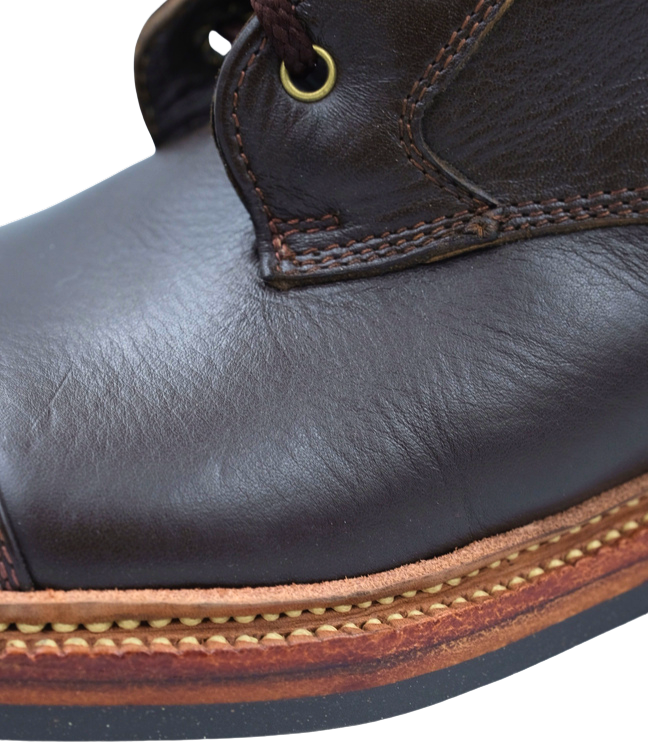
It needs to be stiff enough to hold stitching securely. It needs to be durable enough to survive years of wear and multiple resoles. It also needs to be capable of molding itself into the space between the insole and midsole during the construction process.
This is exactly where vegetable tanned leather excels.
At Naang Boots, there is only one option for a welt, and that’s vegetable tanned leather. Its density, rigidity, and ability to take and hold a shape make it uniquely suited to the demands of welt construction.
During the welting process, the welt is stitched into place and gradually conforms to the structure of the boot. Over time it becomes part of a unified system with the insole, upper, and midsole. Few materials can perform this role as effectively as a quality vegetable tanned leather welt.
Could other materials be used? Certainly.
But if the goal is to build a boot that is durable, rebuildable, and capable of lasting through multiple resoles, vegetable tanned leather remains the gold standard.
Heel Stack
The heel stack is probably one of the easiest components on this list.
For me, the best material for a heel stack is the same material used for the midsole: thick vegetable tanned leather.
The job of the heel stack is simple. It needs to provide structure, support, durability, and resistance to compression. Every step places force through the heel, and over the years that adds up to a tremendous amount of abuse.
This is not a place where softness or flexibility are priorities.
Instead, the heel stack needs to be dense, strong, and capable of maintaining its shape over decades of use. Those are exactly the qualities that make vegetable tanned leather such a natural fit for the role.
At Naang Boots, our heel stacks are built from the same vegetable tanned leather used for our midsoles. The material has already proven itself as an outstanding structural component, so it makes perfect sense to use it in the heel stack as well.
A quality vegetable tanned leather heel stack can withstand years of use while maintaining its integrity and supporting the overall structure of the boot. It’s a material that has been trusted by bootmakers for generations for good reason.
This is another component where there really isn’t much debate in my mind.
When the job requires strength, density, durability, and long-term structural support, vegetable tanned leather is the obvious choice.
What Happens When You Use the Wrong Leather
By this point, you may have noticed that I rarely use absolute language when discussing boot materials.
That’s because good bootmakers design with a specific purpose in mind.
Different boots are built for different jobs, and different jobs may require different materials. A lineman climbing utility poles all day has different needs than a motorcyclist. A hiker has different needs than someone wearing a dress boot to the office. Good bootmakers understand this and select materials based on the function they are trying to achieve.
For that reason, there are often multiple correct answers when it comes to material selection.
I certainly don’t believe the Naang way is the only way. It’s simply the approach we believe works best for the types of boots we build and the environments we expect them to be used in.
That said, there are absolutely wrong choices.
In my opinion, problems start when materials are selected because they are cheaper, easier to manufacture, or faster to work with rather than because they are the best material for the job.
Take shanks as an example. For most boots, I prefer a leather shank. However, if you’re a lineman climbing poles or towers all day, a steel shank may be the better choice because it provides the support that specific application demands.
Likewise, I generally prefer rubber outsoles because they offer superior grip, durability, and versatility in most environments. A traditional leather outsole may still make sense on a dedicated dress boot, but that’s a decision driven by function and intended use.
The same logic applies to the internal components of the boot.
I don’t want a thin chrome tanned insole. I don’t want a chrome tanned midsole. I don’t want a chrome tanned welt. Those materials simply don’t possess the characteristics I believe those components require. The job calls for dense, durable vegetable tanned leather, and that’s what I want to see used.
The same is true of synthetic replacements for traditionally leather components. While there are certainly situations where synthetic materials make sense, I generally believe that if a component can be made from quality leather and that leather better serves the function of the boot, then leather is the superior choice.
At the end of the day, good boots are rarely the result of a single material choice.
They’re the result of dozens of decisions made by a bootmaker who understands the purpose of the boot and selects materials accordingly.
As consumers, the best thing we can do is educate ourselves. The more you understand about how boots are built and why certain materials are used, the easier it becomes to separate genuine quality from marketing claims.
And when the right materials are used in the right places, the result is usually a very good boot.
How Premium Bootmakers Think About Leather Selection
A premium bootmaker looks at every component individually. The upper needs flexibility, durability, and weather resistance. The insole needs structure and support. The heel counter needs to maintain its shape while gradually conforming to the wearer. The welt needs to hold stitching securely through years of wear and multiple resoles.
Each component has a specific job, and the material is chosen based on how well it performs that job.
The best bootmakers think in terms of systems rather. They understand that a boot is the sum of its parts, and that every component must work together to achieve the desired result.
In many ways, that’s the real lesson of this article.
The question isn’t which leather is best.
The question is which leather is best for the job.
Once you start thinking that way, material selection becomes much easier to understand, and so does the difference between an ordinary boot and a truly exceptional one.
Final Thoughts
So, what’s the best leather for boots?
As you’ve probably figured out by now, there isn’t a single answer.
Another bootmaker may make slightly different choices, and that’s okay. Good bootmaking is about understanding the function of the boot and selecting materials that support that function.
What matters is not whether a component is chrome tanned or vegetable tanned.
What matters is whether the material is the right choice for the job.
The more you understand about how boots are built, the easier it becomes to recognize quality when you see it. And once you start looking at boots component by component rather than as a single piece of leather, you’ll never evaluate footwear the same way again.
FAQ
Of course, at Naang Boots we get questions about leather all the time.
If you skipped straight to the end, here are some of the most common questions we hear from customers, along with the short answers.
What Is the Best Leather for Boots?
There is no single best leather for boots. Different parts of a boot are best served by different types of leather.
What Is the Best Leather for Boot Uppers?
For most boots, I prefer a high-quality combination-tanned leather. It offers an excellent balance of flexibility, durability, weather resistance, comfort, and patina potential.
Is Chrome Tanned or Vegetable Tanned Leather Better for Boots?
Neither is universally better. Chrome tanned leather tends to work best for flexible components like uppers and linings, while vegetable tanned leather excels in structural components such as insoles, midsoles, welts, heel counters, and toe puffs.
What Is the Best Leather for Boot Insoles?
A thick vegetable tanned leather insole is generally considered the best option. It provides structure, durability, and gradually molds to the shape of your foot over time.
Why Do Premium Boots Use Vegetable Tanned Leather Components?
Vegetable tanned leather is dense, durable, and excellent at holding its shape. That’s why it is commonly used for insoles, midsoles, welts, heel counters, toe puffs, leather shanks, and heel stacks.
Why Do Many Premium Boots Use Chrome Tanned Leather Uppers?
Chrome tanned leather is flexible, durable, comfortable, and more resistant to moisture than vegetable tanned leather. These characteristics make it well suited for boot uppers that flex constantly during wear.
What Is Combination-Tanned Leather?
Combination-tanned leather is leather that has been tanned using both chrome tanning and vegetable tanning. Many bootmakers use it because it combines characteristics from both tanning methods.
What Leather Does Naang Boots Use?
Naang Boots uses a combination-tanned leather for uppers, chrome tanned leather for linings, and vegetable tanned leather for structural components such as insoles, midsoles, welts, heel counters, toe puffs, leather shanks, and heel stacks.
Are Leather Components Better Than Synthetic Components?
In many cases, yes. Leather components often provide better durability, shape retention, repairability, and long-term performance. However, there are situations where synthetic materials or steel components may be the better choice depending on the intended use of the boot.
Why Do Different Parts of a Boot Use Different Types of Leather?
Because every component has a different job to do. The characteristics that make a leather ideal for an upper are often different from the characteristics needed in an insole, welt, heel counter, or shank.
What to Read Next
All Boots Are Made-To-Order. Current Lead Time: 60-90 Days.
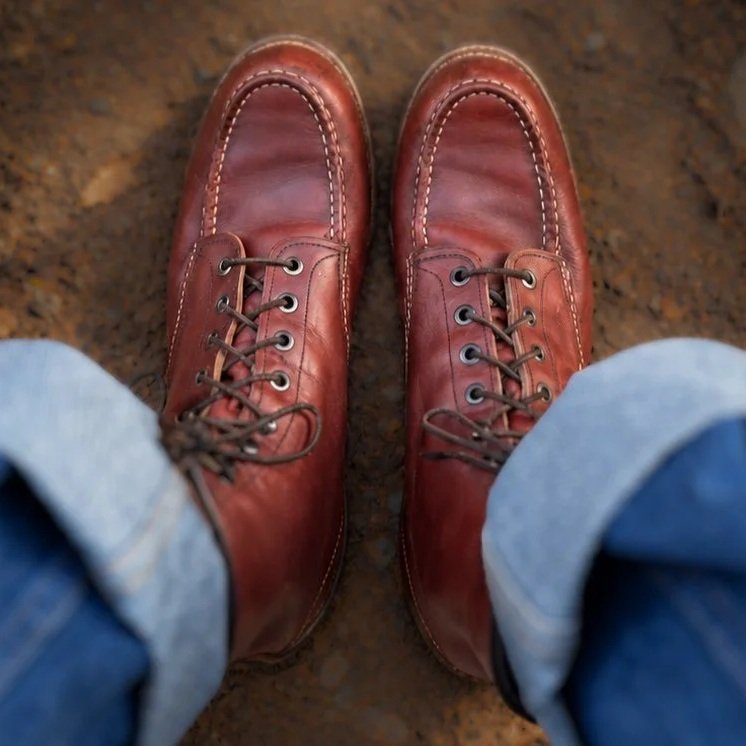
The Winnfield is built to walk the earth. This limited edition pairs red goat leather with our anatomical toe box and lace-to-toe design, giving your toes room to spread and letting you adjust the fit across your forefoot.
Built with 360° hand-welted construction and a full leather lining, these 6-inch boots are available with a zero-drop sole or minimal heel.
Upper: Limited edition red goat leather
Construction: 360° hand-welted
Lacing: Lace-to-toe for adjustable forefoot fit
Shaft height: 6 inches
Fit: Anatomical toe box
Last Options: Zero drop or minimal heel
Lining: Full leather lining
Not sure about your size? Check our Sizing Guide. Or Contact Us.
Worldwide shipping available.