Chrome Tan Leather vs Veg Tan Leather: What’s the Difference?
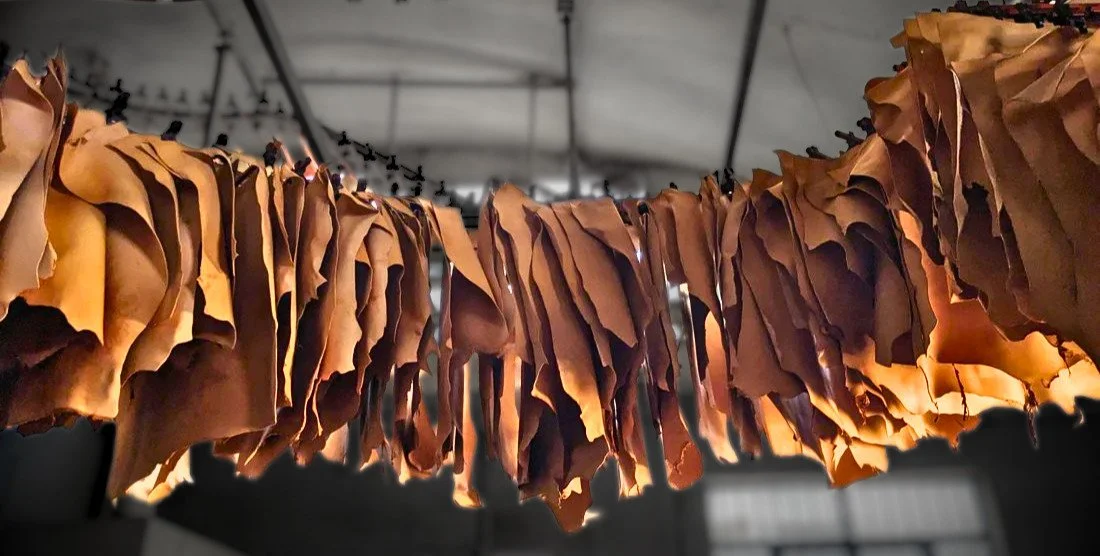
Vegetable Tanned Hides Hanging at the Tannery
Chrome tan leather and vegetable tanned leather are made from the same raw material, animal hides, but they are transformed using two very different tanning processes.
Vegetable tanning uses natural tannins derived from plants, bark, and roots, while chrome tanning uses chromium salts developed through modern industrial tanning methods. These different processes affect everything from how the leather feels and ages to how it handles moisture, flexibility, and daily wear.
Neither method is inherently better than the other. They simply produce different types of leather with different characteristics.
In this article, we’ll break down exactly how chrome tan and veg tan leather are made, explore the strengths and weaknesses of each, and explain why understanding the difference can help you make better decisions when buying boots, belts, wallets, and other leather goods.
What Is Leather Tanning
Leather tanning is the process of transforming a raw animal hide into a durable material that can be used to make products such as boots, belts, wallets, jackets, and bags.
Without tanning, a hide will eventually decompose and rot. The tanning process stabilizes the proteins within the hide and prevents them from breaking down. In doing so, it transforms a perishable natural material into something strong, flexible, and long-lasting.
This is important because the tanning process does far more than simply preserve the hide. It also plays a major role in determining how the finished leather behaves. Factors such as flexibility, water resistance, texture, durability, and the way the leather ages are all influenced by the tanning method used.
Humans have been tanning hides for thousands of years. Early civilizations discovered that certain plants, tree bark, roots, and leaves contained natural tannins that could preserve animal hides and turn them into usable leather. These early methods became the foundation of what we now call vegetable tanning.
For centuries, vegetable tanning was the primary way leather was produced. That changed during the Industrial Revolution when chrome tanning was developed in the mid-1800s. The new process dramatically reduced production times and allowed leather to be produced on a much larger scale. It also created leather with a very different set of characteristics.
Today, both tanning methods remain widely used. Chrome tanning dominates modern leather production, while vegetable tanning continues to be valued for its traditional character and unique aging properties.
Understanding how these two tanning methods differ is the key to understanding why chrome tan leather and veg tan leather look, feel, and perform so differently.
Check Out Our Handmade Boots
•
Check Out Our Handmade Boots •
Why Raw Hides Need To Be Tanned
Raw animal hides are organic materials. Like any organic material, they naturally break down over time.
If a freshly removed hide is left untreated, bacteria, moisture, and environmental exposure will eventually cause it to decompose. It may dry out, become brittle, develop mold, or simply rot away. In other words, it would never survive long enough to become a useful pair of boots.
Tanning solves this problem.

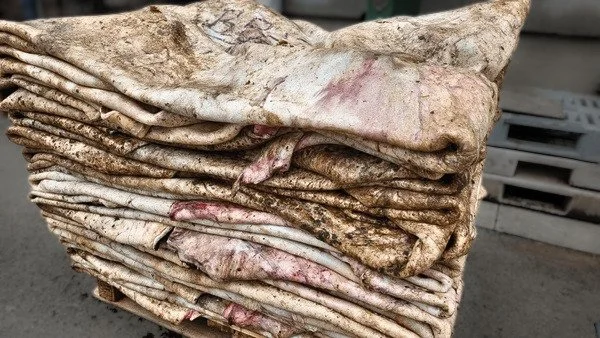
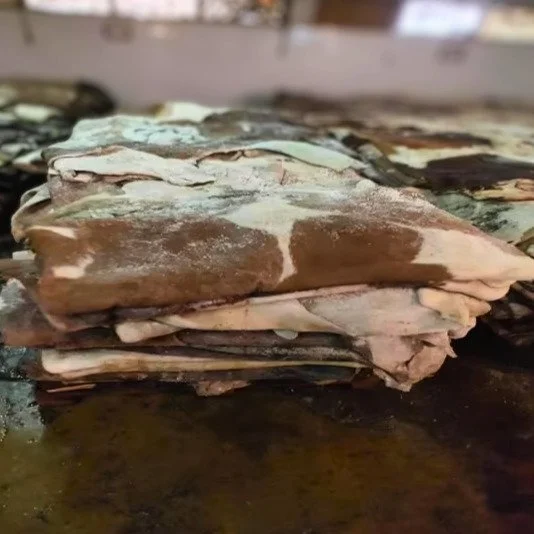

The tanning process permanently alters the structure of the proteins within the hide, making them far more resistant to decomposition. This allows the leather to withstand years of exposure to movement, moisture, heat, dirt, and daily wear without breaking down.
Tanning also helps determine how the finished leather will perform. A heavily worked pair of motorcycle boots, a rugged hiking boot, and a leather wallet may all start as animal hides, but the tanning process helps shape the characteristics that make each leather suitable for its intended purpose.
Without tanning, leather as we know it simply wouldn’t exist. There would be no durable boots, no heirloom-quality belts, and no leather goods capable of lasting for decades of use.
This is why tanning is one of the most important steps in leather production. Before a bootmaker can think about construction methods, stitching, welts, or design, the hide itself must first be transformed into leather.
A Brief History of Leather Tanning
Leather tanning is one of the oldest manufacturing processes in human history.
For thousands of years, people have relied on animal hides for clothing, footwear, shelter, and equipment. Early civilizations quickly discovered that untreated hides would eventually rot, so they began experimenting with different methods to preserve them.
Over time, they found that certain plants contained natural compounds called tannins that could stabilize a hide and prevent it from decomposing. Tree bark, leaves, roots, and other plant materials were soaked in water to create tanning solutions, and hides were immersed in these mixtures for weeks or even months. These early techniques eventually became what we now know as vegetable tanning.
For centuries, vegetable tanning was the dominant method of leather production throughout much of the world. While techniques varied between regions and cultures, the basic principle remained the same: use natural tannins to transform a raw hide into a durable material that could withstand years of use.
Everything changed during the Industrial Revolution.
In the mid-to-late 1800s, tanneries began adopting chrome tanning, a process that used chromium salts instead of plant-based tannins. What once required weeks or months could now be accomplished in a matter of days. The process was faster, more scalable, and produced leather with a different set of characteristics.
As industrial production expanded, chrome tanning became the dominant tanning method worldwide. Today, the vast majority of leather produced globally is chrome tanned.
Despite this shift, vegetable tanning never disappeared. Many tanneries continue to produce vegetable tanned leathers using techniques that trace their roots back hundreds, and in some cases thousands, of years.
Today, both tanning methods remain important. Each produces leather with unique characteristics, which is why both chrome tan and veg tan leathers continue to have a place in the modern boot industry.
What Is Vegetable Tanned Leather?
Vegetable tanned leather is leather that has been tanned using natural tannins derived from plant materials such as tree bark, leaves, roots, and other vegetation.
It is the oldest form of leather tanning and has been used for thousands of years. Long before modern industrial tanning methods existed, leatherworkers relied on plant-based tannins to preserve animal hides and transform them into durable, usable leather.
The process takes significantly longer than modern chrome tanning. Depending on the tannery and the specific leather being produced, vegetable tanning can take weeks or even months to complete. While this slower production process makes vegetable tanned leather more expensive to produce, it also contributes to many of the characteristics that leather enthusiasts appreciate.
Vegetable tanned leather is often firmer and stiffer when new than chrome tanned leather. It typically develops a rich patina over time, gradually changing color and appearance as it is exposed to sunlight, moisture, oils, and everyday use. This ability to age and tell the story of its use is one of the reasons many leather enthusiasts are drawn to it.
Because of its traditional production methods and distinctive aging characteristics, vegetable tanned leather is commonly used in products such as belts, wallets, saddlery, knife sheaths, leather goods, and certain styles of heritage footwear.
That said, not all vegetable tanned leather is the same. Different tanneries use different recipes, tannin blends, hide selections, and finishing techniques. As a result, two vegetable tanned leathers can behave very differently despite sharing the same tanning method.
To understand why, it helps to take a closer look at how the vegetable tanning process actually works.
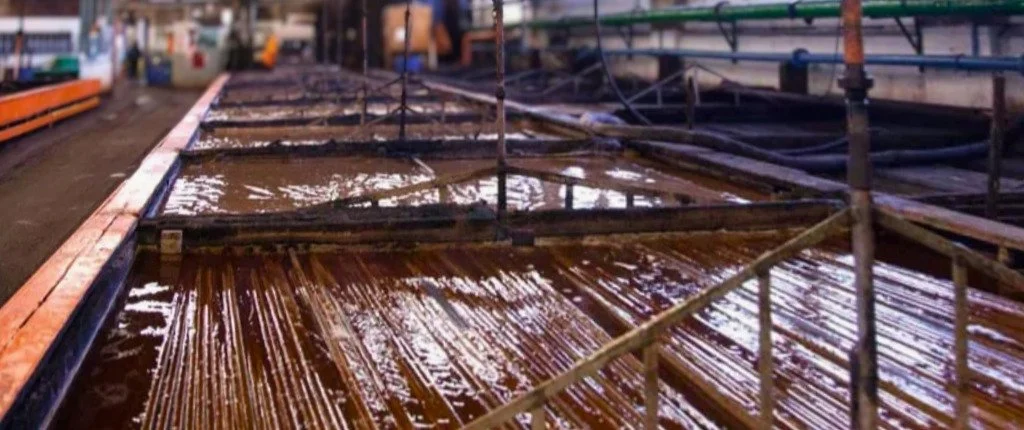
A Vegetable Tan Vat Filled With Hides being Tanned
How Vegetable Tanning Works
Vegetable tanning works by soaking animal hides in solutions containing natural tannins derived from plants such as tree bark, leaves, roots, and certain fruits.
As the hide soaks, these tannins gradually penetrate the leather and bond with the proteins within it. Over time, this transforms the hide from a material that would eventually decompose into durable leather that can withstand years of use.
While the exact process varies from one tannery to another, vegetable tanning generally begins with a cleaned and prepared hide. The hide is then gradually introduced to tanning solutions containing natural tannins. Historically, hides were moved through a series of pits containing increasingly concentrated tannin solutions. Some traditional tanneries still use variations of this method today.
Unlike chrome tanning, which can be completed relatively quickly, vegetable tanning is a slow process. Depending on the leather being produced, the tanning stage alone can take weeks or even months. This extended tanning time allows the tannins to fully penetrate the hide and contributes to many of the characteristics associated with vegetable tanned leather.
The result is a leather that is often firmer, denser, and more structured than chrome tanned leather. It also tends to retain more of its natural character and develops the rich patina that many leather enthusiasts value.
This slower, more traditional approach to tanning is one of the defining characteristics of vegetable tanned leather and helps explain why it looks, feels, and ages differently than chrome tanned leather.
Characteristics of Vegetable Tanned Leather
Vegetable tanned leather is known for its firm structure, natural appearance, and ability to develop a rich patina over time.
When new, vegetable tanned leather is often stiffer than chrome tanned leather. This firmness comes from both the tanning process and the extended time the leather spends absorbing tannins. As a result, many vegetable tanned leather products require a break-in period before they reach their most comfortable state.
One of the most distinctive characteristics of vegetable tanned leather is the way it ages. Exposure to sunlight, moisture, oils from your skin, and everyday use gradually changes the color and appearance of the leather. Over time, it develops what is known as a patina. This gives each piece a unique look that reflects how it has been used throughout its life.
Vegetable tanned leather also tends to display more natural variation than many chrome tanned leathers. Grain patterns, color shifts, scars, and other markings are often more visible, giving the leather a more organic and natural appearance.
Because it starts out relatively firm and structured, vegetable tanned leather is often used in products that benefit from holding their shape. Belts, wallets, holsters, saddlery, and certain styles of heritage boots are all common examples.
While many leather enthusiasts appreciate these characteristics, they are not universally advantages. The same firmness that gives vegetable tanned leather its structure can also make it less flexible and less comfortable during the initial break-in period when compared to many chrome tanned leathers.
These characteristics are a direct result of the vegetable tanning process itself, which is why vegetable tanned leather often feels noticeably different from chrome tanned leather, even when both are made from similar hides.
Common Uses for Vegetable Tanned Leather
Vegetable tanned leather is commonly used in products that benefit from structure, durability, and the ability to develop character over time.
One of the most common applications is in leather goods such as belts, wallets, watch straps, knife sheaths, holsters, and saddlery. The firm nature of vegetable tanned leather helps these products maintain their shape while also developing a unique patina through years of use.
In the footwear world, vegetable tanned leather is often used in certain styles of heritage boots and shoes, particularly those that emphasize traditional construction methods and long-term aging characteristics.
However, one of the most important uses of vegetable tanned leather in bootmaking is something most people never see.
Many high-quality boots use vegetable tanned leather for internal structural components such as insoles, midsoles, shanks, heel stacks, toe puffs, and heel counters. These components form the foundation and structure of the boot and play a major role in comfort, support, durability, and longevity.
This is especially common in traditionally constructed boots. A thick vegetable tanned leather insole provides a durable platform that gradually molds to the shape of the wearer’s foot over time. Vegetable tanned leather midsoles add structure and durability, while leather shanks and heel stacks have been used by bootmakers for generations because of their strength and reliability.
Vegetable tanned leather is also commonly used for toe puffs and heel counters. These hidden components help the boot maintain its shape, provide support around the heel, and reinforce the toe box. Unlike many synthetic alternatives, vegetable tanned leather toe puffs and heel counters can conform slightly over time while still maintaining their structural integrity.
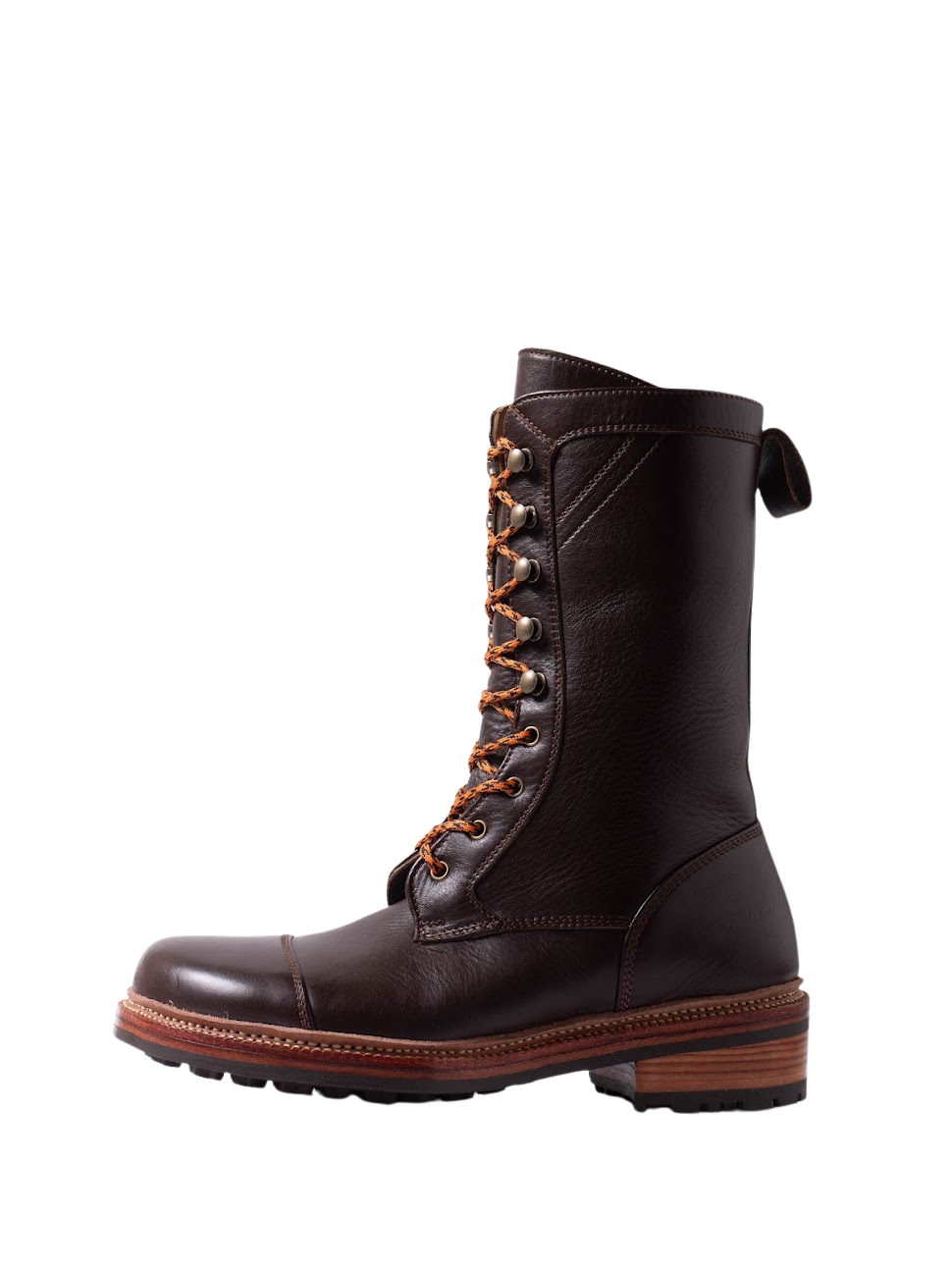
At Naang Boots, every pair is built with a vegetable tanned leather insole, midsole, leather shank, heel stack, toe puff, and heel counter. These components may not be as visible as the upper leather, but they are among the most important parts of the boot’s construction.
This highlights an important point that many people overlook: vegetable tanned leather isn’t only used where you can see it. Even in boots made with chrome tanned uppers, vegetable tanned leather often plays a critical role in the structure and foundation of the boot itself.
What Is Chrome Tanned Leather?
Chrome tanned leather is leather that has been tanned using chromium salts rather than the natural plant-based tannins used in vegetable tanning.
First developed in the 19th century, chrome tanning revolutionized the leather industry by dramatically reducing the time required to turn a raw hide into usable leather. What once took weeks or even months could now be accomplished in a matter of days.
Today, chrome tanning is by far the most common tanning method used worldwide. In fact, the vast majority of leather produced today is chrome tanned. From work boots and motorcycle jackets to furniture, handbags, and automotive interiors, chrome tanned leather is used in countless products that people interact with every day.
One of the reasons for its popularity is the unique set of characteristics it produces. Chrome tanned leather is generally softer, more flexible, and more resistant to water than vegetable tanned leather. It also accepts dyes readily, allowing tanneries to produce a wide range of colors and finishes with a high degree of consistency.
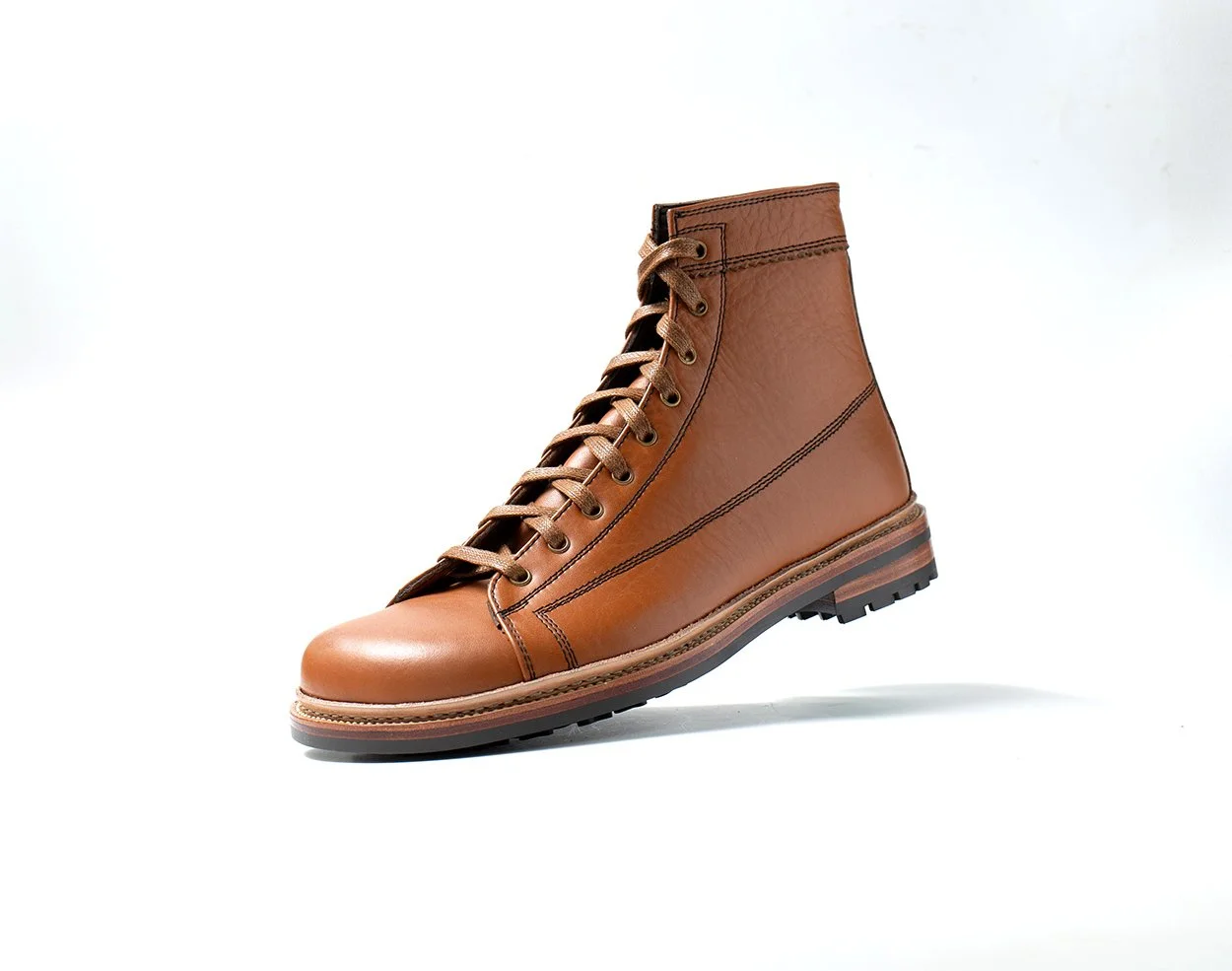
Because of these characteristics, chrome tanned leather is particularly well suited to products that require flexibility, comfort, and resistance to the elements. Many modern boot leathers, work boot leathers, motorcycle boot leathers, and outdoor footwear leathers are chrome tanned for exactly these reasons.
That said, not all chrome tanned leather is the same. Just as there are exceptional vegetable tanned leathers and mediocre vegetable tanned leathers, the quality of a chrome tanned leather depends heavily on the tannery, the hide selection, and the finishing processes used after tanning.
To better understand why chrome tanned leather behaves differently than vegetable tanned leather, it helps to look at how the chrome tanning process actually works.
How Chrome Tanning Works
Chrome tanning works by soaking animal hides in a solution containing chromium salts, which penetrate the hide and stabilize the proteins within it.
Like vegetable tanning, the goal is to transform a raw hide that would eventually decompose into durable leather. The difference lies in the tanning agents used. Instead of relying on natural tannins derived from plants, chrome tanning uses chromium salts to achieve the same objective.
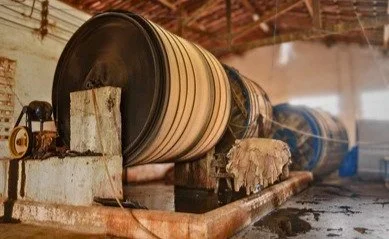
After the hide has been cleaned and prepared, it is placed into large rotating drums containing the tanning solution. As the drums turn, the chromium salts penetrate deep into the hide and bond with its proteins. This process is significantly faster than vegetable tanning and can often be completed in a matter of days rather than weeks or months.
One of the major advantages of chrome tanning is efficiency. The process allows tanneries to produce large quantities of leather while maintaining a high degree of consistency. It also produces leather with a different set of physical characteristics than vegetable tanning.

Large Drums Used to Tumble Chrome Tan Leather Hides
The resulting leather is typically softer, more flexible, and more resistant to water than vegetable tanned leather. It can also be dyed in a wider range of colors and finishes, making it a versatile choice for everything from boots and jackets to furniture and automotive interiors.
While chrome tanning is often associated with modern industrial leather production, that doesn’t mean all chrome tanned leather is the same. Premium tanneries can produce exceptional chrome tanned leathers that combine durability, comfort, and beautiful aging characteristics.
The differences created during the tanning process are one of the main reasons chrome tanned leather feels and performs differently than vegetable tanned leather in real-world use.
Characteristics of Chrome Tanned Leather
Chrome tanned leather is known for its flexibility, softness, water resistance, and versatility.
Compared to vegetable tanned leather, chrome tanned leather is generally softer and more supple from the start. This allows many chrome tanned boots and leather goods to feel comfortable with little or no break-in period.
Another defining characteristic of chrome tanned leather is its resistance to moisture. While no leather is truly waterproof on its own, chrome tanned leather typically handles exposure to water better than vegetable tanned leather. It is less likely to absorb moisture quickly and generally dries with less stiffening than a comparable vegetable tanned leather.
Chrome tanned leather is also highly versatile when it comes to finishes and colors. Because it accepts dyes readily, tanneries can produce everything from smooth dress leathers and rugged work boot leathers to heavily oiled pull-up leathers and waxed outdoor leathers.
Many people assume that chrome tanned leather doesn’t age well, but this isn’t necessarily true. While it often develops a different type of patina than vegetable tanned leather, high-quality chrome tanned leathers can develop significant character over years of wear. Some of the most respected boot leathers in the world are chrome tanned and are prized specifically for the way they age.
Another characteristic of chrome tanned leather is its consistency. The process allows tanneries to produce leather with more uniform color, texture, and performance characteristics from hide to hide. This consistency is one of the reasons chrome tanning became the dominant leather tanning method worldwide.
Of course, these are general characteristics rather than universal rules. Different tanneries use different formulas, hide selections, and finishing techniques. As a result, two chrome tanned leathers can feel and perform very differently despite sharing the same tanning method.
These characteristics help explain why chrome tanned leather has become the most widely used leather in the world and why it is found in everything from premium boots and motorcycle gear to furniture, bags, and automotive interiors.
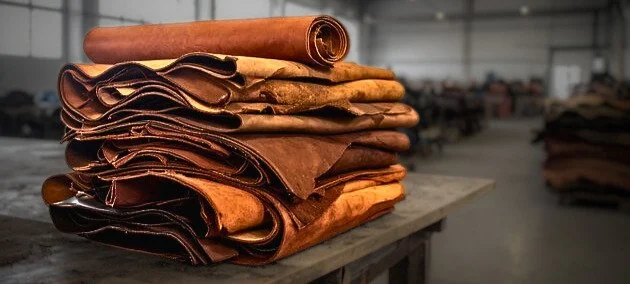
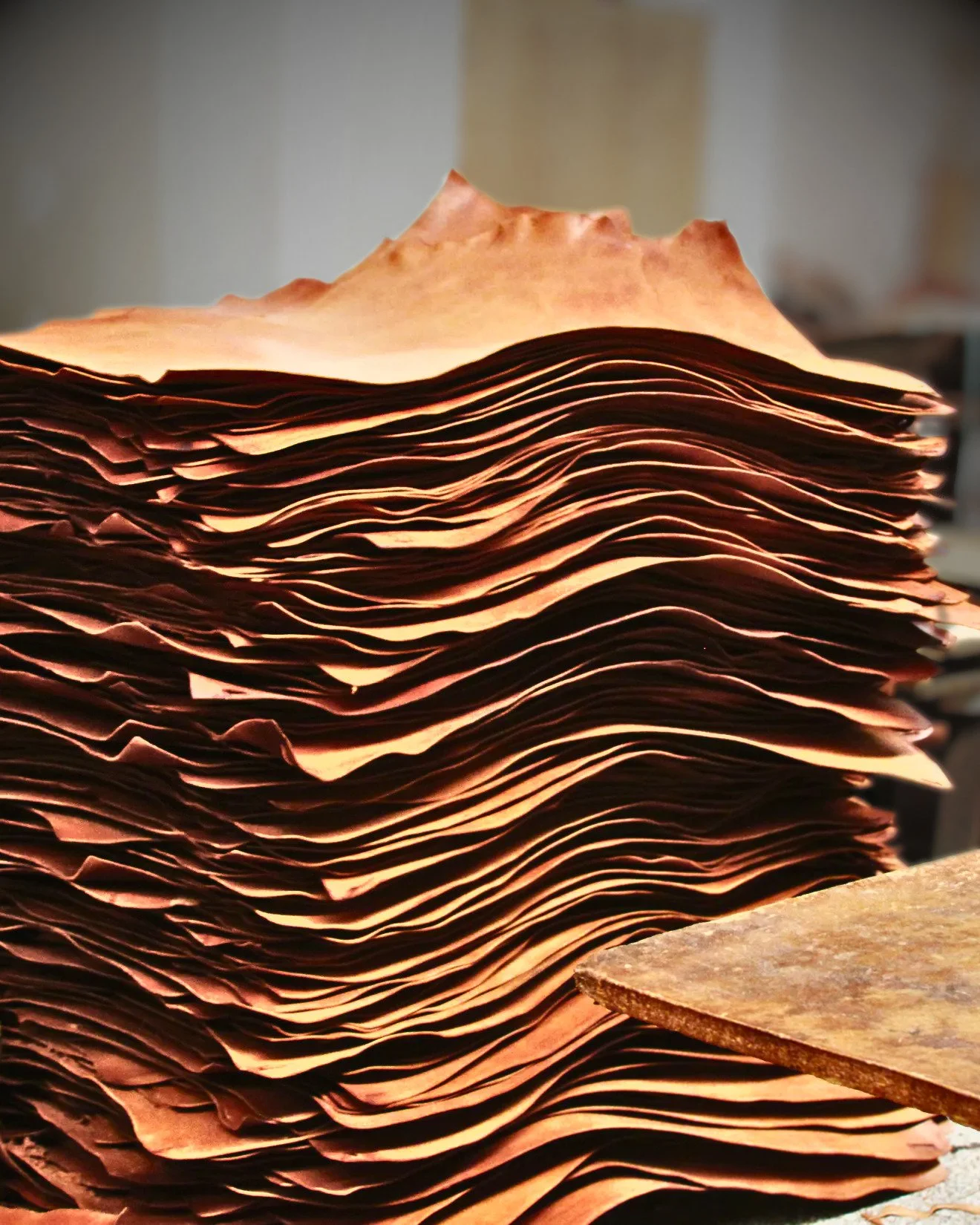
A Pile of Chrome Tanned Leather Ready for Pickup
Common Uses for Chrome Tanned Leather
Chrome tanned leather is used in a wide range of products where flexibility, comfort, durability, and resistance to the elements are important.
Because it is generally softer and more pliable than vegetable tanned leather, chrome tanned leather is commonly used for jackets, gloves, bags, furniture, automotive interiors, and countless other leather goods that benefit from flexibility and comfort.
In the footwear world, chrome tanned leather is by far the most common choice for uppers. Many work boots, motorcycle boots, hiking boots, service boots, and everyday casual boots use chrome tanned leather because it offers an excellent balance of durability, flexibility, comfort, and weather resistance.
Chrome tanned leather is particularly popular in applications where the leather will be exposed to changing weather conditions. Its ability to handle moisture more effectively than many vegetable tanned leathers makes it a practical choice for outdoor footwear, workwear, and motorcycle gear.
This is one reason many of the world’s most respected boot leathers are chrome tanned. Tanneries have spent decades refining chrome tanning techniques to produce leathers that are tough enough for demanding environments while remaining comfortable enough for everyday wear.
At the same time, chrome tanned leather is often paired with vegetable tanned leather components within the same boot. A boot may feature a chrome tanned upper for flexibility and weather resistance while relying on vegetable tanned leather for the insole, midsole, heel counter, toe puff, shank, and heel stack.
This highlights an important reality of bootmaking: chrome tanned leather and vegetable tanned leather are not competitors. They are different materials with different strengths. Many of the highest-quality boots use both, with each leather chosen for the role it performs best.
Understanding where each type of leather is commonly used helps explain why bootmakers continue to rely on both tanning methods today.
Chrome Tan vs Veg Tan: The Key Differences
The biggest difference between chrome tanned leather and vegetable tanned leather is the way they are produced, and that difference affects nearly everything about the finished leather.
In general, vegetable tanned leather tends to be firmer, develops a more dramatic patina, and takes longer to produce. Chrome tanned leather tends to be softer, more flexible, more resistant to moisture, and faster to produce.
Of course, those are broad generalizations. The tannery, hide selection, finishing process, and intended use all play a major role in how a leather ultimately performs. There are exceptional examples of both chrome tanned and vegetable tanned leather, just as there are poor examples of both.
Rather than asking which tanning method is better, it’s often more useful to understand how they differ.
In the following sections, we’ll compare chrome tan and veg tan leather across some of the characteristics that matter most: production time, flexibility, water resistance, patina development, color consistency, break-in, maintenance requirements, cost, and weight.
Tanning Time
One of the biggest differences between chrome tanned leather and vegetable tanned leather is the amount of time required to produce them.
Vegetable tanning is a slow process. Depending on the tannery and the specific leather being produced, the tanning stage alone can take weeks or even months to complete. The hide is gradually exposed to increasingly concentrated tannin solutions, allowing the natural tannins to slowly penetrate deep into the leather.
Chrome tanning is significantly faster. In many cases, the tanning process can be completed in a matter of days rather than weeks or months. This efficiency is one of the primary reasons chrome tanning became the dominant leather tanning method during the Industrial Revolution and remains the most common tanning process used today.
The difference in production time has a direct impact on cost and availability. A tannery can produce far more chrome tanned leather in the same amount of time it takes to produce vegetable tanned leather, which helps explain why chrome tanning became the preferred method for large-scale leather production.
It’s important to remember, however, that longer production time does not automatically mean better leather.
Many people assume that because vegetable tanning takes longer, it must produce a superior product. In reality, tanning time is simply one characteristic of the process. Both chrome tanning and vegetable tanning are capable of producing exceptional leather when high-quality hides, skilled tannery practices, and proper finishing techniques are involved.
The difference is not that one process is better than the other. The difference is that one prioritizes speed and efficiency, while the other prioritizes a slower, more traditional approach.
Flexibility
When it comes to flexibility, chrome tanned leather generally has the advantage over vegetable tanned leather.
One of the defining characteristics of chrome tanned leather is its soft and supple feel. The chrome tanning process produces leather that is naturally more flexible, allowing it to bend and move more easily from the start. This is one reason many chrome tanned boots and leather goods require little break-in compared to their vegetable tanned counterparts.
Vegetable tanned leather, by comparison, is typically firmer and more structured. This additional stiffness can be beneficial in products that need to maintain their shape, but it often means the leather feels less flexible when new.
That doesn’t mean vegetable tanned leather remains stiff forever. With use, it gradually softens and becomes more pliable as it conforms to its owner. Many leather enthusiasts appreciate this process because it allows the leather to develop a more personalized fit and character over time.
The intended use of the leather often determines which level of flexibility is desirable. A motorcycle jacket, work glove, or hiking boot may benefit from the immediate comfort and flexibility of chrome tanned leather. A belt, holster, or structured leather component inside a boot may benefit from the firmness and support of vegetable tanned leather.
This is another example of why chrome tan and veg tan leather are not competing materials. They simply offer different characteristics, and bootmakers often choose one or the other based on the specific role the leather needs to perform.
In general, if flexibility is the priority, chrome tanned leather tends to be the better choice. If structure and rigidity are the priority, vegetable tanned leather often has the advantage.
Water Resistance
When it comes to water resistance, chrome tanned leather generally performs better than vegetable tanned leather.
The chrome tanning process produces leather that is less absorbent and more resistant to moisture. As a result, chrome tanned leather typically takes longer to become saturated when exposed to rain, wet conditions, or everyday moisture.
Vegetable tanned leather, on the other hand, tends to absorb water more readily. When repeatedly exposed to moisture, it can become stiff, lose some of its flexibility, and may require additional conditioning to restore its original feel.
That doesn’t mean vegetable tanned leather and water are incompatible. For centuries, vegetable tanned leather was used in footwear, saddlery, and countless other applications that were regularly exposed to the elements. However, it generally requires more care and maintenance when subjected to wet conditions.
It’s also important to remember that tanning method is only one factor that affects water resistance. The oils, waxes, and finishing treatments applied by the tannery can have a significant impact on how a leather handles moisture. Some heavily waxed or oil-infused vegetable tanned leathers can outperform certain chrome tanned leathers when it comes to resisting water.
Likewise, no leather is truly waterproof on its own. Even highly water-resistant leather will eventually become saturated if exposed to enough water for a long enough period of time.
In general, chrome tanned leather tends to offer better water resistance and requires less maintenance after exposure to moisture. This is one reason it has become a popular choice for work boots, hiking boots, motorcycle boots, and other footwear designed for demanding outdoor use.
Patina Development
When it comes to patina development, vegetable tanned leather is generally known for producing the most dramatic changes over time.
One of the defining characteristics of vegetable tanned leather is the way it responds to use and environmental exposure. Sunlight, moisture, dirt, oils from your skin, and everyday wear gradually alter the color and appearance of the leather. Over time, these changes create a patina, a unique visual record of how the leather has been used throughout its life.
Fresh vegetable tanned leather often starts relatively light in color. As it ages, it typically darkens and develops a richness that many leather enthusiasts find appealing. No two pieces age in exactly the same way, which is part of the appeal.
Chrome tanned leather develops patina as well, although it often does so differently. Rather than dramatic darkening, many chrome tanned leathers develop character through creasing, color variation, burnishing, pull-up effects, and changes in the finish. The exact type of patina depends heavily on the tannery, the finishing process, and the specific leather itself.
This is where many misconceptions begin. Some people believe that only vegetable tanned leather develops patina, but that simply isn’t true. Many of the most respected boot leathers in the world are chrome tanned and are highly valued for the character they develop over years of wear.
The difference is not whether patina develops. The difference is often how that patina develops.
In general, vegetable tanned leather tends to produce more dramatic color change and visual transformation over time. Chrome tanned leather often develops character in more subtle ways, depending on the leather and the finishing techniques used by the tannery.
Color Consistency
When it comes to color consistency, chrome tanned leather generally has the advantage.
One of the reasons chrome tanning became so widely adopted is that it allows tanneries to produce leather with highly consistent colors and finishes. Chrome tanned leather readily accepts dyes, making it easier to achieve uniform results across large production runs.
This consistency is valuable for manufacturers who need multiple hides to match closely in appearance. Whether producing boots, furniture, handbags, or automotive interiors, predictable color and finish characteristics help ensure a consistent final product.
Vegetable tanned leather tends to display more natural variation. Because it relies on natural tannins and often undergoes less aggressive coloring processes, differences in grain, tone, and color are often more visible from one hide to another.
For many leather enthusiasts, this variation is not a flaw. In fact, it is often considered part of the appeal. The subtle differences between hides can give a product a more organic appearance and emphasize the natural origins of the material.
It’s also worth noting that color consistency and leather quality are not the same thing. A perfectly uniform chrome tanned leather is not automatically better than a vegetable tanned leather with visible variation. They simply reflect different approaches to leather production and different aesthetic goals.
The same principle applies to aging. Even when vegetable tanned leather begins with a relatively uniform appearance, it often develops increasing variation as it acquires a patina through use. Chrome tanned leather can also change over time, but it generally begins life with a more controlled and predictable appearance.
In general, chrome tanned leather tends to offer greater color consistency, while vegetable tanned leather often showcases more of the natural variation found in the hide itself.
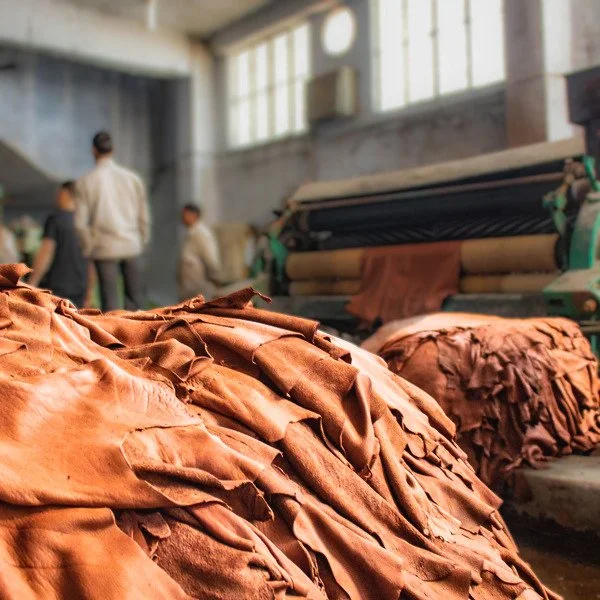
Chrome Tanned Leather Being Prepped Before Dye
Break-In Period
When it comes to break-in, chrome tanned leather generally reaches its most comfortable state faster than vegetable tanned leather.
Because chrome tanned leather is typically softer and more flexible from the start, products made from it often require less time to conform to the wearer. Many chrome tanned boots feel comfortable right out of the box and continue to soften with use.
Vegetable tanned leather, by comparison, usually starts out firmer and more structured. As a result, it often requires a longer break-in period before it begins to fully conform to the shape of the foot and move naturally with the wearer.
This extended break-in period is one reason some people are initially drawn to chrome tanned leather. The leather often feels more forgiving during the first few wears and can require less patience to reach a comfortable state.
However, a longer break-in period is not necessarily a disadvantage.
Many leather enthusiasts appreciate the way vegetable tanned leather gradually molds to the wearer over time. As the leather softens and adapts to the foot, it develops a personalized fit that reflects the way the boots are actually used.
In fact, the same characteristics that contribute to a longer break-in period are also what make vegetable tanned leather such an excellent material for structural boot components. Its firmness, density, and ability to hold its shape are the reasons it is commonly used for insoles, midsoles, shanks, heel counters, toe puffs, and heel stacks in high-quality handmade boots.
A vegetable tanned leather insole, for example, gradually molds to the shape of the foot while retaining the support and structure needed to serve as the foundation of the boot. Likewise, vegetable tanned leather heel counters and toe puffs provide long-term shape retention that helps the boot maintain its form throughout years of wear.
It’s also important to remember that break-in is influenced by more than just the tanning method. Leather thickness, boot design, construction methods, lasting techniques, and the specific tannery all play a role in how quickly a boot becomes comfortable.
A thick chrome tanned leather can require more break-in than a thin vegetable tanned leather. Likewise, a heavily structured boot may take longer to break in than a lightly built boot regardless of the tanning method used.
In general, chrome tanned leather tends to offer a shorter break-in period, while vegetable tanned leather often requires more time before reaching its full comfort potential.
Maintenance
When it comes to maintenance, chrome tanned leather generally requires less attention than vegetable tanned leather.
Because chrome tanned leather is typically more resistant to moisture and environmental exposure, it often tolerates everyday wear with less frequent conditioning and care. Many chrome tanned leathers can handle rain, mud, and changing weather conditions with relatively little intervention from the owner.
Vegetable tanned leather, by comparison, tends to be more sensitive to moisture and environmental conditions. It can dry out more readily, absorb water more easily, and may benefit from more regular conditioning to maintain its flexibility and appearance.
That doesn’t mean vegetable tanned leather is fragile. In fact, some of the most durable leather goods ever made have been produced from vegetable tanned leather. However, it often rewards owners who are willing to invest a little more time in caring for it.
The type of maintenance also differs between the two materials. Vegetable tanned leather often develops a patina as it ages, and many owners choose products and care routines that preserve and enhance that natural aging process. Chrome tanned leather, on the other hand, is often maintained with a greater focus on preserving flexibility, water resistance, and the original finish.
As with many of the comparisons in this article, the tanning method is only one piece of the puzzle. Leather thickness, tannery finishes, oils, waxes, and intended use all influence how much maintenance a particular leather requires.
A heavily waxed vegetable tanned leather may require less care than a lightly finished chrome tanned leather. Likewise, a pair of boots worn occasionally in dry conditions will have very different maintenance needs than a pair worn daily in harsh environments.
It’s also worth remembering that no leather boot is truly maintenance free.
If your goal is to own a pair of boots for decades and have them survive multiple resoles, they will need to be cleaned, conditioned, and cared for along the way. Dirt, moisture, and repeated flexing gradually take their toll on any leather, regardless of how it was tanned.
I often compare it to motorcycle ownership. If you want a motorcycle to last, you change the oil, service it regularly, and address small issues before they become big problems. Leather boots are no different. The better you care for them, the longer they’ll continue to serve you.
In general, chrome tanned leather tends to be more forgiving and lower maintenance, while vegetable tanned leather often benefits from more regular care and attention. Neither approach is inherently better. It simply depends on how involved you want to be in the long-term care of your leather goods.
Cost
When it comes to cost, vegetable tanned leather is often more expensive than chrome tanned leather.
One of the primary reasons is production time. As we discussed earlier, vegetable tanning can take weeks or even months to complete, while chrome tanning can often be completed in a matter of days. The longer tanning process means more labor, more time, and lower production throughput, all of which contribute to higher costs.
Vegetable tanned leather is also frequently associated with smaller production runs and more traditional manufacturing methods. Many tanneries producing vegetable tanned leather prioritize craftsmanship and quality over volume, which can further increase costs.
Chrome tanned leather benefits from a faster and more efficient production process. Because tanneries can produce larger quantities in less time, chrome tanned leather is often more affordable and widely available.
However, cost is one area where it is particularly important not to oversimplify.
There are premium chrome tanned leathers that cost significantly more than some vegetable tanned leathers. Likewise, there are entry-level vegetable tanned leathers that may be less expensive than highly sought-after chrome tanned leathers from world-renowned tanneries.
The reputation of the tannery, the quality of the hides, the finishing process, and the specific characteristics of the leather often have just as much influence on price as the tanning method itself.
This is why cost alone is rarely a reliable indicator of quality. An expensive leather is not automatically better than a less expensive one, and a vegetable tanned leather is not automatically superior simply because it costs more to produce.
In general, vegetable tanned leather tends to command a higher price because of its slower production process and more traditional methods. Chrome tanned leather is often more cost-effective to produce, which helps explain its widespread use throughout the leather industry.
Weight
When it comes to weight, vegetable tanned leather is generally heavier and denser than chrome tanned leather.
One of the characteristics of vegetable tanning is that it produces a firmer, more substantial leather. The tanning process and the resulting structure of the leather often create a material that feels heavier and more rigid than a comparable chrome tanned leather of the same thickness.
Chrome tanned leather, by comparison, is typically lighter, softer, and more flexible. This is one reason it is so commonly used in products where comfort, mobility, and reduced weight are important considerations.
In the world of footwear, weight can have a noticeable impact on how a boot feels throughout the day. A boot built entirely from thick vegetable tanned leather components can feel very different from one that relies more heavily on chrome tanned leathers and lighter materials.
That said, tanning method is only one factor influencing weight.
Leather thickness often has a greater impact on weight than the tanning method itself. A thick chrome tanned work boot leather may weigh considerably more than a thin vegetable tanned leather used in a dress shoe. Construction methods, sole materials, hardware, and overall boot design can also have a significant effect on the final weight of a boot.
This is another area where context matters. The additional weight and density of vegetable tanned leather can be a benefit when used in structural components such as insoles, midsoles, shanks, heel counters, toe puffs, and heel stacks. The same characteristics that add weight also contribute to support, durability, and shape retention.
Likewise, the lighter and more flexible nature of many chrome tanned leathers makes them particularly well suited for boot uppers, where comfort and freedom of movement are often priorities.
In general, vegetable tanned leather tends to be heavier and denser, while chrome tanned leather is often lighter and more flexible. Neither is inherently better. The ideal choice depends on how the leather will be used and what characteristics are most important for the finished product.
Why Leather Type Doesn’t Automatically Determine Quality
Leather type doesn’t automatically determine quality because the tanning method is only one part of what makes a great leather.
A leather can be vegetable tanned and still be poorly made. Likewise, a leather can be chrome tanned and be among the finest leathers available anywhere in the world. The tanning process tells you how a leather was produced. It does not tell you how well it was produced.
This is one of the biggest misconceptions in the leather world. Many people assume that vegetable tanned leather is automatically higher quality than chrome tanned leather, but the reality is far more complicated.
Part of this misconception exists because many premium leather goods and heritage-style products use vegetable tanned leather in highly visible ways. Over time, some people have come to associate vegetable tanning with quality itself. While there is certainly a relationship between traditional craftsmanship and many vegetable tanned leathers, the tanning method alone does not guarantee excellence.
Some of the most respected leathers in the boot industry are chrome tanned. Likewise, some vegetable tanned leathers are chosen specifically because they offer characteristics that chrome tanned leather cannot easily replicate. Neither tanning method has a monopoly on quality.
When experienced bootmakers evaluate leather, they rarely start by asking whether it is chrome tanned or vegetable tanned. Instead, they look at factors such as the quality of the hides, the reputation of the tannery, the consistency of the leather, the finishing techniques used, and whether the leather is appropriate for its intended purpose.
In many cases, those factors will have a far greater impact on the performance and longevity of the finished product than the tanning method itself.
Understanding this distinction is important because it shifts the conversation away from simple labels and toward what actually matters. The question is not whether a leather is chrome tanned or vegetable tanned. The question is whether it is a well-made leather that is being used in the right application.
To understand why, let’s look at some of the factors that often have a greater influence on quality than the tanning method alone.
Tannery Matters More Than Tanning Method
When it comes to leather quality, the tannery that produces the leather often matters more than whether the leather is chrome tanned or vegetable tanned.
A tannery’s expertise influences every stage of production, from hide selection and tanning formulas to finishing techniques and quality control. Two tanneries can use the same tanning method and produce leathers that perform very differently in the real world.
This is why experienced bootmakers often pay close attention to where a leather comes from. Certain tanneries have spent decades, and in some cases centuries, refining their processes and building reputations for producing exceptional leather. Their experience, consistency, and attention to detail often have a greater impact on quality than the tanning method itself.
Consider two vegetable tanned leathers. One may come from a world-class tannery known for exceptional hide selection and meticulous craftsmanship. The other may come from a tannery that prioritizes cost and production volume above all else. Even though both leathers are vegetable tanned, the difference in quality can be significant.
The same is true for chrome tanned leather. A premium chrome tanned leather from a respected tannery can dramatically outperform a lower-quality vegetable tanned leather in durability, comfort, consistency, and overall performance.
This is one reason why knowledgeable bootmakers often talk about specific tanneries rather than simply talking about tanning methods. The reputation of the tannery tells you far more about what you can expect from the leather than the words “chrome tanned” or “vegetable tanned” ever could.
When evaluating leather, it’s worth remembering that tanning method is only one piece of the puzzle. The skill, experience, and standards of the tannery behind the leather often play a much larger role in determining the final quality of the material.
Hide Selection Matters More Than Tanning Method
The quality of the hide itself often has a greater impact on the finished leather than the tanning method used to produce it.
No tanning process can completely overcome poor raw materials. If a hide contains significant defects, weak fiber structure, excessive scarring, or other quality issues, those limitations will often remain regardless of whether the leather is chrome tanned or vegetable tanned.
On the other hand, a high-quality hide provides a strong foundation for producing exceptional leather. Better hides tend to have tighter fiber structures, greater durability, more consistent grain patterns, and improved long-term performance.
This is one reason reputable tanneries place so much emphasis on hide selection. Before tanning even begins, hides are sorted and graded based on factors such as size, condition, grain quality, and the presence of natural markings or defects.
Different products also place different demands on the hide. A tannery producing premium boot leather may select hides differently than a tannery producing upholstery leather or fashion leather. The intended use of the finished product often influences what characteristics are considered desirable.
This is another area where simple labels can be misleading. A vegetable tanned leather made from lower-quality hides is not automatically superior to a chrome tanned leather made from carefully selected premium hides. In many cases, the opposite may be true.
Experienced bootmakers understand that great leather starts long before the tanning process begins. The quality of the hide sets the foundation for everything that follows.
When evaluating leather quality, it is worth remembering that the tanning method changes the hide, but it does not create quality from nothing. The best leather in the world begins with the best raw materials available.
Finishing and Construction Matter Too
Even the highest-quality leather can fall short if it is poorly finished or used in a poorly constructed boot.
Once the tanning process is complete, leather still goes through a variety of finishing steps that can significantly influence its appearance, feel, durability, and performance. Oils, waxes, dyes, conditioners, and protective finishes can all affect how a leather behaves in the real world.
This is one reason two leathers from the same tannery, produced using the same tanning method, can feel completely different. The finishing process often plays a major role in determining the final characteristics of the leather.
Construction is equally important.
A boot made from excellent leather can still perform poorly if it is built with weak materials, poor craftsmanship, or shortcuts in the construction process. Conversely, a well-made boot can often get the most out of the materials used because every component is working together as part of a complete system.
When bootmakers talk about quality, they are rarely talking about a single material or a single manufacturing step. They are evaluating the entire package. The leather matters, but so do the insole, midsole, heel counter, toe puff, shank, outsole, stitching, last, and construction method.
This is especially true when discussing long-term durability. A boot built from premium leather but paired with low-quality structural components may not deliver the longevity that buyers expect. Likewise, a thoughtfully constructed boot that uses quality materials throughout can often provide decades of service and multiple resoles.
This is why it is difficult to judge a boot simply by asking whether the leather is chrome tanned or vegetable tanned. Quality is the result of many decisions working together, not a single label attached to the leather.
Ultimately, the best boots are not defined by one material or one manufacturing process. They are defined by how well every component and every decision comes together to create a durable, comfortable, and long-lasting product.
Why Many Modern Boot Leathers Use Both
Many modern boot leathers use both chrome tanning and vegetable tanning because the combination allows tanneries to capture the strengths of each process while minimizing some of their individual limitations.
By this point, it should be clear that chrome tanned leather and vegetable tanned leather each offer their own advantages. Chrome tanning can produce leather that is soft, flexible, and resistant to moisture. Vegetable tanning can produce leather that is firm, structured, and capable of developing a rich patina over time.
Rather than choosing one or the other, many tanneries combine both processes to create leathers that blend these characteristics together.
This approach is often referred to as combination tanning. A hide may be chrome tanned first and then vegetable re-tanned later in the process. The exact methods vary between tanneries, but the goal is generally the same: create a leather that benefits from both tanning systems.
Some of the most respected boot leathers in the world are produced using some form of combination tanning. These leathers are often prized because they strike a balance between comfort, durability, weather resistance, structure, and long-term aging characteristics.
For bootmakers, combination tanning can provide an attractive middle ground. It allows them to build boots using leathers that are comfortable enough for everyday wear while still retaining much of the character and substance that leather enthusiasts appreciate.
Understanding combination tanning is important because it highlights a reality that is often overlooked in discussions about chrome tan versus veg tan. In many cases, the answer isn’t one or the other.
Sometimes the answer is both.
To understand how this works, let’s take a closer look at what combination-tanned leather actually is and why so many modern tanneries use it.
What Is Combination-Tanned Leather?
Combination-tanned leather is leather that has been tanned using both chrome tanning and vegetable tanning during the production process.
In most cases, the hide is chrome tanned first and then vegetable re-tanned later. This allows the tannery to take advantage of the speed, flexibility, and moisture resistance associated with chrome tanning while also introducing some of the structure, character, and aging characteristics associated with vegetable tanning.
The exact process varies from tannery to tannery. Some use heavier vegetable re-tanning than others, while some incorporate additional oils, waxes, and finishing techniques to further influence the final characteristics of the leather.
This means that combination tanning is not a single formula. Rather, it is a broad category that encompasses many different approaches to leather production. Two combination-tanned leathers can feel completely different depending on the goals of the tannery.
Many people are surprised to learn how common combination tanning has become in the boot industry. In fact, some of the most respected boot leathers in the world are produced using some form of combination tanning because it allows tanneries to create leathers that balance comfort, durability, weather resistance, and aging characteristics.
This is also why discussions about chrome tan versus veg tan can sometimes become overly simplistic. Not every leather fits neatly into one category or the other. Many modern leathers exist somewhere in the middle, combining elements of both tanning methods.
Rather than viewing chrome tanning and vegetable tanning as opposing approaches, combination tanning demonstrates that the strengths of both can often work together to create an exceptional leather.
Why Tanneries Use Combination Tanning
Tanneries use combination tanning because it allows them to create leathers that capture desirable characteristics from both chrome tanning and vegetable tanning.
As we’ve discussed throughout this article, each tanning method has its own strengths. Chrome tanning tends to produce leather that is softer, more flexible, and more resistant to moisture. Vegetable tanning tends to produce leather that is firmer, more structured, and capable of developing a rich patina over time.
Rather than being limited to one set of characteristics, combination tanning gives tanneries the ability to fine-tune the performance of the finished leather.
For example, a tannery may want a leather that feels comfortable from the first wear but still develops character as it ages. Another may want a leather that handles wet conditions well while retaining some of the structure and substance commonly associated with vegetable tanned leather. Combination tanning provides a way to pursue those goals.
This flexibility is one reason combination tanning has become so popular in the boot industry. Boots place unique demands on leather. They need to be durable, comfortable, weather-resistant, supportive, and capable of standing up to years of wear. Combination tanning allows tanneries to balance these competing requirements more effectively than either tanning method might on its own.
It also allows tanneries to develop leathers with their own distinct identities. Many of the leathers that boot enthusiasts recognize by name have become popular because of the unique combination of tanning, oils, waxes, and finishing techniques used to create them.
Ultimately, combination tanning gives tanneries more tools to work with. Rather than choosing between chrome tanning and vegetable tanning, they can draw from both processes to create a leather that is tailored to a specific purpose.
That ability to balance characteristics is one of the main reasons combination tanning has become such an important part of modern leather production.
The Benefits of Combining Chrome and Vegetable Tanning
The primary benefit of combination tanning is that it allows a tannery to create leather that balances characteristics from both chrome tanning and vegetable tanning.
A well-executed combination-tanned leather can offer much of the flexibility, comfort, and moisture resistance associated with chrome tanning while also retaining some of the structure, character, and aging properties associated with vegetable tanning.
For bootmakers, this balance can be particularly valuable.
Boots need to withstand years of flexing, exposure to the elements, and daily wear while remaining comfortable enough to wear for long periods of time. Combination-tanned leathers can help achieve that balance by providing a blend of durability, comfort, and long-term character.
Another advantage is versatility. Because the tannery has more variables to work with, combination tanning allows for a wider range of performance characteristics than either tanning method can often provide on its own. This gives tanneries greater freedom to develop leathers tailored to specific applications and environments.
Combination-tanned leathers can also develop unique aging characteristics. Depending on the tannery’s approach, these leathers may exhibit some of the patina development associated with vegetable tanning while retaining the flexibility and resilience commonly found in chrome tanned leather.
This is one reason many of the most respected boot leathers in the world are combination tanned. Rather than forcing a choice between the strengths of chrome tanning and the strengths of vegetable tanning, they seek to combine the best aspects of both.
Of course, combination tanning is not a shortcut to quality. Just like chrome tanning and vegetable tanning, the final result still depends on the quality of the hides, the skill of the tannery, and the finishing techniques used throughout production.
What combination tanning demonstrates is something we’ve seen repeatedly throughout this article: leather quality is rarely determined by a single factor. More often, it is the result of multiple processes working together to achieve a specific goal.
Common Myths About Chrome Tan and Veg Tan Leather
There are few topics in the boot world that generate more misinformation than the debate between chrome tanned leather and vegetable tanned leather.
By now, you’ve probably noticed a recurring theme throughout this article: neither tanning method is inherently better than the other. Each has strengths, weaknesses, and applications where it excels.
Despite that, a number of myths continue to circulate among boot enthusiasts and leather buyers. Some contain a grain of truth, while others fall apart under closer examination.
Let’s take a look at some of the most common misconceptions about chrome tan and veg tan leather.
Myth #1: Vegetable Tanned Leather Is Always Better
Vegetable tanned leather is not always better than chrome tanned leather.
This is probably the most common misconception in the boot world, and it often comes from a misunderstanding of what vegetable tanning actually is.
As we’ve discussed throughout this article, vegetable tanning is simply one method of transforming a raw hide into leather. It produces a specific set of characteristics, including greater structure, a more pronounced patina, and a generally longer production process. Those characteristics can be highly desirable in certain applications, but they do not automatically make the leather superior.
A common mistake among newer boot enthusiasts is assuming that vegetable tanning and quality are the same thing. They are not.
A poorly selected hide that is vegetable tanned is still a poorly selected hide. A leather produced by an inexperienced tannery does not become exceptional simply because it was vegetable tanned. Likewise, a premium chrome tanned leather produced by a world-class tannery can outperform a lower-quality vegetable tanned leather in comfort, durability, consistency, and real-world performance.
The reality is that vegetable tanning and chrome tanning are different tools designed to achieve different results.
If you’re building a boot component that needs structure and shape retention, vegetable tanned leather may be the better choice. If you’re building a boot upper that needs flexibility, weather resistance, and comfort from day one, chrome tanned leather may be the better choice.
Neither approach is inherently superior. The right choice depends on the intended application.
This is one reason many of the best boots in the world use both tanning methods. Bootmakers are not choosing a side in a debate. They are selecting the materials that best suit each part of the boot.
The better question is not whether a leather is vegetable tanned or chrome tanned.
The better question is whether the leather is well made and being used for the purpose it was designed for.
Myth #2: Chrome Tanned Leather Is Cheap Leather
Chrome tanned leather is not cheap leather.
This myth likely exists because chrome tanning is faster, more efficient, and more widely used than vegetable tanning. Since the vast majority of leather produced worldwide is chrome tanned, some people mistakenly assume that chrome tanning is only used for low-cost or mass-produced products.
The reality is far different.
Some of the most respected and sought-after leathers in the boot industry are chrome tanned. Many premium work boot leathers, motorcycle boot leathers, outdoor boot leathers, and heritage boot leathers rely on chrome tanning because it produces characteristics that are difficult to achieve through vegetable tanning alone.
Chrome tanning allows tanneries to create leathers that are flexible, durable, comfortable, and resistant to moisture. These are qualities that many bootmakers actively seek when designing boots intended for demanding real-world use.
It’s also important to remember that price and quality are not determined by the tanning method alone. The quality of the hide, the skill of the tannery, the finishing process, and the intended use of the leather all play major roles in determining the value of the finished product.
A premium chrome tanned leather from a world-class tannery can cost significantly more than a lower-grade vegetable tanned leather. In some cases, the difference can be substantial.
The misconception often comes from confusing production method with product quality. Chrome tanning is simply a process. Like vegetable tanning, it can be used to produce both exceptional leather and mediocre leather.
What matters is not whether the leather was chrome tanned.
What matters is how well the leather was made.
A bootmaker choosing a premium chrome tanned leather is not making a compromise. More often than not, they are selecting a material because its characteristics are the best fit for the job the boot is intended to perform.
Myth #3: Chrome Tanned Leather Doesn’t Develop Patina
Chrome tanned leather absolutely develops patina.
This myth is often repeated because vegetable tanned leather is famous for the dramatic way it changes over time. Fresh vegetable tanned leather can darken significantly with exposure to sunlight, moisture, oils, and daily use, making the aging process highly visible.
Because those changes are so easy to see, many people assume that vegetable tanned leather is the only leather capable of developing patina.
That simply isn’t true.
Chrome tanned leather develops character over time as well, but it often does so in different ways. Depending on the tannery and the finishing process, chrome tanned leather may develop creases, burnishing, pull-up effects, color variation, surface wear, and changes in texture as it ages.
In fact, some of the most celebrated boot leathers in the world are chrome tanned and are prized specifically because of how they age. Many boot enthusiasts spend years wearing these leathers in order to develop the unique character that comes from long-term use.
The difference is not whether patina develops. The difference is how it develops.
Vegetable tanned leather often produces more dramatic color changes and visual transformation. Chrome tanned leather often develops character through wear patterns, texture changes, and subtler shifts in appearance. Both tell the story of how the leather has been used. They simply tell that story in different ways.
This is another example of why comparing chrome tan and veg tan as if one is superior to the other can be misleading.
Both can age beautifully.
Both can develop tremendous character.
And both can look dramatically different after years of hard use than they did on the day they left the tannery.
Myth #4: Vegetable Tanned Leather Is Always More Durable
No, vegetable tanned leather is not always more durable than chrome tanned leather.
This myth often stems from the fact that vegetable tanned leather is typically firmer, denser, and more structured than chrome tanned leather. Because it feels more substantial in the hand, many people assume it must also be more durable.
In reality, durability is far more complex than that.
The lifespan and performance of a leather depend on a wide range of factors, including hide quality, tannery practices, leather thickness, finishing methods, intended use, and how the product is maintained over time. The tanning method is only one piece of the equation.
In some applications, vegetable tanned leather can offer outstanding durability. Its ability to maintain structure and resist deformation is one reason it is commonly used for insoles, midsoles, heel counters, toe puffs, heel stacks, and other structural components within high-quality boots.
In other applications, chrome tanned leather may actually prove to be the more durable choice. Its flexibility and resistance to moisture can make it better suited for boot uppers that are constantly flexing, exposed to changing weather conditions, and subjected to years of daily wear.
A leather that repeatedly flexes with every step benefits from being able to flex without becoming brittle. Likewise, a leather that regularly encounters rain, mud, and moisture benefits from the characteristics that chrome tanning can provide.
This is why durability should always be considered in the context of the intended application.
A vegetable tanned insole may outlast a synthetic alternative because of its structure and density. A chrome tanned boot upper may outlast a vegetable tanned upper in harsh conditions because of its flexibility and resistance to moisture.
Neither outcome is surprising because the two leathers are being asked to perform different jobs.
The most durable leather is not necessarily the one produced by a particular tanning method.
The most durable leather is the one that is best suited to the demands of the application it is being used for.
Myth #5: All Premium Boots Use Vegetable Tanned Leather
No, not all premium boots use vegetable tanned leather.
In fact, many of the world’s most respected bootmakers use chrome tanned leather or combination-tanned leather for their uppers.
This surprises many people because vegetable tanning is often associated with traditional craftsmanship and high-end leather goods. As a result, some enthusiasts assume that premium boots must also use vegetable tanned leather throughout their construction.
The reality is much more nuanced.
When discussing boots, it’s important to remember that a boot is not a single piece of leather. It is a system made up of many different components, each with its own requirements and purpose.
For the upper, many premium bootmakers prefer chrome tanned or combination-tanned leathers because they offer an excellent balance of flexibility, durability, comfort, weather resistance, and long-term aging characteristics. Some of the most sought-after boot leathers in the world fall into these categories.
At the same time, premium boots often rely heavily on vegetable tanned leather in their structural components.
Insoles, midsoles, heel counters, toe puffs, heel stacks, and leather shanks are commonly made from vegetable tanned leather because of its density, structure, and ability to hold its shape over many years of wear. These characteristics make it exceptionally well suited for the foundational elements of a boot.
This is one reason many high-end boots use both tanning methods. Chrome tanned or combination-tanned leather may be chosen for the upper because of how it performs on the outside of the boot, while vegetable tanned leather is chosen for the internal components because of how it performs inside the boot.
In other words, many premium boots do use vegetable tanned leather.
They just don’t necessarily use it everywhere.
The highest-quality boots are rarely built around loyalty to a particular tanning method. They are built around selecting the right material for each part of the boot and allowing every component to perform the job it was designed to do.
Final Thoughts
So, what’s the difference between chrome tan leather and veg tan leather?
At the most basic level, the difference lies in process and qualities. Chrome tanning uses chromium salts, while vegetable tanning uses natural tannins derived from plants. That difference influences everything from flexibility and water resistance to patina development, break-in, maintenance requirements, and cost.
But if there’s one takeaway from this article, it’s that neither tanning method is inherently better than the other.
Chrome tanned leather and vegetable tanned leather are simply different materials with different characteristics. Each has strengths. Each has limitations. And each excels in different applications.
That’s why experienced bootmakers rarely focus on the tanning method alone. They look at the quality of the hide, the reputation of the tannery, the finishing process, and most importantly, whether the leather is being used for the right purpose.
In fact, many of the best boots in the world use both chrome tanned and vegetable tanned leather, taking advantage of the strengths that each brings to the finished product.
The next time you hear someone claim that one tanning method is automatically better than the other, remember that the answer is rarely that simple.
The best leather isn’t determined by whether it’s chrome tanned or vegetable tanned.
The best leather is the leather that is well made, well suited to its intended purpose, and built into a boot that is designed to last.
Frequently Asked Questions
Of course, at Naang Boots we get questions about leather from customers all the time.
Some people are trying to decide between chrome tanned and vegetable tanned leather. Others are trying to figure out which is better for boots, which lasts longer, or whether one is worth paying more for than the other.
So, as a bit of a TLDR for those who skipped straight to the end, I thought I’d answer the questions we get asked most often and put them all in one place.
Let’s jump in.
Is Vegetable Tanned Leather Better Than Chrome Tanned Leather?
No. Vegetable tanned leather is not inherently better than chrome tanned leather.
The two tanning methods simply produce different characteristics. Vegetable tanned leather is generally firmer, develops a more dramatic patina, and is often used for structural components such as insoles, midsoles, heel counters, and toe puffs. Chrome tanned leather is generally softer, more flexible, more water resistant, and commonly used for boot uppers.
The better choice depends entirely on the intended application.
In fact, many premium boots use both, with each leather selected for the job it performs best.
Which Leather Lasts Longer?
Neither vegetable tanned leather nor chrome tanned leather automatically lasts longer than the other.
Longevity depends on factors such as hide quality, tannery practices, leather thickness, construction, maintenance, and how the leather is used.
In some applications, vegetable tanned leather may be the more durable choice. In others, chrome tanned leather may perform better.
The leather that lasts the longest is usually the one that is best suited to the job it is being asked to do.
Which Leather Is More Water Resistant?
In general, chrome tanned leather is more water resistant than vegetable tanned leather.
Chrome tanned leather tends to absorb moisture more slowly and is often more forgiving after exposure to rain, mud, and wet conditions.
That said, tanning method is only part of the equation. Oils, waxes, and finishing treatments applied by the tannery can significantly influence how a leather handles moisture.
Regardless of the tanning method, no leather is completely waterproof. If you want your boots to last for decades, regular cleaning and conditioning remain important.
Why Is Vegetable Tanned Leather Usually More Expensive?
Vegetable tanned leather is usually more expensive because it takes longer to produce.
While chrome tanning can often be completed in a matter of days, vegetable tanning may take weeks or even months. That additional time, labor, and lower production volume all contribute to higher costs.
However, a higher price does not automatically mean higher quality.
There are premium chrome tanned leathers that cost more than some vegetable tanned leathers. The tannery, hide quality, and finishing process often have just as much influence on price as the tanning method itself.
What Is Combination-Tanned Leather?
Combination-tanned leather is leather that has been tanned using both chrome tanning and vegetable tanning.
In most cases, the hide is chrome tanned first and then vegetable re-tanned later in the process. This allows the tannery to combine characteristics from both tanning methods in a single leather.
Many of the most respected boot leathers in the world are combination tanned because they offer a balance of comfort, flexibility, durability, weather resistance, and long-term character.
Think of combination tanning as an attempt to capture the best qualities of both chrome tan and veg tan leather.
What Type of Leather Does Naang Boots Use?
Naang Boots uses combination-tanned, chrome tanned and vegetable tanned leather, with each selected for the role it performs best within the boot.
For our uppers, we use a combination-tanned leather. The hides are chrome tanned first and then finished in a vegetable tanning vat to introduce some of the characteristics associated with vegetable tanned leather.
Our upper leather is also exceptionally thick, typically between 3 mm and 3.5 mm full-grain leather. Because of this thickness, we lean heavily into the flexibility, durability, and weather resistance provided by the chrome tanning process.
For our boot lining, we use a much thinner chrome tanned leather. This helps provide comfort and flexibility while reducing bulk inside the boot.
The structural components of our boots are a different story.
Our insoles, midsoles, leather shanks, welts, heel counters, and toe puffs are all made from various types of vegetable tanned leather. These components benefit from the density, structure, and shape retention that vegetable tanned leather provides.
This approach reflects our overall philosophy on materials. Rather than choosing one tanning method and using it everywhere, we select the leather that is best suited to each part of the boot.

All Boots Are Made-To-Order. Current Lead Time: 60-90 Days.
Not sure about your size? Check out our Sizing Guide.
The Winnfield is built to walk the earth.
City streets. Back alleys. Remote trails. Foothills that don’t forgive mistakes.
Wherever you go, it keeps moving.
Construction: 360° Hand-Welted
Lace-to-Toe
Shaft Height: 6 inches
Last: Anatomical Zero Drop
Our Anatomical Last is very wide, if you feel your foot is exceptionally wide please indicate so on the form that pops up after you add the boots to your cart, we will get in touch to make sure that your boots are wide enough for your feet. We got you!
Leather: 2.5-3.5mm Full Grain
Full Leather Liner
Outsole: Naang Flat Rubber Super Grip
Built on our Anatomical Natural Toe Box last, the Winnfield follows your foot’s true shape.
Not the other way around.
Lace-to-toe construction, lets you fine-tune the fit, helping limit hot spots, pressure, and other foot problems mile after mile
Your toes can spread. Your stride stays strong. Comfort holds, mile after mile.
Every pair is hand-welted with a full 360° storm welt.
Not for looks. Not for marketing. For durability.
It seals out the elements and locks the upper to the sole the way it should be done. Built to take abuse. Built to last.
Inside, a leather shank adds structure where you need it, while letting the forefoot move the way it should.
Stable step after step. Solid under load. Comfortable through long days on your feet.
This is not a delicate boot.
It’s a tool.
The Winnfield is made to walk the earth.
Worldwide Shipping Available.