Why More Nails Doesn’t Mean a Tougher Boot
Nails Aren't a Metric for Toughness
Allan and I didn't start Naang Boots to chase a trend. We wanted boots we could actually live in. They had to be tough, but also fit the natural shape of a human foot. You shouldn't have to trade your mobility for durability.
In the boot world, people love "signals" for quality. One of those signals is nails.
Somewhere along the way, more nails became a code for "better." You see this in Pacific Northwest (PNW) work boots. They are built like tanks with big, heavy stacks and rows of metal. They have a reputation for being indestructible.
They are also heavy and stiff as a board.
The Right Tool for the Job
Make it stand out
Look, PNW boots are great for their mission. If you are a logger or a wildland firefighter, stiffness is your friend. You need a platform that won't flex when you're climbing a pole or hiking through deep muck. All those nails keep the boot from falling apart under extreme stress.
But that is a specific mission. Naang has a different one.
Allan spent decades making bespoke dress shoes. In that world, craft is about precision and structure. You don't need a bucket of hardware to make a boot last.
If we don't need a nail, it doesn't go in. This sheds weight. It also keeps the boot moving the way your foot moves. We build for riding, hiking, and living—not just standing on a power pole.
How We Keep It Together
If we aren't hammering nails into every layer, how do we stay tough?
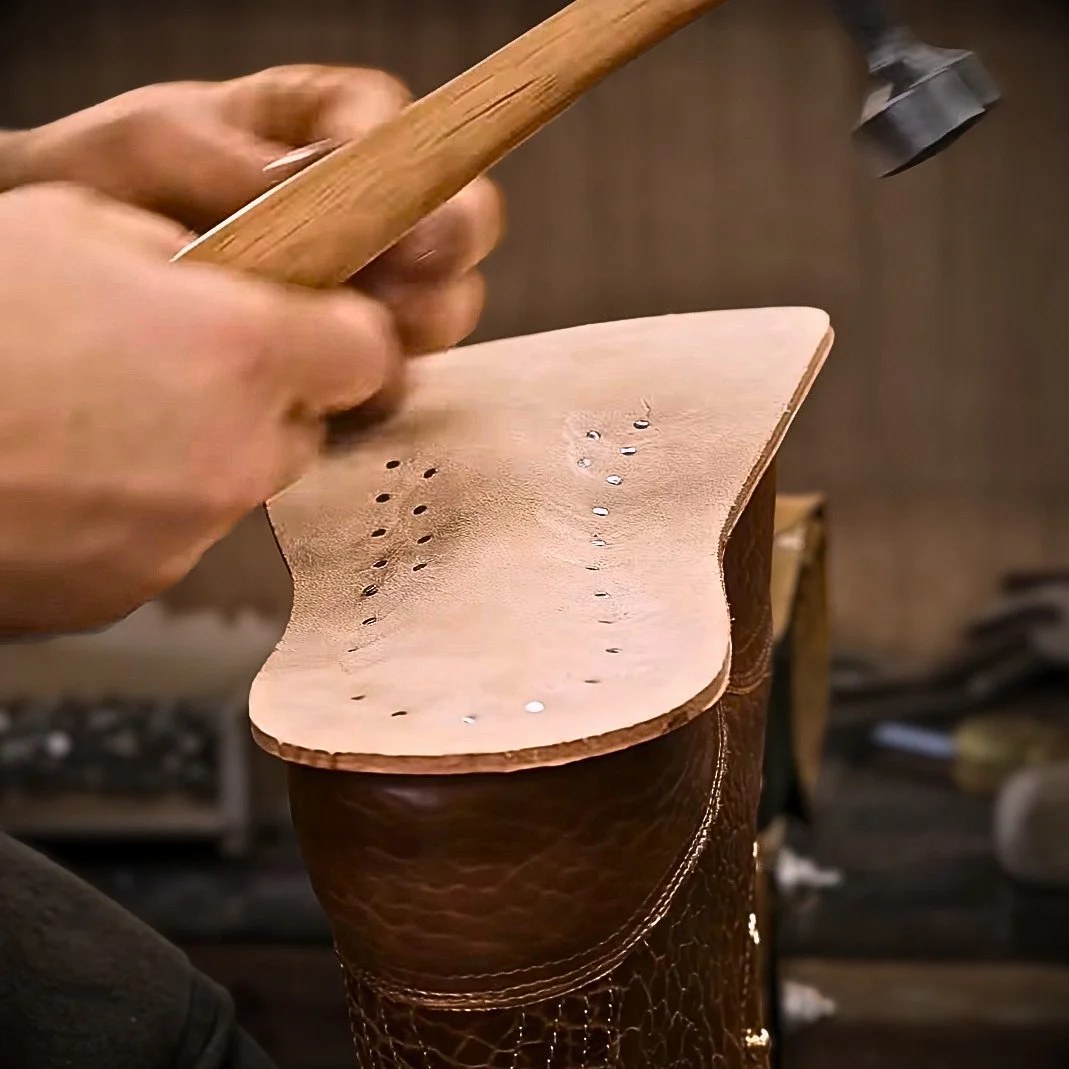
It starts with the guts of the boot. Our insoles and midsoles are thick, vegetable-tanned leather. This creates a stable base that breaks in and moves with you.
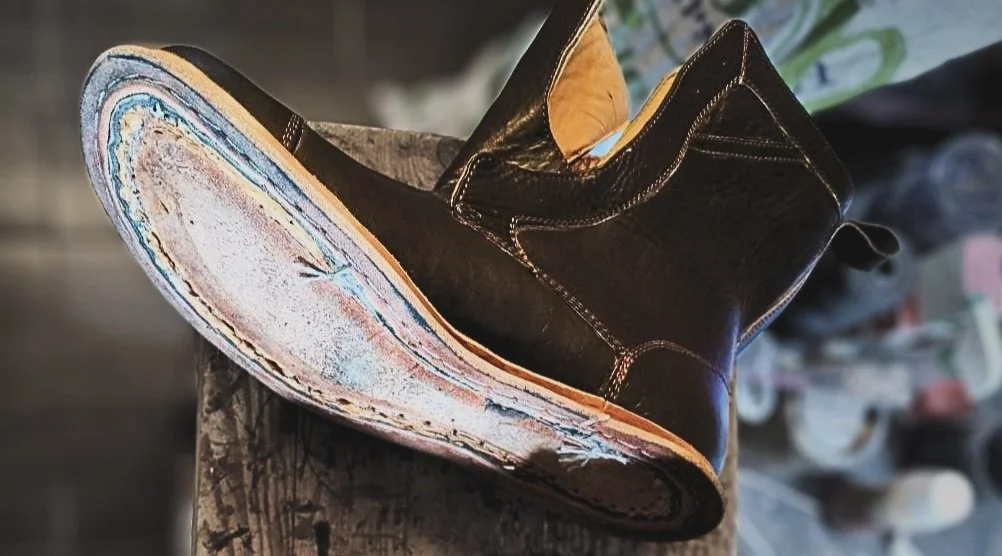
The real secret is the hand-welted construction. We don't use a cheap, glued-in rib. Allan hand-carves a channel into the leather insole. The welt is stitched directly into that foundation. It is a mechanical bond. It won't quit.
Our 360° storm welt creates a flexible perimeter. It makes the boot easy to service and rebuild. We want you to wear these for years, not toss them when the sole thins out.
Hand Welted Boot Construction
Where We Use Nails
We use nails sparingly. They have to earn their spot.
The Shank: On standard builds, we use a leather shank, and we use a few nails here as insurance. It keeps the support system locked in place through heat, flex, and time.
The Heel: If your boot has a heel stack, we nail it. Nothing locks a heel down better against impact. Though to be fair, we are currently testing a screw method to see if this provides a strong mechanical bond. Time will tell.
Note: If you order a zero-drop boot from us, there are zero nails. Our construction is strong enough to handle the job without them.
Build for the Mission, Not the Myth
A boot doesn't need to be full of metal to be "tough as nails." True toughness is about holding up to real life.
When we designed our first boot, the Dante, we started with the foot. We built a last that lets your toes spread out. We used a leather shank so the boot feels alive, not like a concrete block.
Whether you are riding across a continent or walking through Bangkok, choose your gear based on the mission. Stop punishing your feet for the sake of a "heavy duty" look.