Why Your Boot Lining Is Letting You Down
The Inside Story: Leather vs Fabric Boot Lining
Stop staring at the paint job for a second. Most guys obsess over the leather grain or the sole. That’s fine. It’s what people see. But the lining is what you feel every single step.
If the inside is trash, your feet will pay the price. This is the truth about leather vs. fabric linings.
-
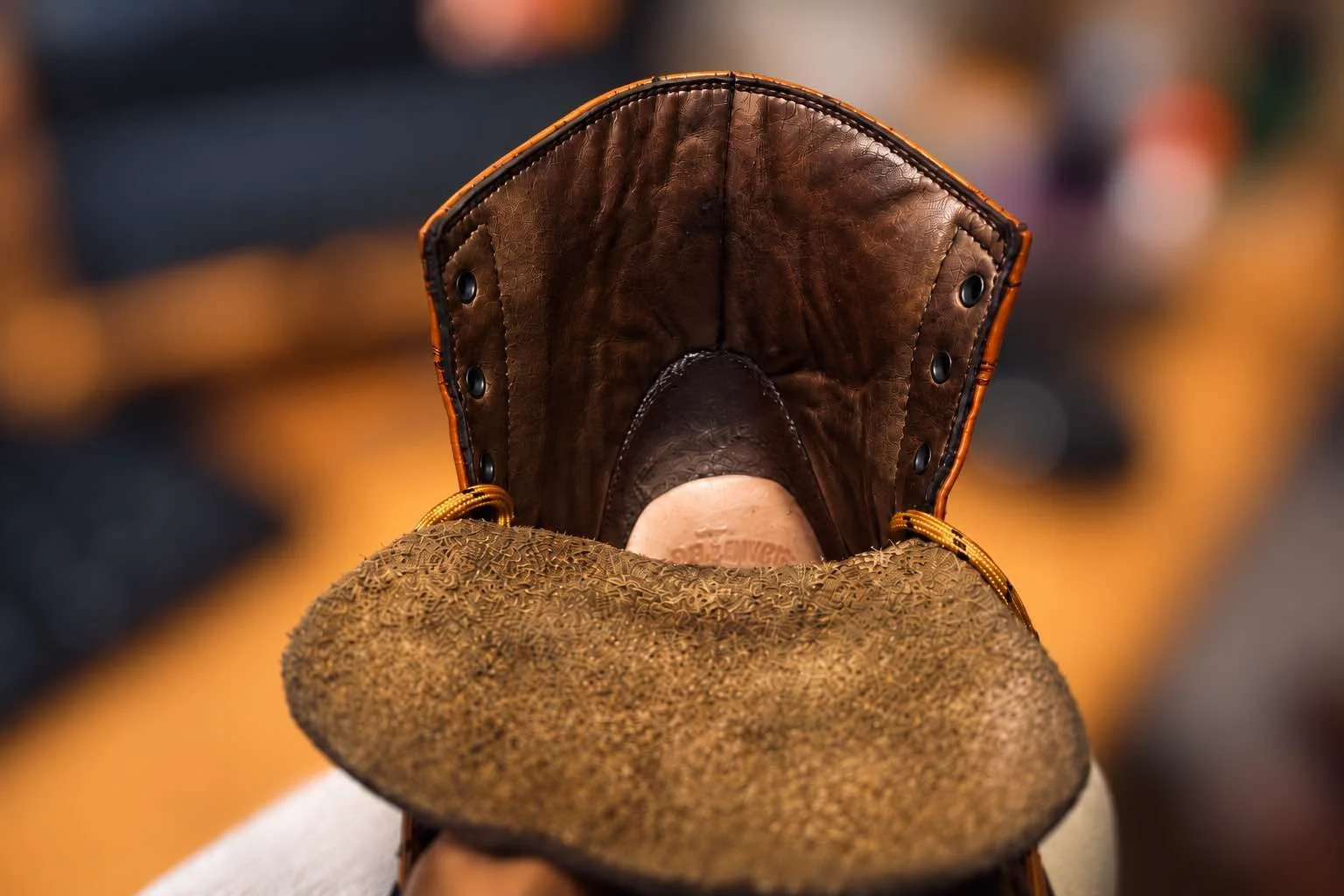
Hey, what's going on everyone, Dana from Naanng Boots here. I wanted to take a minute and talk about boot lining because this is a question we get a fair amount: what is our lining, do we use any synthetics in our boots? Essentially the answer to synthetics is no. Even our toe puff and our heel counter are all veg-tan leather, but our boots have 100% leather lining in them. And you can see here, there's no synthetics at all and there's no padding or anything like that in our boots; it's just a pure leather lining. And this holds up tremendously. That's one of the great things about a leather lining on a boot: it really holds up, it lasts, it stands the test of time.
And in our boots, we put a little patch of rough-out in the heel pocket and that really helps sort of cinch the heel in, especially during that break-in period, so your heel's not slipping all around. It really prevents blisters and lets you really get that good kind of molded feel that you get after a strong break-in. One of the things that's really good about the leather liner as well is it does add to the break-in process. You're not just breaking down foam that might be in the inside the lining and ripping up fabric. And that's probably the biggest thing you see with fabric liners is they break down and they rip over time.
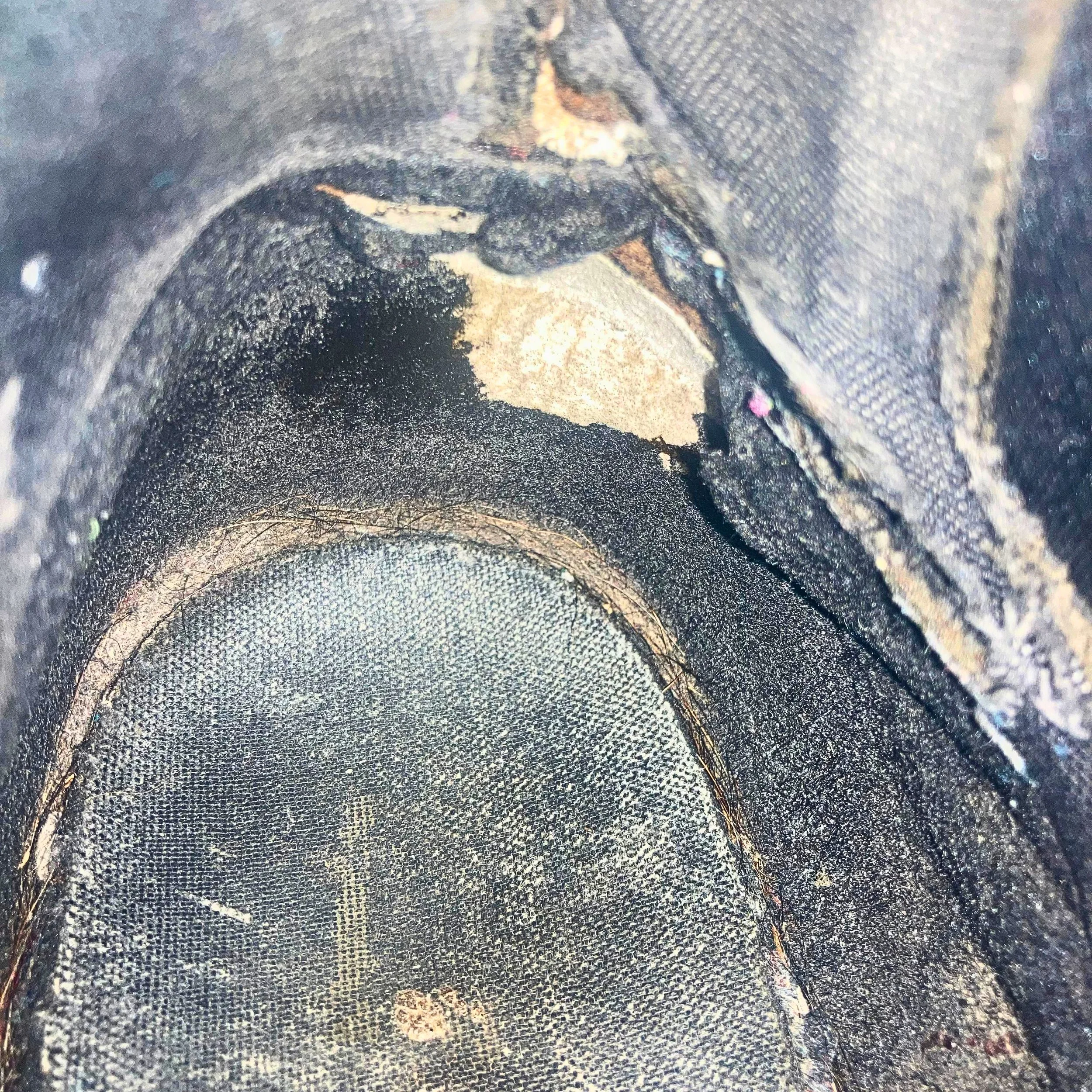
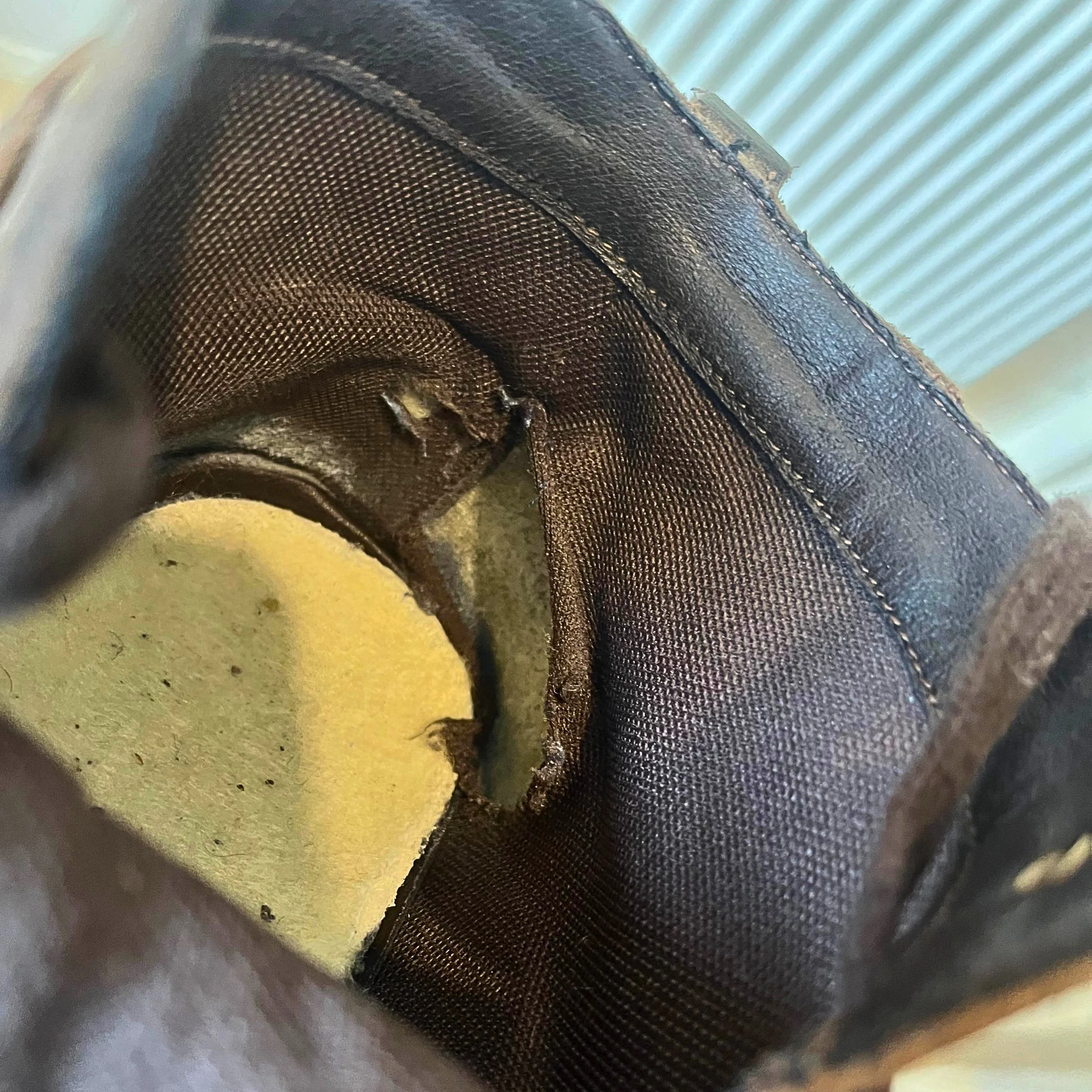
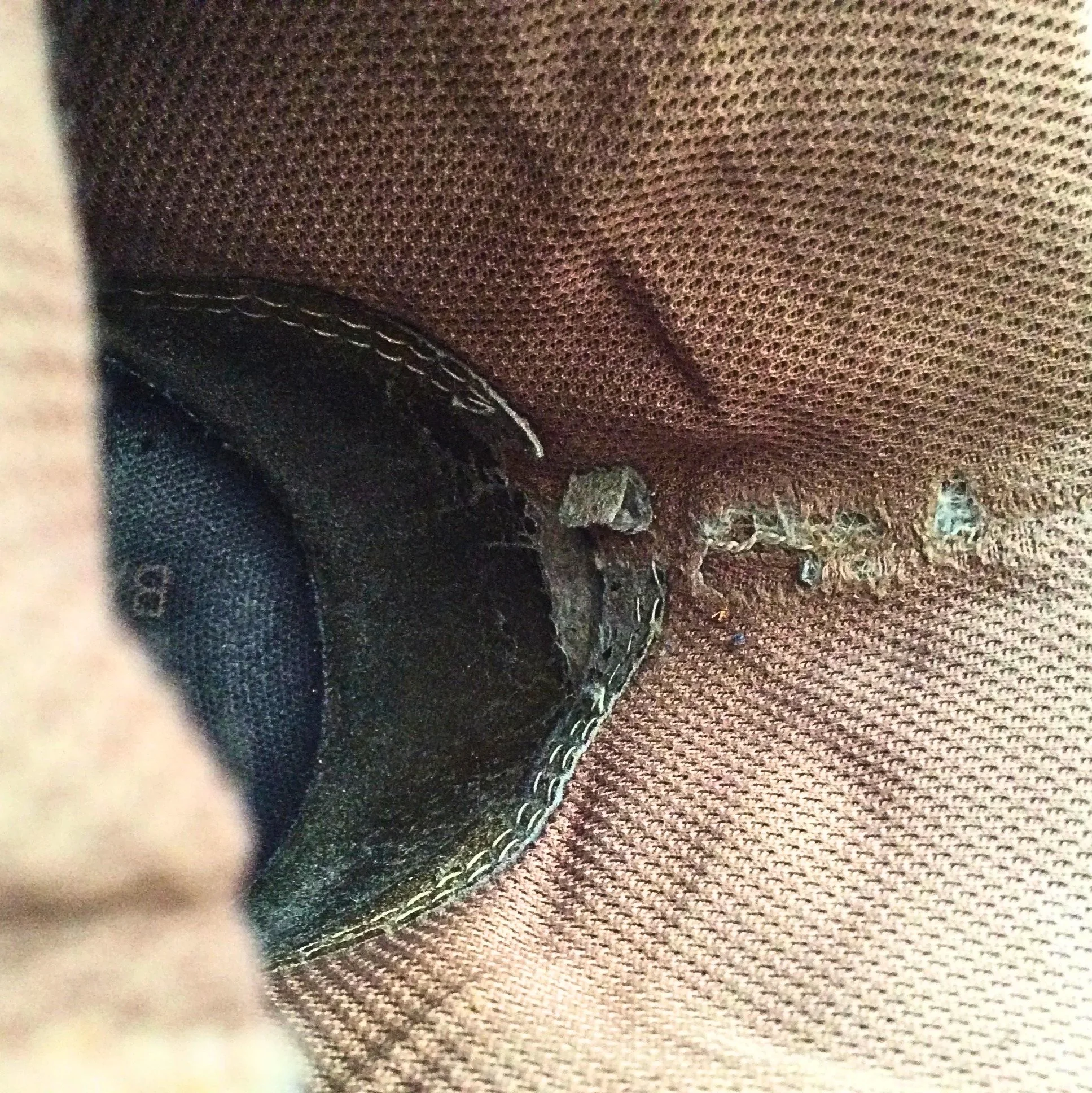
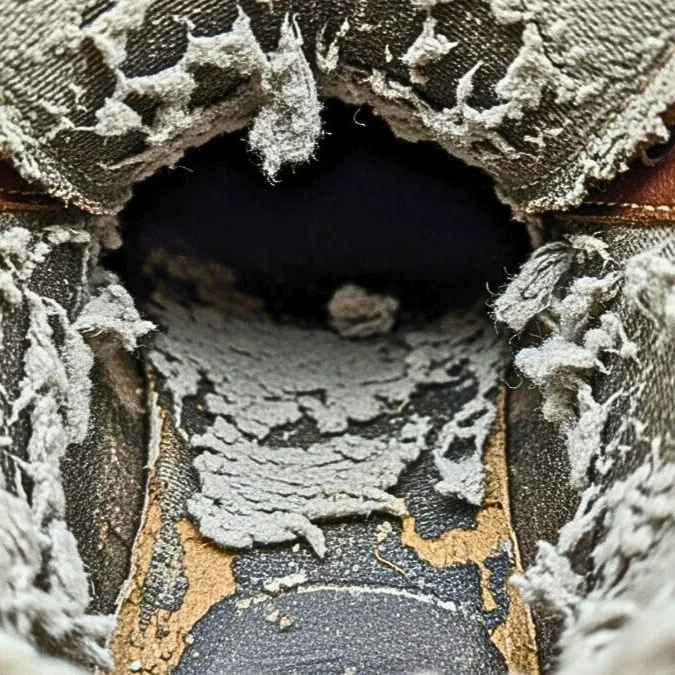
I don't actually have any boots with a fabric liner, but what I have is some sneakers here—this is a Thai brand, great, great shoe, but they're all canvas. But they've got a canvas liner in their shoe as well. And what you see is over time this breaks down. It starts to wear out because the canvas is just a weak point, that fabric liner. And you see this in boots as well; they tear, especially in that heel cup, or if you have a hot spot where your foot rubs a little bit more, that's going to break down a little bit more over time. You're going to get the friction from your sock on that fabric liner, and it's just not going to hold up. It's not a material that's made to last. And so that's going to really break down and that's going to be a failure point in your boot, versus if you've got a full leather liner like we do in our boots.
That really stands the test of time, and this will just sort of age and get really nice, and your foot will mold into it. And that's when you hear people talking about the break-in of their boots and how nice it sort of feels after a few months of just wearing it and it molds to your foot from the heat and the moisture and the pressure, and you get that nice molded feel. That's part of it. And having that really good leather liner, that's a big part of it, as well as the leather insole and the—you know—all of that leather underfoot just sort of molds and fits to it nicely. Versus a fabric one, a boot that has maybe a fabric liner or padding in there, that's all going to break down really quick and you're going to end up with boots that, you know, are just going to fail and fall apart. And they become uncomfortable to wear once you start getting those tears in the lining.
So at Naanng, all of our boots are fully leather lined. No synthetics at all. And what we've found through years of testing so far—daily wear even on some of these—is that the liners just hold up. There's no breakdown. I'll go through a pair of outsoles long before my liner even starts to show wear. Very different than if you get a cheaper boot or shoes even that have a fabric liner and that just starts to break down right away. All right, I hope that answers some questions on leather liners. If you have any other questions, feel free to shoot me an email or fill out the contact form over on the website naanngboots.com. Thanks.
What Is a Lining?
The lining is the layer between your foot and the outer leather. It’s the part that prevents blisters. It handles your sweat.
A good lining:
Stops friction.
Breathes well.
Shapes to your foot.
Makes the boot last.
A bad lining? It peels and stinks. It tears at the heel just when the boot feels broken in, right when you think it’s getting good, it’s trashed. It’s like putting cheap seats in a vintage Porsche. It looks okay until you actually sit in it.
Fabric Linings: The Cheap Way Out
You see fabric linings in most mass-market boots. It’s usually a mix of mesh or polyester. Brands love it because it’s cheap and fast to make. Most of these boots with fabric liners are made to feel good right away, that feeling doesn’t last tho. after a few wears that gone, and all those hot spots start to show up.
The Good:
Like anything, there are trade offs that get made, and so not everything about a fabric liner is bad. However, they are not good for very long. There are some specific use cases where having a lighter weight boot with a fabric liner, and likely a mostly fabric upper are going to have some advantages, but these are generally not heritage boots and not something that can be repaired and resoled over the years. For the most part, you can think of these as single serving boots.
Fabric liners are lighter.
It’s soft right out of the box.
It’s going to make your boot less expensive.
The Bad:
With the good you are always going to get the bad, predictably, the bad outweighs the good when it comes to fabric liners.
It tears at the heel and toe.
It traps sweat and grows mold.
It never molds to your foot.
It smells like a locker room after a month.
Fabric linings are fine if you just walk to a coffee shop. If you hike, ride, or actually work, they won't last. Once that fabric rips, your boots are junk.
Leather Linings: Built for the Long Road
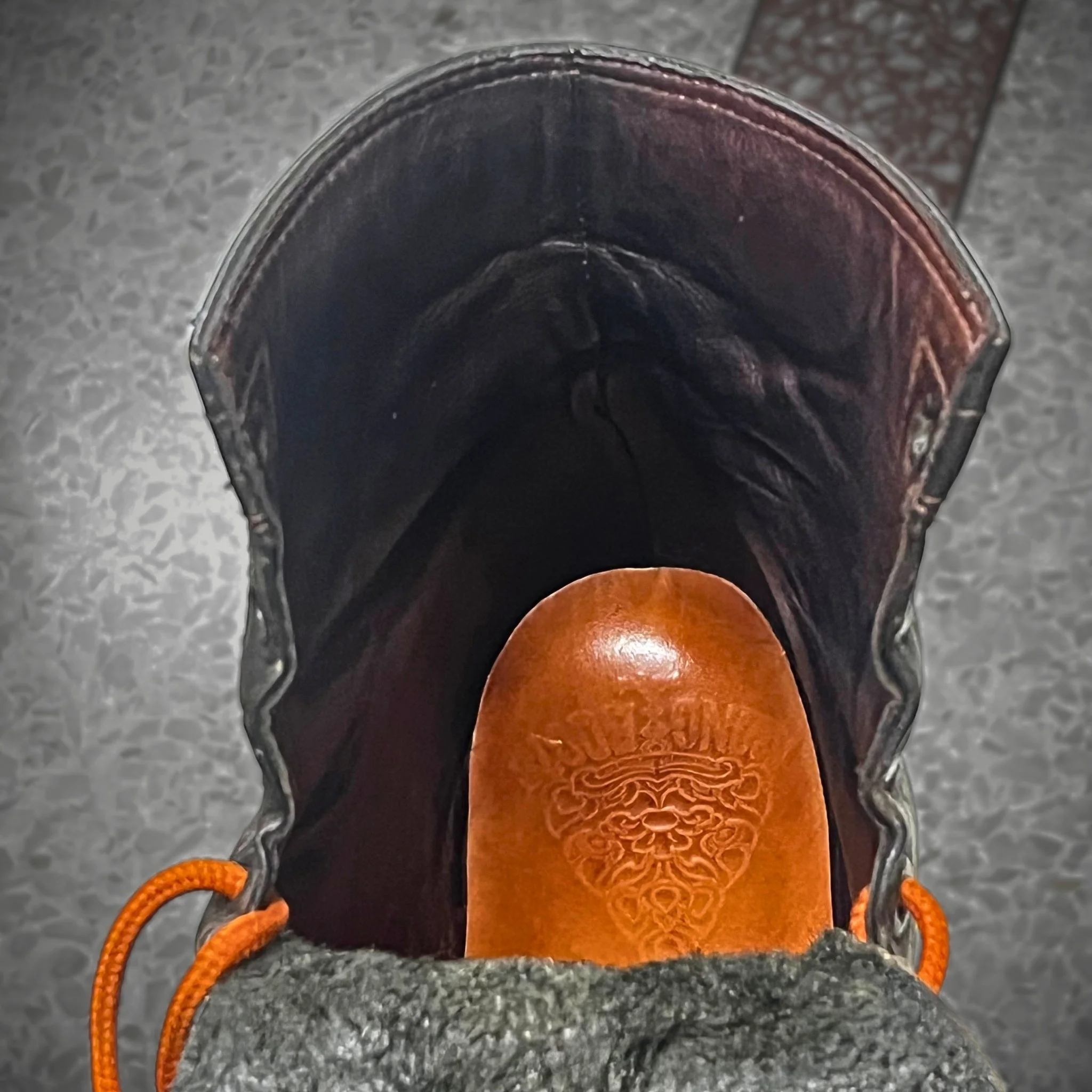
Full leather linings are the old-school way. They take more time and skill to make. In many cases a full leather liner is significantly more work, it could add 20-30% more time to making your boots. Most brands skip them to save a buck, and improve their margins. We don't, at Naang Boots we think a full leather liner is the only way to do it.
The Good:
A leather liner really elevates your boots, it adds substance and lets you know that your boots are made out of quality material. If you see a leather liner, you can feel confident that you have a quality boot that was built to last and be repaired. So, what are the key good points of a leather liner.
It forms to your unique foot shape.
It breathes naturally.
It keeps the boot’s shape for years.
It gets better with age.
No stink and no peeling.
The Bad:
Nothing is perfect, and everything comes with trade offs, leather liners are no different. However, unlike fabric liners, the good strongly outweighs the bad.
It takes a bit longer to break in.
It adds weight to the boot.
It’s going to make your boot more expensive.
The trade offs you make for a quality leather boot liner seem fairly small when you stack them up to all the positives on the list. You are spending a bit more money for a boot that is going to drastically out last it’s fabric lined equivalent, so the value is far greater. The weight difference isn’t massive, and if you are looking for ultra light boots then a heritage boot was probably the wrong place to start looking.
Why Naang Boots Only Uses Leather Boot Liners
At Naang, we don’t do shortcuts. At the core of our philosophy as a company is that we build things to last. When you buy a pair of boots from us, it should outlast any other boot you have. We use all leather construction because it provides the most robust build. It will last longer, break in better and age better. And when it comes time to resole, repair or rebuild your boots having a full leather construction means that more is possible, but also that less will have to be done.
Your boots should mold to your feet and age like good whiskey. That only happens with real leather.
The Bottom Line
Boot linings aren't flashy. They don't get likes on social media. But they’re the difference between a boot you love and a boot you throw away.
If you want a boot that’s going to last you years, then a leather liner is the way to go. It’s going to hold up to abuse, it’s going to be rebuildable and repairable and it’s going to get better with time.
Don't just look at the tread next time you buy boots. Ask what’s touching your foot. That’s the part that actually matters.
Ready for a boot that lasts? Check out our latest leather-lined builds.
What to Read Next