Crashing The World Championship of Shoemaking: Naang Zissou Chelsea Boot
In a room full of peacocking dress shoes, consider this the rebel in a tuxedo.
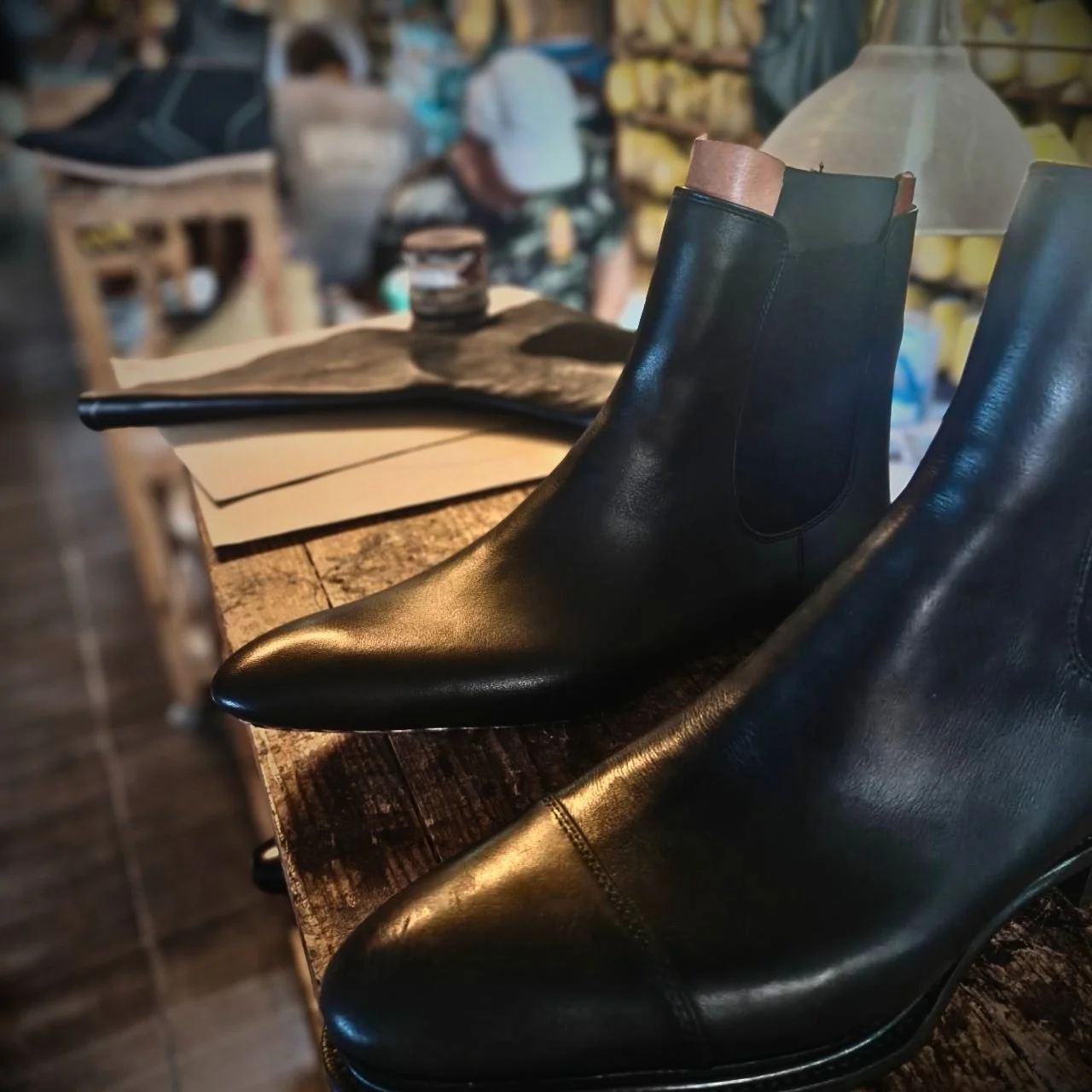
Before Naang Boots was even a blip on your digital radar, Allan and I were already in the trenches of high-end bespoke shoemaking. For three years, we’ve collaborated on his entries for the World Bespoke Shoemaking Championship, even cracking the Top 5 last year. But 2026 is different. This is the first year we’re officially crashing the party as Naang Boots, bringing our signature rugged Thai craftsmanship to the global stage.
Here’s the squad breakdown: Allan brings the technical wizardry and the this is how we build this know how. I handle the design language, the glue that ties obscure techniques and artistic concepts into a cohesive presentation. To win at this level, you need a secret weapon, so we brought in my wife, Jib Blouin. As a professional artist, her hand-embroidery and painting have been the finishing blow on our last three entries.
The Great Paradox: Form Over Function (Just This Once)
Let’s be real: If you know us, you know we live and die by the foot-first philosophy. Our boots are built for function, meant to be beaten to hell, resoled, and rebuilt. Rinse and repeat.
But the World Championship of Bespoke Shoemaking? That’s a different beast. These are one-off art pieces. They aren’t meant for walking. The lasts we use for these aren’t anatomical; they are sculpted for pure, unapologetic aesthetic. It’s the one time we flip the script and let Form take the wheel. It’s a flex of pure technique, showing the dress-shoe elite that rugged hands can master the most delicate details in the world without losing their edge.
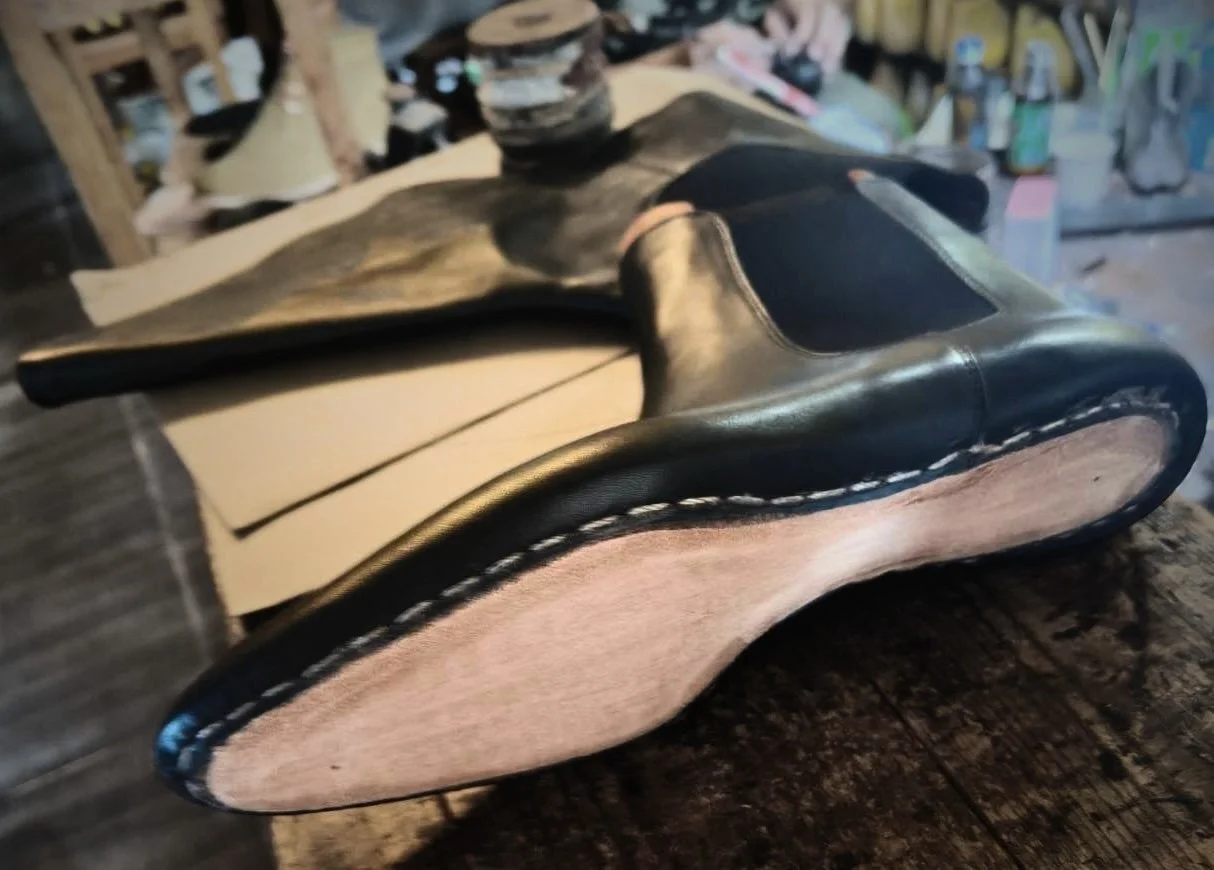
The narrow, pointed shape of this shoe has no thought for foot function
The Zissou Concept: Moving Through the Depths
The dress shoe world is obsessed with stingray leather, it’s the go-to for guys who want to look "exotic." We decided to do it differently.
Our entry, Zissou, is inspired by the stingray itself—not just the skin, but the soul. Per competition rules, we used full-grain calf leather, but we sculpted it into the animal’s fluid, terrifyingly efficient silhouette. The stingray moves in silence and stays hidden until it’s ready to strike. That’s the energy we poured into this boot.
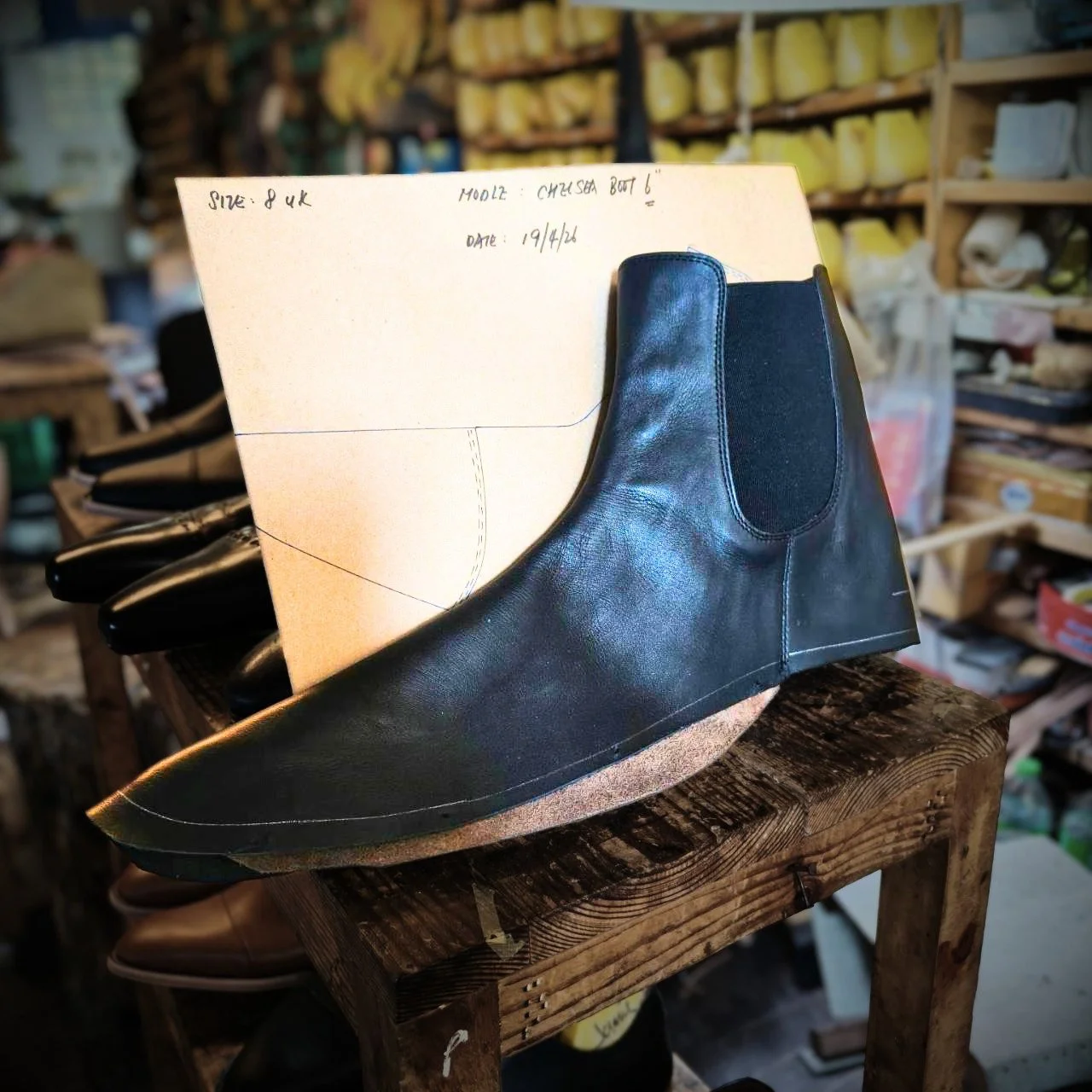
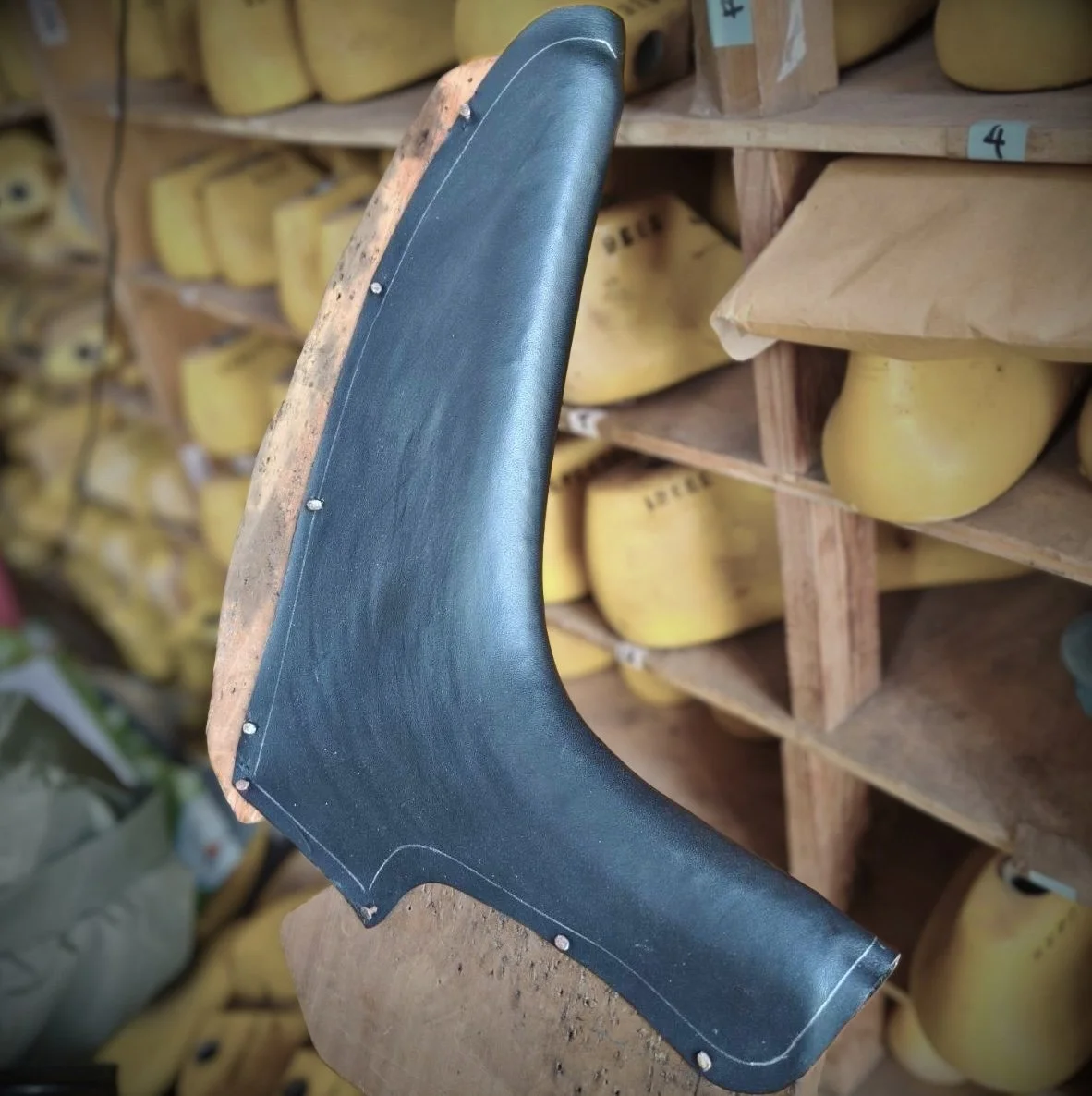
The Week-Long Sculpt: We spent seven days molding and shaping the leather upper before it ever touched the last. No hard edges. No clunky transitions. Since this boot is an art piece, we had to ensure the leather holds those flowing curves perfectly under the gallery lights while the judges inspect it.
The Two-Piece Upper: This is a stripped-down, minimalist middle finger to the classic 4-panel Chelsea boot. We removed all the noise, no fancy cap toes, no medallions, no broguing. We asked, What is the absolute minimum we need to make this work? and we chased it. That is the Naang DNA: no fluff, just flow.
The Deep Cut Construction
This is where we challenge convention and probably piss off a few purists. We’ve decided to force an awkward conversation between two styles of shoemaking that usually don't speak the same language, and frankly, probably wouldn't be caught dead at the same bar.
We get the game: these competitions are won or lost on the absolute masochism of your execution and the microscopic, delicate detail of your techniques. Hand-welting is already a masterclass in doing it the hard way. It’s the reason the mass-production world traded its soul for the easy efficiency of the Goodyear welt decades ago. But for us, hand-welting is just Tuesday. We wanted to up the ante.
We went hunting for a construction technique so fragile and refined that its juxtaposition against our rugged, overbuilt DNA would be undeniable. It was this what if? thinking that drove our design decisions to create what is likely the most technically useless, yet aesthetically curious combination of construction methods we could dream up.
Shop Naang Boots


The French Pump Stitch
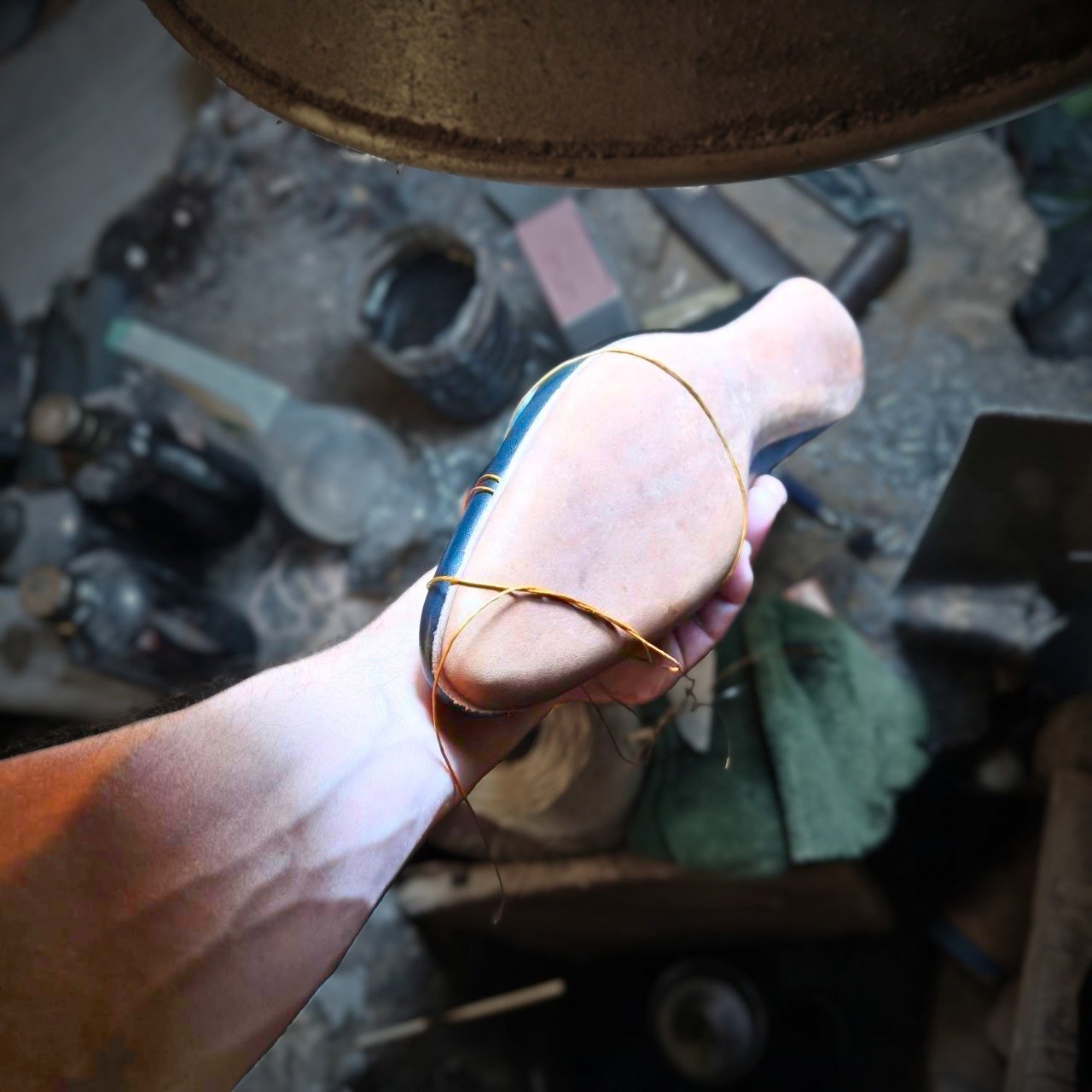
This technique is a ghost. It’s a turnshoe construction historically used for the dainty indoor slippers of the 18th-century gentleman elite. It involves a skin stitch where the awl never fully penetrates the sole, drawing the leather back tightly to the midsole. It’s the exact opposite of our rugged designs.
This technique is increasingly rare and closely tied to the legendary Jim McCormack. It’s a competition, after all, time to steal like an artist.
This technique gives the boot smooth, rounded edges to the soul that are generally perceived as elegant.
The Rugged Naang Twist
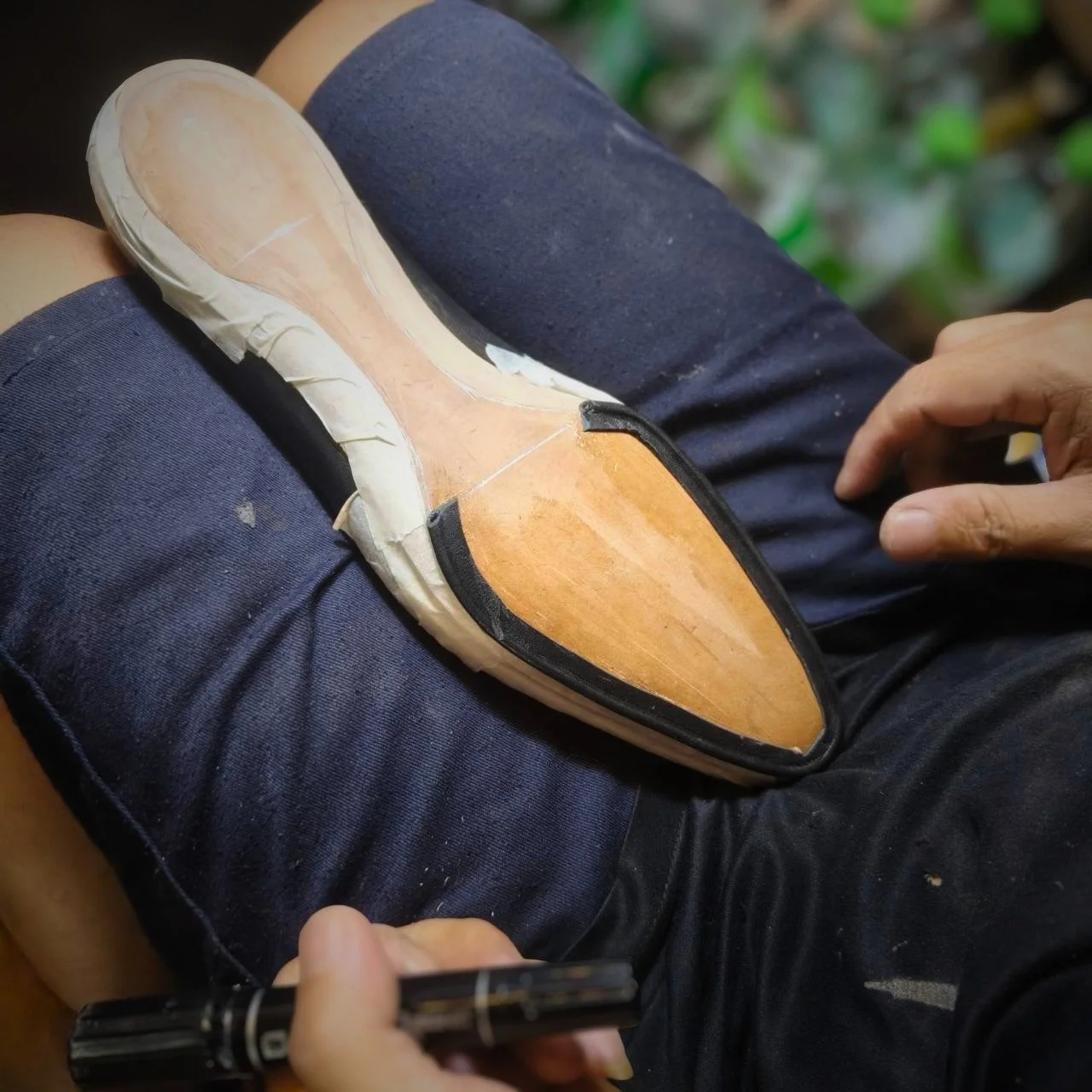
Because we can’t help ourselves, we took that delicate French pump stitch and slapped a rugged, hand-welted sole right on top of it.
Is it pointless? Oh hell yeah. There is zero functional reason to combine these two. But we couldn’t enter a design competition without a hand-welt, that technique is the beating heart of our brand. That ridiculous combination makes this something of a hybrid: museum-grade sophistication with the ride-to-the-end-of-the-earth soul of a heritage adventure boot.
I am sure dress shoe lovers think about us carving a holdfast into a perfectly executed French pump stitch sole cringe. And that is exactly the reaction we wanted.
Details From the Deep
We didn't just stop at the silhouette. We brought the stingray’s DNA into the very textures of the build. When you’re playing at this level, a competition piece isn’t just a boot—it’s a singular, unwavering message. If the theme doesn’t carry from the toe plate all the way through to the sock liner, you’ve lost the plot. We needed to communicate our intent to the judges and the audience without saying a single word.
For us, that meant the Zissou couldn't just be a suggestion of a shape; the inspiration had to be baked into every fiber. We knew the aesthetic details had to match the technical masochism of the construction. You can’t marry a rare Jim McCormack-style French Pump to a rugged hand-welt and then skimp on the finish.
We needed elements that spoke directly to the spirit of the stingray, but they had to be executed with the same "impossible" level of difficulty as the build itself. No shortcuts, no filler—just pure, obsessive design where the art is as hard-earned as the stitch-work.
3D Embroidery
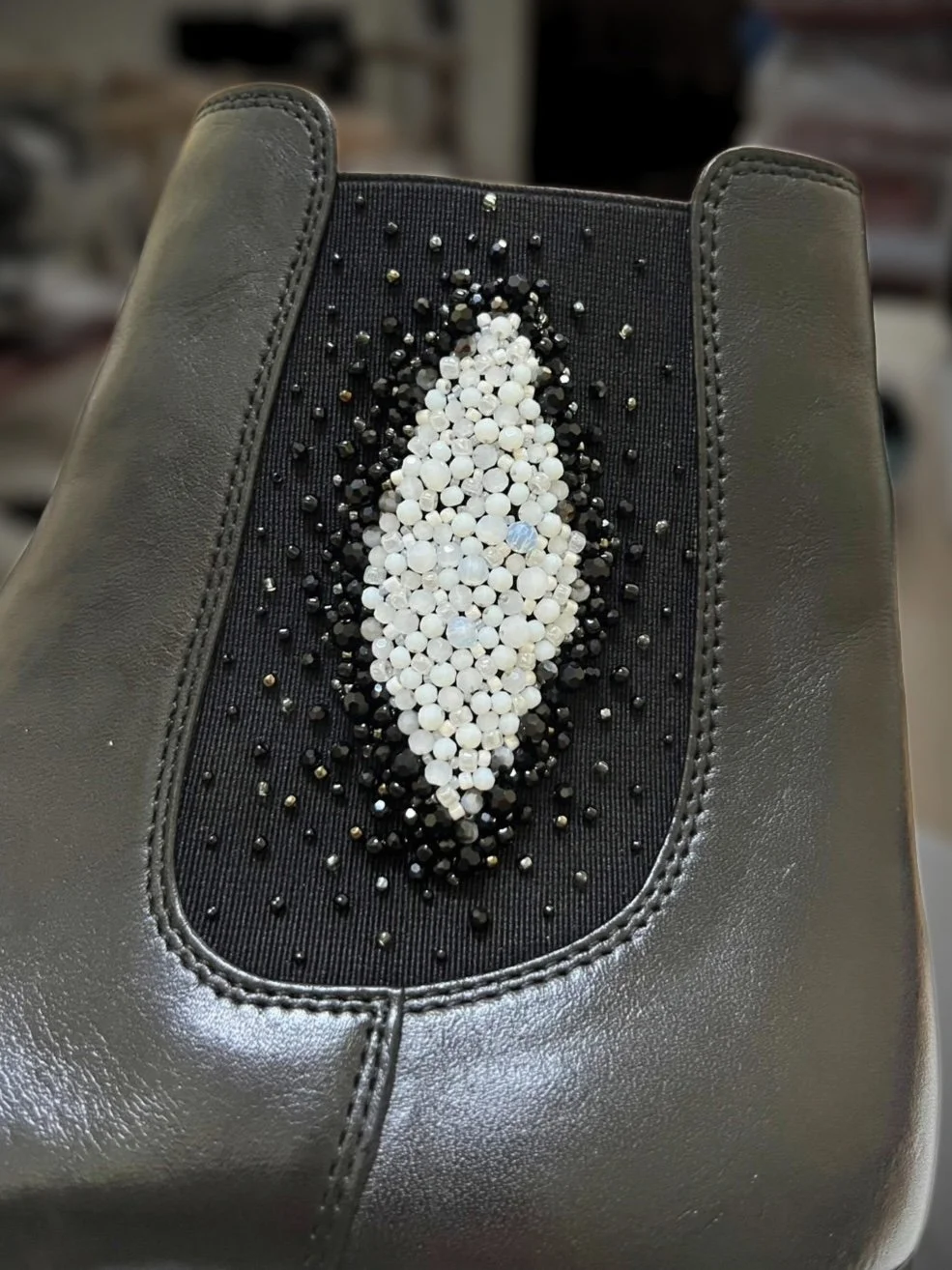
We knew the elastic side panels, traditionally the most utilitarian and, frankly, boring part of a Chelsea boot, were our biggest opportunity to flip the script. Most makers try to hide the elastic; we decided to turn it into a topographical map of our inspiration.
For this, we looked to our secret weapon. Jib isn’t just the wife; she’s a professional artist who has mastered the high-stakes world of traditional Thai embroidery and fashion. We tasked her with recreating the natural, geometric pearl pattern of a stingray’s skin using hand-embroidered beadwork.
This wasn’t just about sewing on some shiny bits. It was about creating a three-dimensional texture that forces the eye to stay on the boot. Each bead was placed to mimic the way a stingray’s armor like skin catches the light and pushes outward. We even carried that beadwork onto the sock liner at the heel, a detail no one will see while the boot is on a pedestal, but one the judges certainly will when they inspect it. If the boot isn’t meant to be worn, why leave a single square inch flat or uninspired? It’s a commitment to the theme that borders on the fanatical.
The Brasswork
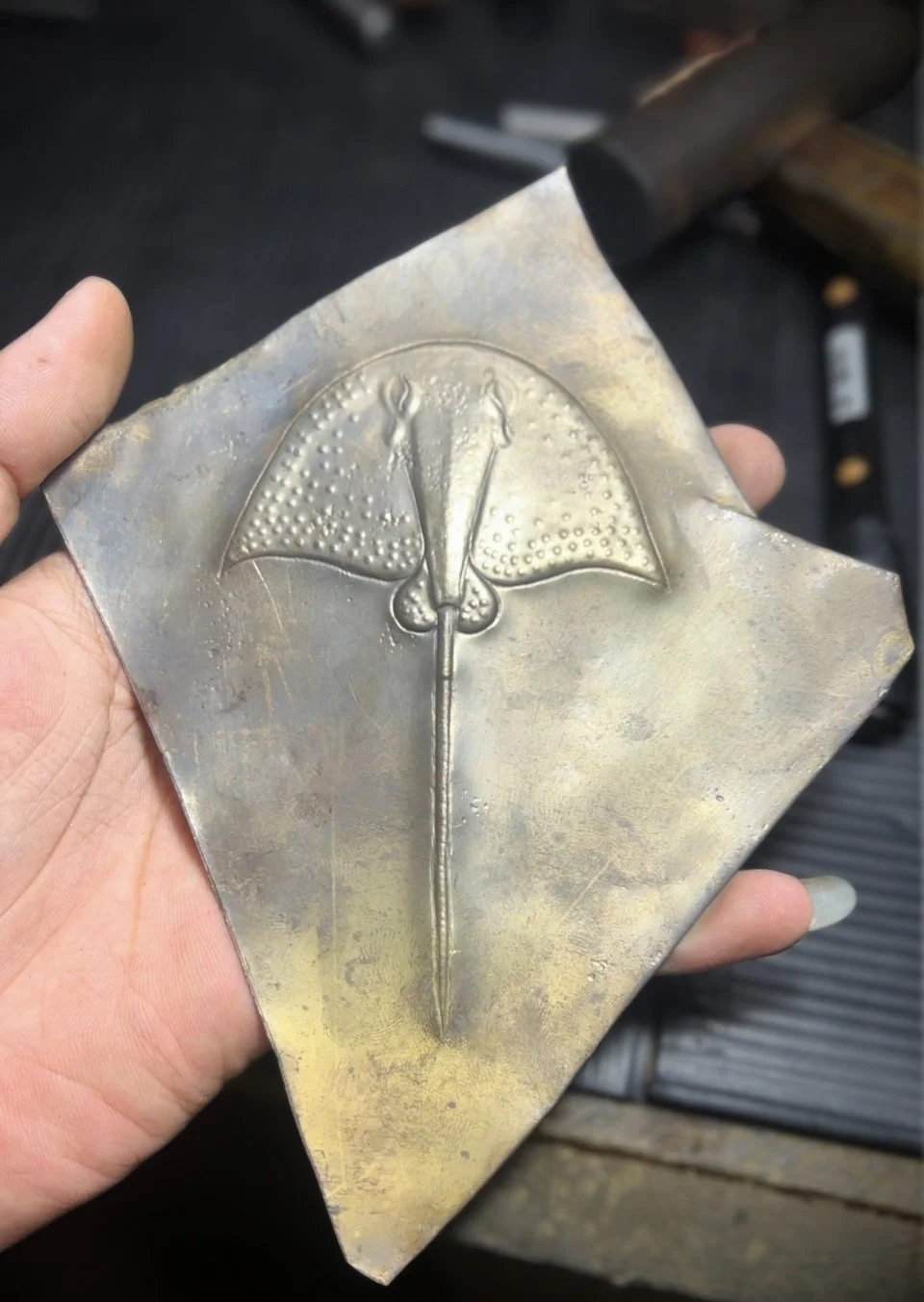
While the leather and embroidery handle the fluidity of the stingray, the brass work provides the loud detail. For this, we leaned on Yo, a local Thai craftsman who treats metal with the kind of respect usually reserved for holy relics.
Yo painstakingly hand-hammered a custom stingray toe plate that doesn't just sit on the front of the boot, it anchors it. We designed it with an exaggerated, needle-thin tail that stretches down the centerline of the sole, acting as a visual spine for the entire build. To bridge the gap between the cold metal and the organic leather, we outlined the plate with a hand painted water motif. It’s a subtle touch that makes the toe plate look like it’s literally cutting through a wake as the boot moves through the depths.
But because we’re Naang, we didn't stop where the eyes usually look. We tucked Easter eggs of brass throughout the build for the judges to find. Yo sandwiched a thin brass plate inside the heel stack and hand-bent a brass ribbon to sit exactly where the heel cap meets the leather stack. It’s just enough flash to catch the eye of a judge inspecting things close up. It’s proof that there is a human soul, and a pair of very tired hands behind every single element of this boot.
The Finish
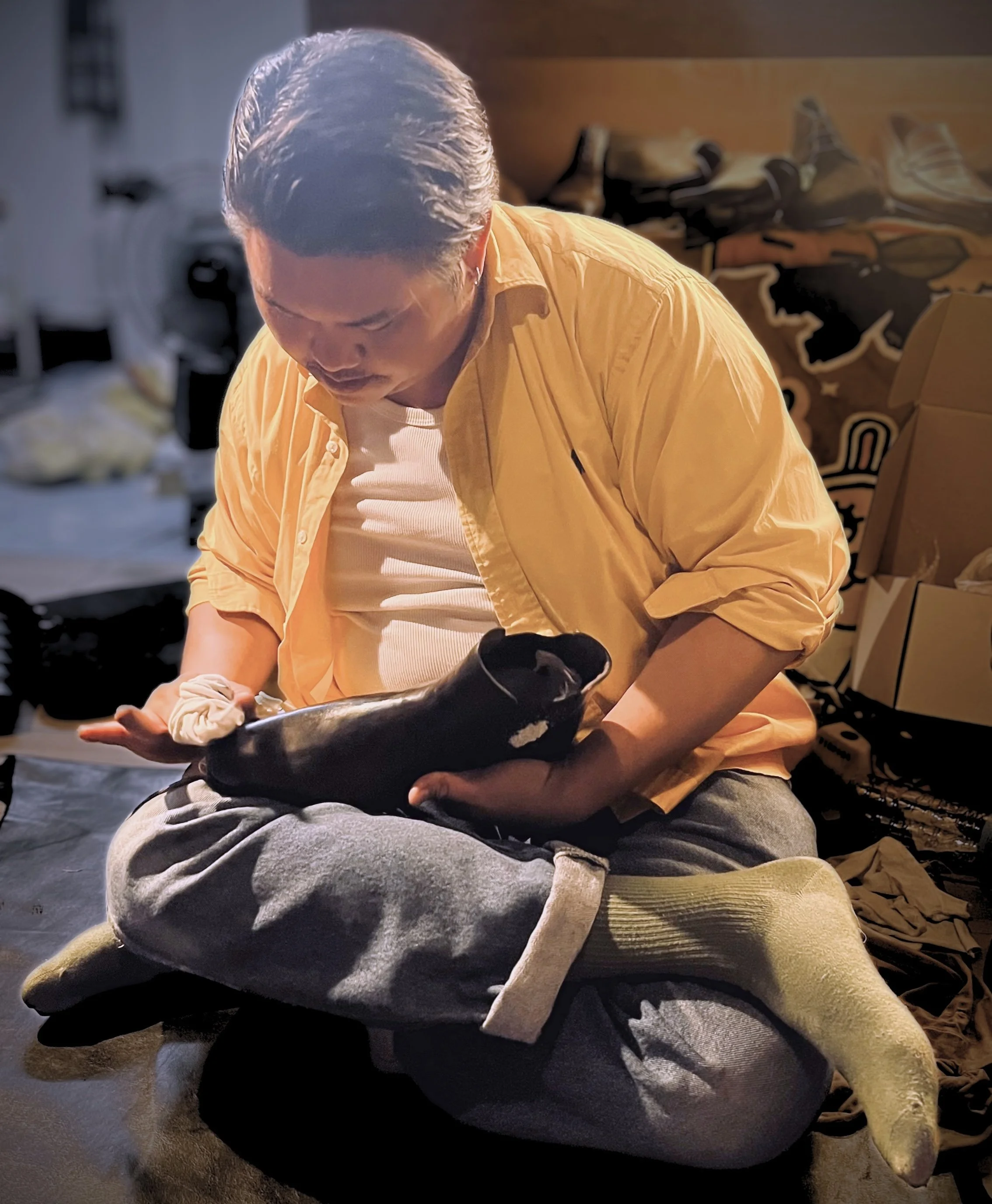
We didn’t stop at the hardware. To truly nail the Zissou concept, we had to replicate the unique, deceptive luster of stingray skin. If you’ve ever seen the real thing, you know it’s not just a flat shine, it’s a texture of light. It has a subtle, biological sheen where the raised pearls catch a semi-gloss or satin glow while the recessed areas remain flat and matte.
To capture that interplay, we called in Aon, our finishing and polish specialist. While most makers in this competition will go for a blinding, look at me mirror shine to hide behind, we decided to be more reserved. We told Aon to pull back. We wanted a finish that was true to the predator, a sophisticated, organic luster that feels alive rather than plastic. It’s a move of pure restraint, proving that sometimes, the loudest statement you can make is a whisper.
Why We Put Ourselves Through This
You’re probably thinking: Cool story, but I'm not walking a London runway. I’m trying to ride my bike without losing a toe.
Here’s the deal: We do this because we want to push our design practice to the absolute limit. We’re competing against the best shoemakers on the planet for no reason other than to get better. Steel sharpens steel. By pushing our design and construction technique we get new ideas, some of those might even inspire the next Naang Boot.
Ready to see what get into a pair of handmade boots built with our foot first philosophy? Shop our current lineup of hand-welted adventure boots here.
Quisque iaculis facilisis lacinia. Mauris euismod pellentesque tellus sit amet mollis.